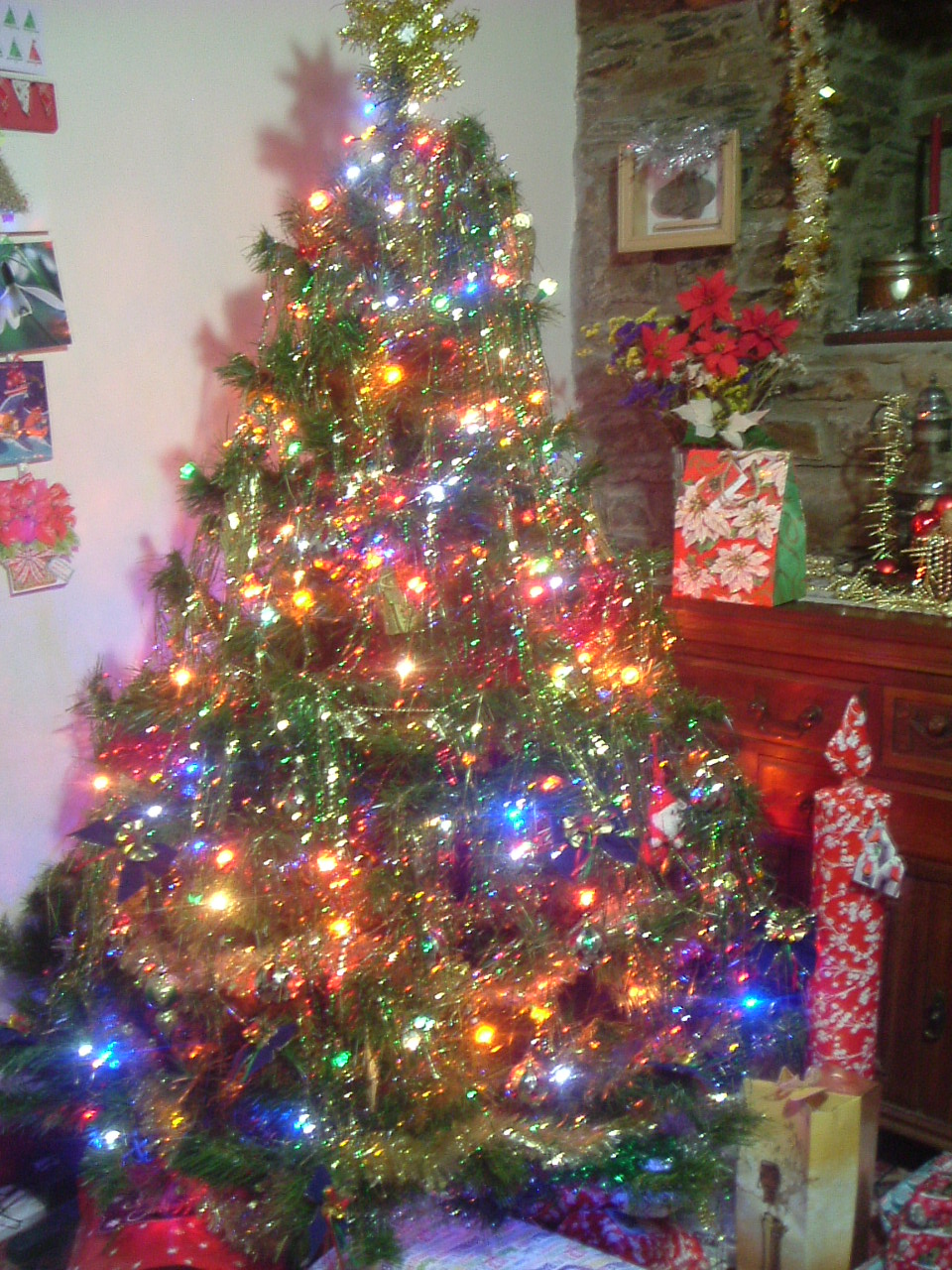
Are you a very organised person? Do you buy throughout the year as ideas come to you?
Sad to say – I’m not one of those.
Maybe you are a blitzer – make a list and blitz the shops notching up scores until the whole lot is got?
No, I’m not one of those either.
Maybe you like to sit at the computer in late November or early December and order everything on-line?
Now, I have to admit I’d like to do this. However, if I am stuck for ideas this doesn’t work very well for me – real browsing would be better at triggering ideas.
I have a confession – I do not like shopping.
There, I’ve said it. I know, I know, we women are supposed to like shopping.
But I mean – who says?? No-one asked me!
I do not even like shopping for things, clothes, treats or gifts for MYSELF – let alone any other type of shopping!
A trip to the shops usually has me returning with either something, which I later decide is not the right thing after all, or nothing – except a headache – which I always come back with. (which is why the internet shopping is attractive – don’t usually get a headache doing that)
More than anything – I do not want to go to Plymouth, our nearest metropolis, and trail around the shops there – it is not just Plymouth – I just do not want to trail around shops in any town or city – it is not my thing.
You get the picture – Christmas shopping is not a joyous time for me – though I love to give gifts that I know the other person will actually want and like!
For the main presents ‘want’ and ‘like’ are the key words to me – however I am now resigned to the fact that I cannot buy what my loved ones will really want and likeand make it a surprise. Oh, yes – I forgot to mention that. I really would like presents to be a surprise. A surprise that also happens to really and truly be ‘Just What they Wanted’ … Yeah, right, in my dreams.
And so … no surprises any more for the big stuff – now the esoteric gifts (climbing gear – for instance) is ordered via a link to the precise item, or a description given that cannot be mistaken in any way, for the more usual things.
However, for ‘secondary’ or ‘stocking’ presents I like unique, interesting, different gifts if I can find them to suit the right people – and so, as I said in an earlier blog, I do frequent local quality Craft Fairs – like the one coming up at Upton Cross next weekend. (4th– 6th) where lovely things and beautiful paintings are to be found (as well as my novels) and these have to satisfy my longing to ‘surprise!’
Converting them to what – or from what? You may well ask!
One of the things that the internet has brought us, is recipes from round the world. Recipes from far flung countries with different climates and different languages do not seem to be a problem – usually someone, somewhere, has taken the trouble to convert the recipe from whatever units it is usually made in – into (nowadays) grams and millilitres. Apart from American recipes!
If you are ‘of a certain age’ you are probably still thinking in ounces and pints for cooking. In fact there are a few recipes I really do not think I could work in metric, so long ago were they learnt that I make them on automatic pilot and in imperial. They are, at least, proper measurements.
I have been looking for a particular type of biscuit to set as a competition for our WIs next group meeting. Now, for the uninitiated, a group meeting is where a designated group of WIs in an area get together for a cut-throat friendly set of competitions and a talk – frequently one that would be beyond the reach (financially) of one WI on its own, though not always.
At these events the friendly competition is usually set to reflect the theme of the talk. Hence – the last one we set up was a talk from a man who had owned a Zoo … the competitions were: Floral – a flower arrangement to represent a wild animal, Craft – a decorative border for the poem Tyger Tyger, by Blake and, Cookery – a Zebra Cake!
Just a few of the entries shown Right>
Now the only available versions of this zebra cake were in American Cups – and using a tin size that is just not commonly in the British cupboard. So a lot of conversion and changing of quantities took place until the recipe worked in metric … and then it had to be converted to imperial and checked again, as some ladies of a ‘very certain age’ only measure and cook in imperial. Zebra Cake! my metric / imperial recipe here
I struggle to understand why the Americans use their form of measurements in their cooking. I have heard that it was from when they had nothing to weigh with, that recipes using ‘cups’ were simple enough that any vessel could be the ‘cup’ and as long as the proportions (the cup) used was the same the recipe would then work. Understandable then, if true, but when we live in an age when even ‘sophisticated’ scales, that swap between imperial and metric, are available for small amounts of money – why use a method so random?
Just try getting a ‘cup’ of butter to be right – or using a different type of sugar to the one specified when you run out of one but have the other in the cupboard (granulated, demerara and caster all give different cup measurements) – or even flour – which has to be ‘fluffed-up’ before making up the cups ‘best spooned into the cup and then levelled off!’ What?!
Looking it up I see that many American Chefs and Cookery writers are trying to convert the Americans to use scales and recipes that are more accurate – but there is a huge resistance – ‘Cups’ ‘Spoons’ and ‘Sticks’ are almost seen as patriotic! (by the way – ‘spoons’ as in ‘a spoon of butter’ – not just spoons of fluid ingredients)
At our next group meeting in May 2016 we have the lovely Anthea Lay who was a competitor on The Big Painting Challenge on the BBC, bringing us an interactive Big Painting Challenge Experience to our WI Group meeting – I’m looking forward to it … but before that I have to work out the cookery competition to fit the theme, and soon – so we can notify the other WIs.
I am after a particular type of biscuit that I saw on the internet, one that can be made to look like an artist’s palette. Can I find it in metric or imperial? Can I coco!
So once more I shall set about converting the American measures into Metric and Imperial. It does mean that I’ll have another recipe to add here eventually – which can’t be a bad thing.
Have you ever tried an American ‘cups’ type recipe without converting it? How did it go?
Do you *sigh* when you find a really nice looking recipe and see it is all in ‘cups’ ‘spoons’ and ‘sticks’?
Do share your thoughts – and any good recipes too, you know I love to hear from you.
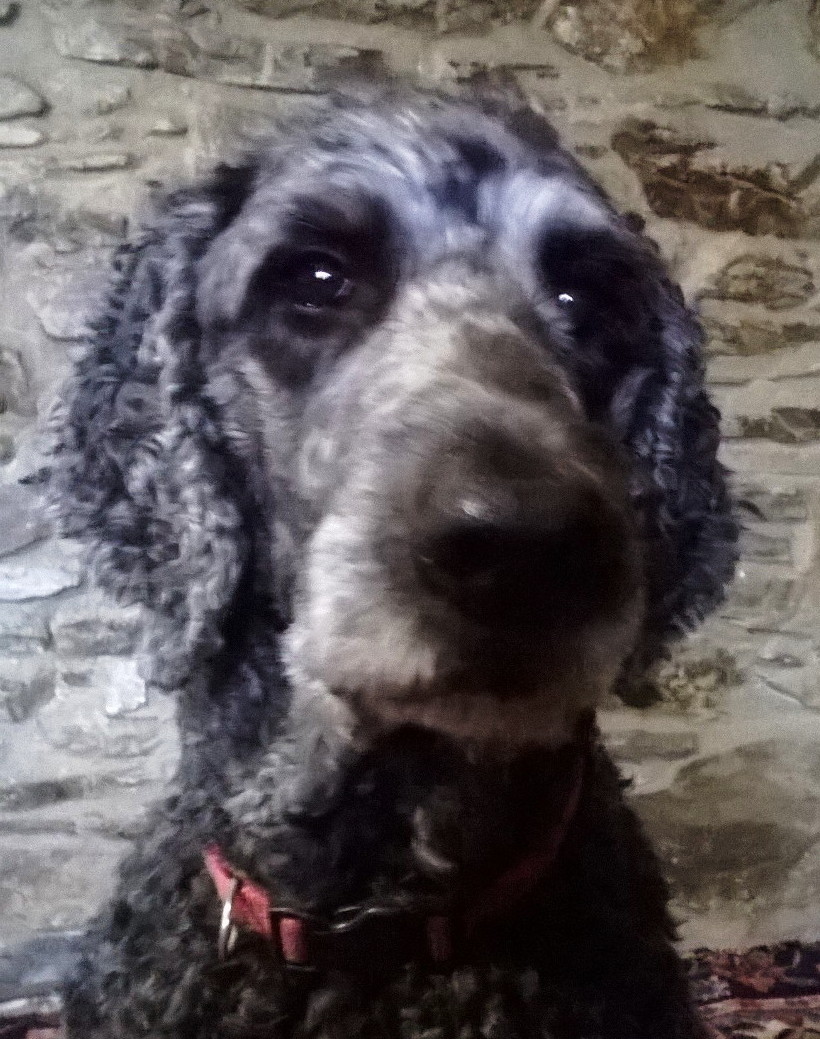
I always fancied ‘a cup of tea’. They say it to all the humans that arrive (smelling delightfully of other places and other dogs) so I figured it must be something good. After all, a lot of them said ‘yes’ and sat down to drink this interestingly scented beverage.
So about a year ago I began the training; this is how it went.
They eat their breakfast and then give me mine – fine – I know where I am in the pack … but then she goes and pours cups of this ‘tea’ for everyone. So this time I stare at the back of her head as she pours – sending those thought-waves that signal ‘someone is staring at you’. She turns, ‘What?’ she says, ‘You’ve had your breakfast.’ True, and I have had to use this method occasionally when she’s poured their tea before giving me my breakfast – she is always contrite and apologises for forgetting.
This time I keep staring even as she turns back to pouring someone else’s cup. She glances round at me, then picks up the cups and takes them through to the dining room. I follow and sit so that I can get my head on her lap. I get a fuss – nice enough – but I want some tea… so I slip away – go and look in my bowl then stare at the teapot. Glance round to see if she’s looking. No! She’s got a book in her hand! Damn. I go and try to dislodge it, nose under elbow and a quick flick… usually works. She turns round so her elbows are on the table! Manners! But her elbow comes off the table when she picks up her cup of tea – I try again, almost spilling it. Maybe not my best move as she is now a little annoyed.
She always has a second cup of tea, so when she goes to pour it I follow. The milk goes in, and then she picks up the teapot. The thought waves I’m sending are really strong, pot in hand she glances round. ‘What?’ she says.
I open my eyes wide staring at the pot. She doesn’t understand so, as she tries to pour, I nudge her rear with my nose. She stops, turns, ‘What? You want a cup of tea?’
At Last! The message has got through! I lick my lips. She smiles, says again ‘You want a cup of tea?’ I lick my lips and glance towards my bowl.
She pours milk and tea into one of the emptied cups, then picks up her cup and starts back towards the dining room. ‘Whoa! Wait – Where’s my tea?’ I dance out in-front of her.
‘Out of the way,’ she says – I know those words – but when she sits down I put my head back on her lap and press down – give her the soulful look. ‘It’s got to cool’ she says.
No – I’m not sure what that means? But I decide against the elbow tipping as that was not good idea last time but I go back to the kitchen and try the staring at the bowl, staring at ‘my’ cup of tea routine again, adding a very tiny whine. She sees me and laughs. You know it’s great when my pack-lady laughs – good pheromones come wafting around – sometimes she’ll even roll around on the floor and play with me, like her pups do when they are at home.
‘You have to wait for it to cool’ she says again, but this time I think it will be okay – whatever it means.
Lovely cuppa!
She finishes her cup of tea, picks up plates, butter, marmalade and her cup from the table and heads into the kitchen.
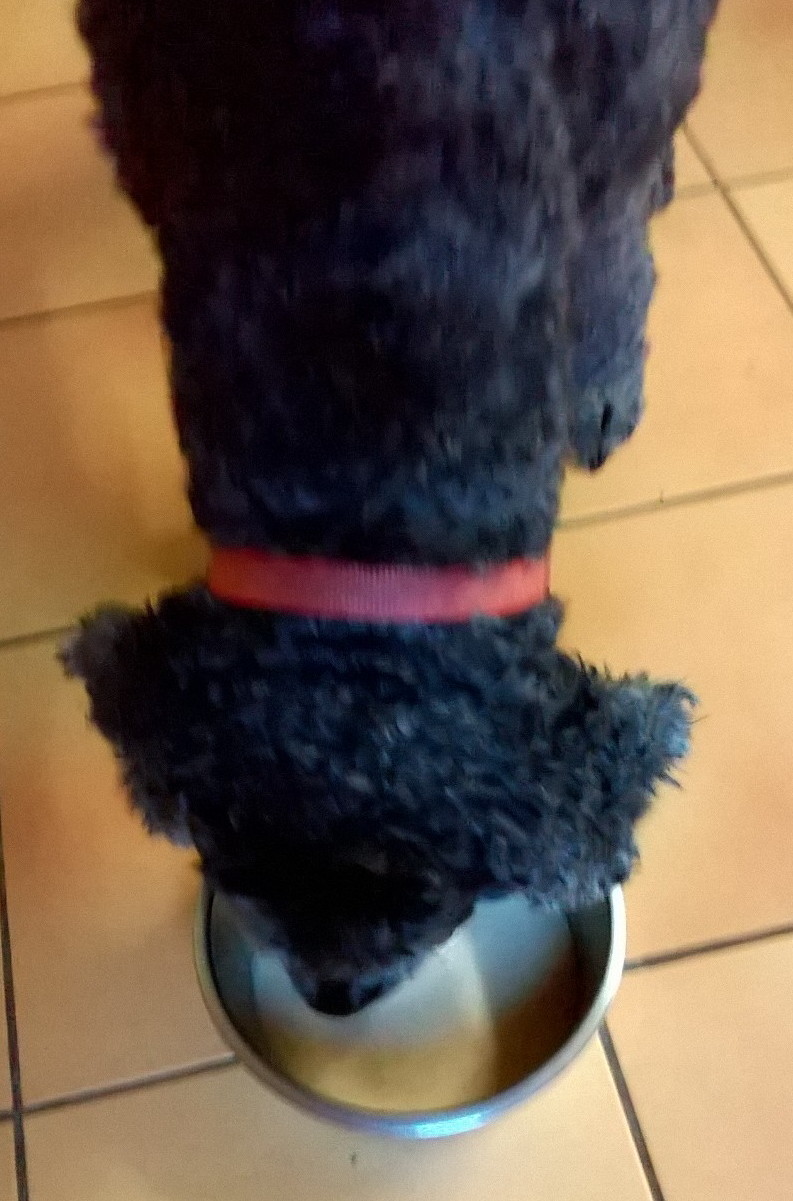
I’m dancing around, can’t wait to have a ‘cup of tea’. She laughs again, sticks a finger in the cup says ‘Okay, cool enough’ and pours it into my bowl.
I go forward and taste.
Yes! I like tea! I soon lap it all up while she watches.
It takes less than a week from there to – a stare (she’s really good at picking up that vibe) then a gentle nose-nudge as she’s pouring their first cups of tea and she’ll ask ‘Want a cup of tea?’ I lick my lips and she pours some into a small plastic bowl to cool. I get my tea when she pours her second – works like a dream!
Within a month she’s pouring my tea everyday, without any reminders – and apologising if she forgets. Which is what she did when she was busy fussing round and going off to the Literary Festival early; forgot – and it was no use trying to get through to the pack-men around here – they just don’t pick up on the signals as well!
Anyway – the Lit Fest is all done with and life is back on an even keel again – breakfast followed by my tea.
I hope that this will help any other canines out there who need to train their human.
Choosing the receptive one is key, then perseverance and love.
Do let me know what you think (humans too – I love to hear both sides of the story)
It is THAT time of year – when people are thinking about *whisper* Christmas shopping …
… and my favourite place to shop is a proper local craft fair – where the goods are made in the area by the hugely talented lot of crafters we have in South East Cornwall (and around) There are two I always go to – and attend with my own books too – one is in my local church, which happened this weekend, the other is at the Parish Hall (for Linkinhorne) at Upton Cross which is also a treasure house of art as well as crafts … and happens on the first weekend of December – truly into the Christmas season!
Art and Craft … and books? It may seem strange to have books along at such events, but they fit in very well – what an art and what a craft, it is to create the worlds, characters, plots and lives held within the pages of a novel! And they are local – in that the authors are local and are often present to sign or dedicate the books (though not ‘sitting behind the stall’ in either of these style of craft fair they can be found at certain times stewarding).
Today, if you do not count on-line book sales, there are as many books sold through non-bookshop outlets as there are though bookshops. Every supermarket has books for sale, usually the most popular, the newest and the heavily discounted – but books that catch the casual shoppers eye – and get bought. To have books at a craft fair therefore is no different in retailing terms – and a signed (and dedicated) novel can make a very special present.
However, it is the Literary Festival that holds up the book in the spotlight. Here the readers go to hear the stories behind the stories. How the authors come up with their plots. Where do they get inspiration from to create the characters? What are the trials and tribulations … and the highlights and triumphs. What was the hardest part to write, indeed, how do they write – most authors have their own way of working – finding out can be fun.
So it is with great pleasure that I can tell you, if you didn’t know, that I am invited along again to the Looe Literary Festival starting on the 12 of November – 15th.
If you go to their website you can find the schedule – I am talking about Some Kind of Synchrony at 2.45 on Saturday 14th and would love to see you along there – and it is totally FREE. The venue is Upstairs @ Mama J’s – which is down towards the sea in East Looe. Scroll down the Full Schedule page to see a map.
Before me, at 1.30pm, you will have the chance to hear my fellow Pendown Publishing author Sally Newton talk about what she learnt when researching her novel, the first of a trilogy, ‘Caradoc – The Defiant Prince’ set in iron-age Britain in AD25.
Not only that but, on Sunday at 11.30, you can catch me again with the rest of The Liskeard Poets with our set called ‘Festival’ – also at Mama J’s and also for free!
In fact this festival is so great because they have ensured that there is always something to be seen and heard, regardless of how deep your pockets are, and it is one of the most relaxed and inclusive literary festivals out there – turning the bucket-and-spade town into something completely different – a place where people wander from talk to talk with books tucked under their arms, eat and drink in the pubs, restaurants and cafes and enjoy the peace of being by a Cornish river and close to the sea, with authors, books and talks all around the town.
So – I hope to see some of you along at the weekend – if you read this blog do let me know when we meet!
Do you frequent Literary Festivals?
What do you like about them?
If not – here’s your chance! A laid-back friendly festival to try.
Only ‘Quite’ as it does that annoying thing of dashing back and forth between the topics of the programme instead of pursuing one to the end before starting on another. I wonder, is this because all media have been told we have very limited concentration spans or, in a self-fulfilling prophesy, we will all end up with very short attention spans because they only offer us tiny tid-bits and flash around the subjects catching up on each one as they go (in case you have so little attention span you have forgotten!) Rant over.
So, a while back they had a little piece about WARTS. Urgh! Yes, I know. Warts and Verrucas to be precise – or to be less precise – as they are the same thing – really.
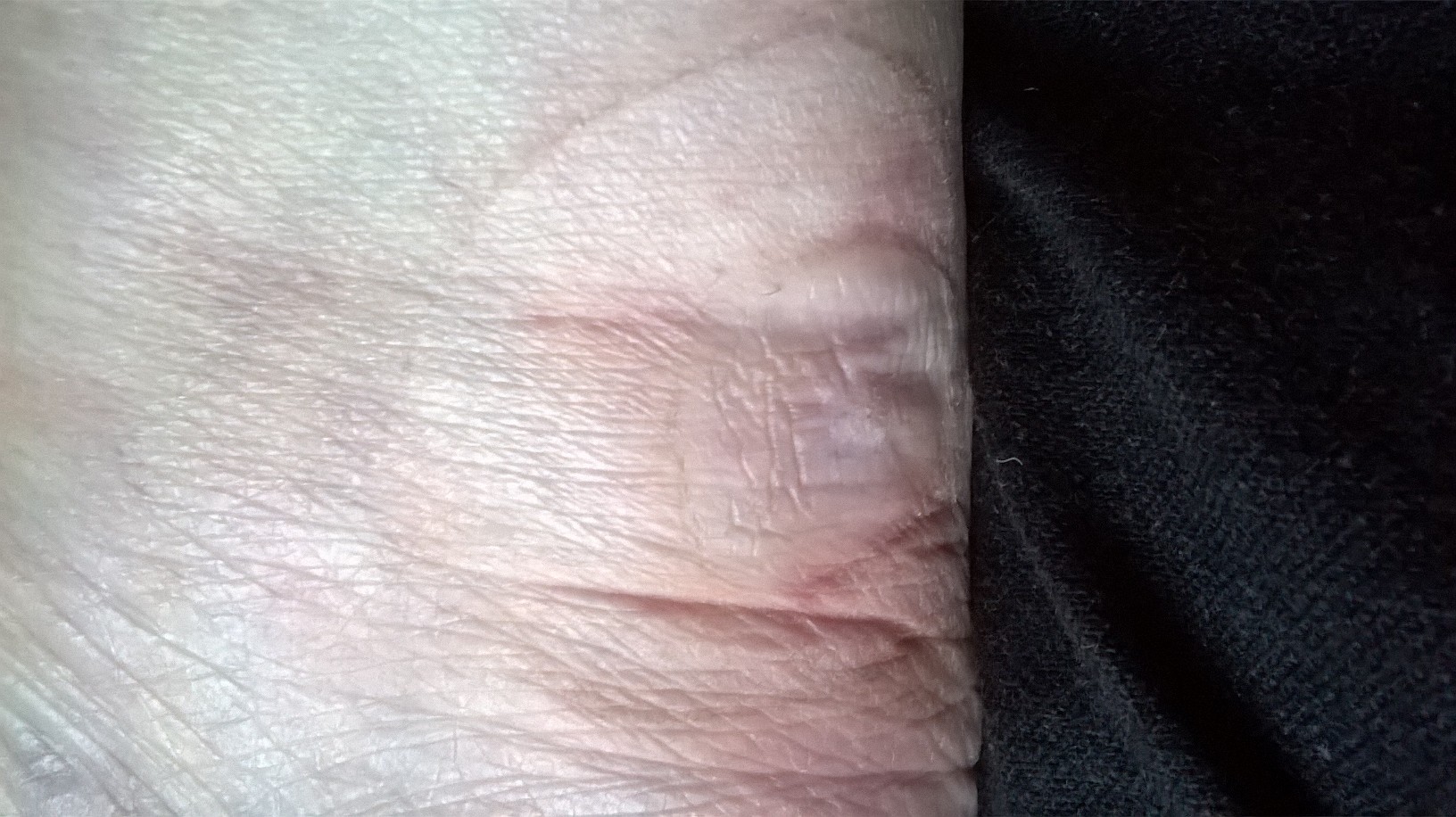
Now, this item interested me in particular as a wart had developed on the inside of my ankle. Just in an annoying position where it caught on some of my sandal straps, where it somehow found its way to annoy me – lots! I’d not had a wart anywhere since I was about six – not even a verruca! Not nice – are they? They certainly have the Halloween YUK! factor!
AND it wouldn’t go away – despite treatments!
I had read (including on our own doctors website) that they didn’t go in for the freezing treatment much nowadays, that the salicylic acid treatment was just as good.
So… I bought a salicylic-acid based treatment and proceeded to treat the wart as instructed. In the position it was in it was very difficult to prevent the liquid running onto the normal skin! This caused some peripheral ‘burning’ and was painful and sore, as it was where the sandal straps go, and therefore a nuisance – but worse, it didn’t seem to have any effect on the wart itself. After repeated treatments and a long time and no change … I bought the Extra Strength version.
This was duly applied, and the result, after many weeks, was the same.
So, after about five months of this, I did ask the doctor – who obliged and treated the damned thing with the freezing treatment. It was ‘painful’ for a short time, but, if the wart was going to go – well worth it.
Over the next few weeks bits seemed to break off from the wart – when, after soaking, it was abraded it sort of peeled off. At Last! I thought. However, it only got to be almost flat – though still a different texture to the skin surrounding it.
Then, inexorably – over the next month – it grew again – albeit with a rougher and flatter top. Arrgh!
It was then I saw the ‘Trust Me I am a Doctor’ programme – which actually ended with the words ‘try the experiment and report back to us’
duct-tape with micropore disguise (at end of 2nd 6 days)
We have duct tape – of course we do – but I didn’t run out to the workshop and get some – I kept meaning to – but it was actually few months later when I cut a piece, covered the wart, and then ‘disguised’ it with a couple of layers of micropore tape and left it on for 6 days. After which, the usual soaking and abrading – by which time it was half the size. Much better result then, so far, compared to the salicylic acid treatment. Leave it a day then re-apply the duct-tape (and disguise) and wait a further 6 days. It says to follow this routine at least four times – or for four weeks.
End 2nd 6 days – duct-tape just removed
I have just removed the duct-tape after the second week – the wart is almost flat (and it hasn’t been soaked and abraded yet) – as much as it was after the freezing treatment and weeks of abrading … and I shall complete the four weeks as prescribed. I think this ‘occlusion therapy’ (as it is called elsewhere on the web) may actually work! (wish I’d taken a ‘before’ picture – but then I never expected to be writing about it)
No doctors time, No burning of the normal skin – Barely any cost!
The TV programme is not taking any further submissions – they have thousands from people who tried it out and will reveal their results in the next series. I will be interested to see what they are, and I’ll report back here when the ‘course’ is finished.
We wouldn’t go to a freak show nowadays, would we? The Elephant man – the bearded lady – the Siamese twins?
What started this train of thought? Well an apple. This apple.
Which I popped on to Twitter – it was cute, I thought, but wanting to check my spelling of Siamese (Siamese twin apples) I came across the story of the eponymous Siamese Twins.
I had known nothing of these particular gentlemen. For some reason I had assumed that the first documented occurrence had been in Siam as is often the case with medical descriptions – and indeed these two did come from Siam – but they were far from the first documented.
‘Comments’ are to be found in history as far back as 300 AD (a statue of conjoined twins) or St Augustine of Hippo 415 (a full description of a man with two heads, two chests and four arms but only one torso and pair of legs). The first full medical examination was of conjoined brothers from Armenia examined in Constantinople in 942 AD
Chang and Eng Bunker courtesy wikipedia
The name ‘Siamese Twins’ came from the freak-show label attached to the two men, Change and Eng Bunker, when on tour with P T Barnum’s Circus. The Bunkers (a surname they later adopted) had been born in 1811 near Bangkok in the, then, the kingdom of Siam to a Malaysian Thai mother and a Chinese Thai father.
A Scottish merchant, Robert Hunter, saw them swimming one day and realised their ‘potential’, getting the parents to allow him to take them on a world tour. This was highly successful and, when their contracts ended, the brothers bought themselves a 110 acre farm in North Carolina. There they also met and married two sisters, and over time fathered a total of 21 children. By then the term Siamese Twins has become synonymous with conjoined twins.
Roll-Up Roll-Up come and see the Freak Show! No, we wouldn’t go now – would we?
Yet every other day Facebook seems to throw up a ‘freak show’ item. Sometimes in the guise of ‘helping’ the ones pictured by giving them ‘Likes’. I even saw one that suggested for every Like the page got money would be donated to the fund to heal the boy shown, with a terribly cleft palate – or so it said…. Then there’s the ones that say ‘share and you care’ ‘ignore and you are heartless’ showing people, or animals, in a distressing state – freak-shows with menaces.
TV serves up lots of freak shows too – I don’t need to name them. From people seeking love lives, to medical enhancements or medical problems, from crazy weddings to weight gain and weight loss, almost every ‘reality’ show – where everyone is a caricature – at the very least.
People are curious, of course we are – but we have obviously not moved on from the Victorian freak show – the only difference now is that it comes to us – and the ‘showmen’ know it – just as P T Barnum did. No, not everyone, if you just turn off – turn over, flick past, you probably wouldn’t have gone to the shows if you were born in Victorian times either.
But it made me think … and all this just from an apple.
Do you get led astray by thought threads …..
Is it a time-waster or a means to learning new things
What do you think? You know I love to hear from you 🙂
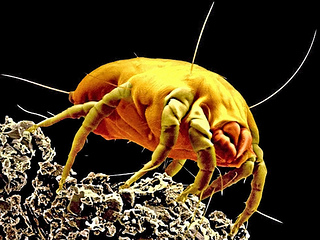
Now, I’ve known about dust-mites for a loooong time. I thought I understood what they like and don’t like – how to change pillows / bedding etc often enough to keep their numbers and, more importantly, their frass to a minimum (the eponymous dust – which is really just their faeces, dead fellows and our dead skin cells). I knew about their relationship to asthma and other allergies and knew I didn’t really want to encourage the pests but, somehow, I’d missed this ‘new’ info the first time round (2005) so I’m glad it re-surfaced recently.
Anyone who knows me knows I am not a tidy-freak… but a made bed – yes, that was something I liked – it seems to start the day on the right note – even if I can’t manage to be tidy all day 😉
Then last week I read about what the dust-mites don’t like (example here) and what can even kill them off sometimes – drying out! It seems it is much better to let the bed get well and truly aired – they do not like that at all, they need the moisture – from our bodies – held in by the covers – and without it they suffer.
It turns out that I wasn’t alone in liking a tidied bed to start the day – when this news was circulating again a week ago there were loads of comments roughly saying ‘I hear the message … but I’m still going to make my bed because I don’t like it looking untidy’
… BUT … the dust mites !!!!
So … not a neat-freak – but yes I like the bed to look tidy. The solution?
I now swish the covers back to lie neatly folded over the end of the bed, draped to almost touch the floor – pull the bottom sheet tight and give the pillows a shake. Sometime, much later in the day, when I happen to be in the room, I will waft the covers and duvet right back over again. Tidy – Tidy.
Okay, so if I were showing someone round the house (as I do occasionally at the moment as we are ‘on the market’) I’d make the bed conventionally – but for everyday it is fine – the day still feels like it is off to the right start… and, if the research is right, then far fewer dust mites thrive in-between our sheets.
Have you ever suddenly changed a habit of a lifetime?
It’s not something most people think about unless they are a writer or a publisher – and here’s the thing – STYLES CHANGE!
I read only yesterday that the guide to use when formatting a book should be the Chicago Manual of Style (which is a paid-for online service) self designated as ‘recommendations on editorial style and publishing practices for the digital age’.
‘Recommendations’ … a style guru for the digital age of publishing that seems to be trying to be the go-to and one and only way to set-up a book.
Today I went to my book shelves and picked up a couple of books, one published in 1998 and one in 2012. What did I find?
The style of speech-marks – 1998 — all doubles “…” – the 2012 — all singles ‘…’ . I did wonder if it was just the ‘House’ style – as the old book was Penguin and the new was Orion.
Not at all, I found a new Penguin on my shelf and that also had single speech-marks.
(click on any picture to enlarge)
Then there is the ‘one gap after a full-stop (period) or two?’ This has just about reached the final stage – two seems to have been dropped – though you will still find people citing that it should be used in manuscripts. (Often difficult to tell – as the full-justification of pages evens out all the spaces making it look like two sometimes)
So publishing style is mutable and does mutate over time – and I, for one, am wondering why the idea that all speech should be indented still hangs on. I think, as a reader, that I am perfectly capable of reading the speech-marks and that, alone, telling me that someone is speaking. I even find some novels with a lot of speech – all indented – annoying to read / look at. Especially the convention that has a line beginning indented but not with speech-marks … because a piece of speech is coming up. NOW that just looks like it is a new paragraph to begin with – and can actually be confusing when the speakers are in a full-flow conversation!
from Some Kind of Synchrony
To Indent or not to Indent – that is the question
so … I’m doing something different – I’m missing these speech-indents out on my formatting. What do you think – does this make my books weird or just ahead of the game?
A couple of weeks back I was talking about reviewing books and I mentioned that a good review can help someone choose what they want to read (as well giving the author a boost – especially newbies and Indies) and it made me think of how I choose my next read … and wonder how you do it.
Right now I am on a Lee Child ‘Reacher’ string … I had read one of these before a while back but I wasn’t too enamoured, then I happened to pick on one last week and enjoyed it so I headed straight back to the Lee Child section and took up the next one I could find.
That’s on the kindle – in hand, on real paper that is – I am reading Predictably Irrational – the hidden forces that shape our decisions by Dan Ariely. The choice of this book was merely stumbling across it when I was moving stuff – it belongs to my second son … but a brief glance through and I knew I wanted to read it. When, if ever, I shall use the information I do not know, but it is fascinating!
Most recently before these, I read two authors recommended by friends. One was Lisa Scottoline’s ‘Look Again’ – which I followed up by reading her ‘Lady Killer’ as I had enjoyed the first one. The other was ‘Azincourt’ by Bernard Cornwell, which, though I like historical novels, I found not to my taste. Perhaps not enough engagement with the characters, even though they had all the makings of people I could have been empathetic with I felt too much of an outsider, not involved, partly, I think, due to the historical research getting in the way of getting to feel close to them – though I love (and expect) my historical stuff to be accurate I do not want to be browbeaten by it.
Prior to those my reading was a pick and mix; what did I have loaded on my kindle? Ah! An Elizabeth George ‘Inspector Lynley ….’ which I must have loaded a while back after reading another (which had been recommended to me as ‘set in Cornwall’) A Terry Brooks ‘The Measure of Magic’ the second I have read – but wouldn’t choose another, Snuff – Terry Pratchett – always clever, social and historical commentary in the guise of fantasy and funny with it (I think I’ve read all the disc-world series – except the last). A Sarah Paretsky and, at the same time, three collections of poetry’ (in hand) that have come my way.
So …
How Do YOU choose your next read? By recommendation? By Author? By Genre (all crime or all romance for example) Lucky pick? Whatever is on the library ‘best reads’ shelf?
Which Authors would you recommend and why?
Do Share – I’m looking forward to hearing what you are reading and seeing what you’d recommend!
Clock with map showing the area of Poplar he grew up in
Are you always having to listen to tales of what happened in the ‘old days’ – what your parents did way back when? We are often too busy to stand and listen just when they have remembered something in particular, and as for the grandchildren listening …
I am in the process of creating a book from my fathers memories – for him. He is eighty-nine and has really LIVED a LIFE and would like his grandchildren and great grandchildren to know something of ‘where they came from’. He is writing it all in longhand and we are getting it typed up – then I am putting it into sentences, paragraphs and chapters – as the memories are written down as one long narrative.
Here is part of the first chapter …
I was born on 12th June, 1926, in Harrap Street, Poplar, in the East End of London, the first child of my parents and what follows in this first chapter is what I was told by my parents and memories that nobody could have told me – because I was alone in hospital from the age of eighteen months until the age of four years.
The state of the economy was low and, though my father had a job, the wage was poor, as there were a lot of unemployed. It was a struggle to make ends meet. Consequently they were already in a bad nutritional state, and then the employers wanted to cut wages by a shilling a week. The miners called a national strike and evidently all the small employers locked their workers out, so my father lost the little income he had. Mum and Dad went to the relief office to ask for a bread voucher, and the officer said “Why don’t you send your wife out to work?” and Dad said she was not in a condition to work. The officer said “Bring her in and let’s have a look at her – is she crippled or something?” (nobody mentioned the word ‘pregnant’ in those days) When he saw Mum, he said “That’s not my fault, and if you can’t feed your wife, you should keep yourself to yourself, and not come here begging”. Dad grabbed his shirt front and hauled him over the counter. Immediately the copper on duty took Dad to the magistrates who were sitting full-time. Dad explained what had happened, so the magistrate sent for the relief officer who came, full of self-importance, and was soon told his job was to issue tickets, not pass obnoxious comments on the applicant’s condition and to go back and do the job he was paid for. Then he told Dad to go back and get the ticket. Dad thanked him and said that if that was what it took to get a loaf of bread he would sooner starve.
The strike was soon over because of starvation and the employers took their shilling off the wages, and then I was born. My parents struggled on, and when I was slow to crawl they asked the older women in their street what they thought was wrong, and in my case it was obvious to them that the child was just lazy in one leg. The only health service at that time was a scheme called ‘The Panel’ which only applied to actively working people, not wives or children, but at the end of eighteen-months they realised that I could not and would not be able to walk. I crawled, but only dragging my left leg, or stood, by standing by a chair with my left leg hanging free. So my parents tightened their belts and took me to the GP, who watched me crawl along the floor, and, for one shilling and sixpence, told them that I had a congenitally dislocated hip – just a bald statement – and then left them to get on with it.
Now, to add to their troubles, they knew their first-born was a cripple, doomed to wearing a leg-iron for life, useless and dependant on relief. Remember there was no NHS at the time but I think Dad had always belonged to the HSA (Hospital Savings Association), which, for a subscription of about three pence a week would finance any serious hospital treatment, the full cost of which you paid back in weekly instalments. (My father was still paying this back when I reached eighteen)
I was taken to Guy’s Hospital where they started the attempt to rectify the problem. The ball joint now was above the pelvis and had grown in, so over many weeks it was loosened and, by a system of pulleys and weights, the leg was stretched until the ball was in line with its socket.
My parents said that they couldn’t visit much, as they couldn’t afford the fares, so would walk when the weather permitted. I was only aware of strange faces swarming in and out of my vision. When the doctors were satisfied with the alignment I was put in a plaster cast from lower ribs to ankles for four months (my parents did visit at this time at least once, for years later I was told I was almost unapproachable because of the stink). At the end of the four month period the plaster was removed and I was fitted with a corset to keep the hip in place until it became stronger, and I was removed to Shadwell Hospital, where the muscles in my leg were to be exercised and strengthened. Bearing in mind that I had never walked, it must have been very difficult for the nurses.
The life was very confusing for me at the time – apparently during this time I caught all the childhood complaints, and I understand at this time my mother became ill, and visits were even less often.
Eventually I reached the age of four, still not walking unaided, and was fitted with a leg iron for support. I went home, except I didn’t know it was home, and my mother was ‘Nurse’, and when Dad came home, pulling faces, trying to make me laugh, I would say ‘That funny man is here again, Nurse’.
How many other people should be getting their memories written down? What rich heritage are families losing if they do not? What rich heritage of everyday life is the country losing – for instance if the memories of being a midwife in the East End in the 1950s hadn’t been written down then we’d never have had ‘Call The Midwife’ for instance. We have plenty of the rich and famous lives of each era – but, perhaps, not enough of the everyday people.
Here’s a thought, if your parents have retired*, get them to use some of their time in writing it down. (yes – I know this means they may be still quite young – but it takes a long time to write up fifty / sixty / seventy years – Dad began writing his story when he was about 68!) You don’t have to ‘publish’ the book to get it in print – Create Space is a wonderful set-up that you can use almost for free and only get as many books as you want printed for the family by Print On Demand POD (rather than the old way of having to have a lot done all at once)
*or this may be YOU?
What did you think about this excerpt from my father’s memoirs?
Are you, or your parents, on this task right now?
Do share – you know I love to hear from you.
ps – the grandchildren – now in their twenties and thirties – are, at last, standing still long enough to listen – and I am sure they will love the completed books
 Are you a very organised person? Do you buy throughout the year as ideas come to you?