Happy Mothering Sunday – not ‘mother’s day’

Every year it gets more difficult to find a card for my mother which says

‘Happy Mothering Sunday’.

This year I scoured the card shops in our local town and found none – they all said Mother’s Day. (Though my brother (or his wife) – living in a larger town – did manage to find a ‘Mothering Sunday’ card so there are some still made)

Well, what’s the fuss? It just happens that my Mum likes the correct wording to reflect the history behind the day.

Indenture of 'poor child of the parish' John Roberts age 8 years, to learn 'Husbandry' 1797 (click to view)


From the sixteenth century Mothering Sunday used to be the only day that all the family could be together for families with children ‘in service’ as it was the only guaranteed day off.  This would affect  most families from yeoman class down.   Children as young as eight went into service, or went as an apprentice  in another household. Some went as maids of various levels, gardener’s boys, stable lads, and could work their way up through the hierarchy to cook, housekeeper, footmen, head gardener, etc.  Children of the ‘deserving poor’ were also placed in apprenticeships by the Parish Overseer’s of the Poor to learn things like Husbandry (looking after farm animals) or Housewifery (looking after the domestic duties of a farm-house – including things like cheese-making and milking)

Originally a church festival, and falling on the fourth Sunday of Lent, it was the day you returned to your ‘mother church’. Which, in much less mobile times, meant you went back to where your family lived. Along the way children would pick posies of wild flowers to give to their mothers, and some would be sent with a Simnel cake, to take home (if they were lucky)

I have spoken to elderly ladies from this village who remember picking primroses from the hedgerows to bunch and sell in the markets for Mothering Sunday – the money from this would buy them a dress for Easter (or, rather,  the fabric to make them a light-weight dress for Summer) This is a parish abundant in primroses even now.

Back to the history- so what happened to turn this ancient special day into Mother’s Day – was it just a short-hand way of saying it?

Afraid not- and this is why my Mum likes it to be known as Mothering Sunday. Mother’s Day is a different thing – created by an American lady in 1907 called Anna Jarvis in memory of her mother, Ann, a truly wonderful woman who set up Mothers’ Day Working Clubs in five cities to improve sanitary and health conditions. This new Mother’s Day is set on the second Sunday in May (closest to Ann Jarvis’ birthday) and was , later, to become known as International Mother’s Day.

In the UK observance of Mothering Sunday had lapsed by the time of the first world war, but, inspired by the success of Anna Jarvis in  the US, a revival of Mothering Sunday was brought about by Constance Penswick-Smith’s campaign called ‘The Mothering Sunday Movement’.  Businesses soon saw the potential and jumped in by promoting the day with cards and suggestions of gifts.

Confusion

Our Church's Mothering Sunday posy

After the second world war, what with many Americans over here, and international companies and communications, before long the two traditions got blended together – and now we have Mother’s Day promoted on Mothering Sunday in the UK. I heard on the radio yesterday that Mother’s Day / Mothering Sunday is worth £1.6 billion to UK retailers, so no wonder.

Our village church holds a Mothering Sunday service – at which posies are given to all mothers, or to their children of all ages to give to their mothers – though not primroses from the hedgerows, today they are more likely to be locally grown daffodils.

And how did I sort out my problem of not being able to find an appropriately named card … I chose a beautiful card by a local botanical artist, Jo Totterdell, and applied my own words with a silver pen! (see top pic)  Mum was happy ….

How do you feel about the commercialisation of such days?

Are you a ‘Mothering Sunday’ or a ‘Mother’s Day’ person?

How do you like to celebrate Mothering Sunday?

You know I love to hear from you – do share

Playground games anyone?

So there we were, standing in the market, miming throwing tennis balls against a wall and trying to remember the rhyme that went with it. Anyone watching us would have thought we had gone completely bonkers! (as opposed to just slightly bonkers – as they already know we are)

Hopscotch grid from Wiki Commons - by Paul Farmer

All this began with a song I’d heard on the car radio on the way in, it wasn’t one of those ‘game rhymes’ but it had triggered off one of in my mind – or rather a snatch of it and I asked Anthea if she knew what the rest of it was.

It wasn’t long before we were reminiscing about other playground games from our (long ago) youth. Unlike hopscotch, which is ‘institutionalised’  in primary schools by having neat grids painted on the playgrounds, ( where we’d had to find a stone that could scratched a line, or a nub of chalk) I suspect that many playground games that we played may have died out.

How about this one? Do you remember ‘ The big ship sails through the alley alley oo,  the alley alley oo, the alley alley oo, on the first day of September ‘ ? Played by a chain of children, one with her hand pressed up against a wall, the child at other end of the chain leads under the arm against the wall, then under the next pair, and so on until the whole group is knotted up, then to the continuing refrain, they un-sew themselves. (or all fall over – depending on where you came from)   Having looked it up since, I find it is thought to be one of the last survivors of the ancient ‘thread-the-needle’ dance games. I wonder if it still surviving?

Clapping games were also popular in our small rural primary school. The clapping game ‘Have you ever, ever, ever, in your long legged life seen a long legged sailor with a long legged wife?’ was the rhyme I was trying to remember, as we also played it as a ball game, juggling a pair of tennis balls, bouncing them off the wall and doing a ‘drop, spin, catch’ on every ‘long legged life’ part.

And I can’t go without mentioning skipping games – particularly the ‘long rope’ games requiring two ‘turners’, one at either end – and usually a queue of children ready to jump in at their turn. ‘Keep the kettle boiling, never let it stop’  – w here you must jump into the rope at ‘keep’ and out of the rope at ‘stop’ edging your way forward on the skips so that the next person has room to jump in. Anyone missing the beat takes the rope end.  Or  ‘Salt, Vinegar, Mustard, PEPPER’ – where the first 3 words have leisurely two jump skips and at ‘pepper’ the rope is spun really fast. When you trip up you take the rope end and the turner joins the skipping.

You know, we really did ‘make our own fun’ back then.  A long length of heavy rope, a few tennis balls or even just a wall and we could fill every playtime with fun.

What games do you remember?

How many do you know of that are still being played by the primary age children of today?

Do share – you know I love to hear from you all!

Baby, you can drive my car …

 … except, no one drove my first car but me – I was very possessive about my first car!

This week we have been looking for a new car. Not NEW as in NEW NEW – just new to us.

Anyway, we swanned off to Totnes to look at and test drive this car. The salesman lifted the bonnet and there was this shiny looking engine squeezed into the space.  There was no space around the engine whatsoever and, as I understand it, no home-maintenance can be done to this car without upsetting the  all computer controlled, and diagnosed, electronics.

It made me yearn for the simplicity of my very first car – a Morris 1000 Traveller.

This isn’t the photo I was actually looking for, that one has JUST me and my car, without the current boyfriend getting in on the picture – and shows the iconic wood-framed back to the Morris 1,000 Traveller. The wood frame that had to be rubbed down, scraped out and filled if there was any rot, and re-varnished every summer!

The ‘Traveller’ was an estate car – and was great for cramming loads of stuff into the back, often extra friends.  This at a time when seat belts in the front had only just become mandatory (that is to have them at all – let alone mandatory to wear them).  When the seats were all full, to have a couple of extra lads rattling around in the back was commonplace, after all, not many of us had cars at all and we lived in a village!

 Beep beep’m beep beep yeah

Not only did it have woodwork that you had to care for, but it also had a ‘choke’ you had to pull out before you tried to start the engine. If the battery wasn’t too good it had a handle you could insert into the front and crank the engine with. You sometimes had to double de-clutch to get it to change gear. It rattled alarmingly when it went over 60 (which wasn’t often as you could only do that if you went up the motorway – and I didn’t need to go that way very much) And there was so much room around the engine it felt like you could reach every part with no problem.

I have fond memories of that car! It is there in the background of  my social life from seventeen to twenty two – it is just as well it couldn’t talk 😉

 Beep beep’m beep beep yeah

It scared the life out of me once, when the brakes failed as I came up to a huge busy roundabout near Staines, a nifty bit of double-de-clutching slowed me enough to tuck behind a lorry (rather than going into the side of it) and I completed my journey using the gears and the handbrake until got home safely. It took me to my teacher training college everyday for the first year (while I still lived at home) and saw me right through the following three years of my training and degree.  And I still prefer to drive estate versions. Ahh! Memories!

Despite this fondness for my first car I have not been particularly attached to any of my other cars, or interested in makes and models, and I notice that even when cars appear in my novels they are barely described. Even in Some Kind of Synchrony, when the story within the story is told whilst driving back and forth to work, the type of car is never discussed. Interestingly, other novelists, perhaps ones more fixated on cars, often go into fine detail over the vehicles their protagonists drive. I can see the value in that and it is something that I shall think about when I start my next novel.

Do you have fond memories of your first car?  What make and model was it?

What do you remember most about cars you have owned?  What does the car a character drives, say about them to you?

Join in the conversation – you know I love to hear from you.

School Puddings – Loved them or Loathed them ?

We were out the other evening, and for some reason we started talking about puddings we ate at school or when we were young. Now most people at the event were in their fifties, so we all had similar experiences of ‘school puddings’ and certain culprits kept being recalled.

Tapioca was mentioned. I shuddered!  Indeed this ‘frog-spawn’ of a milky dessert was my very least favourite. OK OK! I didn’t like it AT ALL!  I once sat in front of a bowl of it ALL LUNCH BREAK, age 7,  because I wouldn’t eat it! It meant I missed the whole lunch playtime – that was a big punishment!

And that was before I ever knew WHAT tapioca was or where it came from.  I mean, how on earth did we get to eat this stuff. I know it is a staple in some parts of the world now, but which native Brazilian first thought  ‘Oh, I’ll try eating the mashed up roots of this cassava plant’ – and died! (containing cyanide producing enzymes, it is highly poisonous!)  Then the next person thought – ‘OH, perhaps I can wash the ‘badness’ out of it’ .. but still dies.. then the next thought – perhaps if it is washed AND cooked it’ll be ok…. and it was, (and, by the way, this process is really complicated ). How on earth? But here we are – what is a staple (like potato or rice is elsewhere) – is, in this country, a dessert we call tapioca, a name derived from the original name of tipi’óka in the Tupi language of South America. (more on Cassava and tapioca here and here)

Other desserts that bubble up in my memory from the depth of childhood are: Semolina, with a blob of so-called jam in the middle, banana custard – fluorescent yellow with the odd slice of browning banana here and there, red jelly so firm that your spoon bounced rather than cut it, rice-pudding swimming in a watery white liquid freckled with yellow globules (of butter, we hoped) or so thick it stood up on its own with a burnt flavour skin broken up into little bits throughout it. It’s not that I really dislike any of this group of puddings, unlike tapioca, it’s just the school versions.

I do remember one pudding that was good at our village primary school, apple pie with a very sweet, though rather thick, crust. We only had this when the apples were in season and it is quite likely that it was made with apples from the tree in the headteacher’s garden (attached to the school) as sometimes a child or two was sent to pick up all the windfalls there.

I have great difficulty thinking of any other school puddings that I actually liked or looked forward to – and this may be an age thing. Having a scout round the internet I find that message boards populated by ‘young things’ going to school in the 1980’s, reporting many favourite puddings – with the likes of cornflake chocolate crunch, butterscotch slice, chocolate pudding with chocolate sauce, or even, arctic roll. I don’t ever remember anything like this – nor do the message boards of those of us in school in the fifties and sixties.

Mind you, the eighties would be when the school catering had been put out to tender by Maggie Thatcher’s government and so had to attract the customer, incidentally the same time that the ‘meals’ were turkey drummers, pizza and chips and rated as far poorer, nutritionally, than in the 1950s. (Just the stuff Jamie Oliver campaigned against 2004 onwards)

So, what era do you fit in to and what are your memories of school puddings? 

Which one did you loathe ? Which did you love?

Lets compare notes – go on – share your thoughts – you know I love to hear from you!

Confession of a serial Resolution breaker (proper edition)

(apologies for the edtion posted earlier  – I pressed the wrong button while still editing – hence the errors and unfinished condition – hope you enjoy this one more 🙂 )

I never used to be a fan of New Year’s Resolutions, they never lasted very long – I guess I was a serial resolution breaker – so much so that I used to keep them secret. A bit like when you pull the chicken wishbone and you mustn’t say what it was you wished for – or else it wouldn’t come true.

Now, isn’t that a funny thing – and I’d never thought about it before today. Why on earth would we break a small bone from a chicken in this way and make a wish. Now, if the information I’ve just found on the internet can be believed (LOL) it seems that this practice of snapping the wishbone to make the wish is extremely old in western culture – going back at least to the Romans and before them to the Etruscans (more good Etruscan info here).  Whereby, the Etruscans (800 – 400 BC) were great readers of entrails – particularly the liver it seems – and also would save the furcula (wishbone) of a sacred chicken for people to stroke when in need of guidance from the gods. The Romans, it is suggested, picked up this idea but then, through fighting over the bone, developed the breaking of the wishbone to bestow the favour upon the winner.

Reading up about this I now know we’ve been doing it all wrong! It seems that the wishbone should be cleaned and set out in the sun to dry for a few days before being broken in the wishbone contest – no wonder my wishes didn’t come true!

I remember my father telling me that back in the East End of London, when he was young (we are talking 1920-30s here) IF a family had a chicken as a meal the wish bone would be cleaned up, wrapped in foil and stood on the mantelpiece. Neither of us is sure if this was for luck…  or just to show off that they could afford to eat a chicken!

OH! Where was I? Ah! New Year’s Resolutions, last year was the first time I told everyone about a new year resolution, that being to lose weight. Now, whether it helped me keep the resolution or not I am not sure – I do know I had some good cheerleaders along the way!

Whichever, encouraged by this I made more than one resolution for this year and in doing so thought long and hard about how I would frame them as it is easy to set up a resolution that is doomed to failure merely by how it is framed.

My resolution last year was only to lose weight  Almost by accident I had hit upon the best sort of resolution – one framed in such a way that it is easier to achieve (I did not say how much or by when – so even if I’d only lost a few pounds by the end of the year I would have made it!)  As it happened I lost two  and a half stone, enough to feel good, comfortable, and be slimmer than I have since before I had my first child – and all before Christmas. (more here)

So, when I said to myself ‘I shall resolve to make sure I actually get to bed before midnight’. [This resolution because I am an ‘owl’ and find I write better late at night  – but my Husband is a ‘lark’ and so we get up at 7.30 therefore, if I am to get a reasonable night’s sleep, important for helping keep weight in check, I must get to bed before midnight.]

I realised I needed to make the resolution both firm and flexible – so I did not have to rush Cinderella-like away from a party crying ‘I must not break my NYR!’  So my reasonable resolution runs ‘I will get to bed before midnight at least 5 out of 7 nights a week’

Completely doable! So far so good. So far every week I have met my target (just!) And that’s it – I have been getting enough sleep and the only exceptions have been because we were out at an event that ran on late – or it was late by the time we got home – but that certainly doesn’t happen more than 2 nights a week so my resolution stands!

So, if you have already broken your NYR it could be that you needed to frame it in a firm but flexible way. It’s not too late to re-frame that broken resolution now – as a reformed resolution breaker I can tell you, kept resolutions feel good at the end of the year!

Did you make any resolutions this year?  Have you made and broken any already?

Are you a serial resolution breaker – or a keeper? What is your secret for keeping resolutions?

Do share – I love to hear from you!

Happy New Year and a Gift for YOU

Happy New Year ! – my opening salvo for 2013 is a glance back over the past year in pictures ( all the newspapers and TV programmes do this – so why not here – and I bet these are different – no Jubilee or Olympics here ( except Doglympics :))

So here are a few of Your Favourites and a few of Mine

Side view Jan 1 2012

I didn’t feel brave enough to even post the ‘before’ picture until well into 2012 – but it’s an apt start to my reminiscences of 2012 as this is the biggest thing in the year for me – to find a round-up of how I got there, losing 34lbs on the way click here:

Side view Dec 1 2012

In April Bonny, my Dog, made a you-tube Doglympics Video for me which 344 people have liked and I share again now as it’s fun!  🙂 [if you can’t see this video on the emailed version click on the title and it will take you to the blog proper where it is available]

I liked my slug study from 2012 ( though if you don’t like slugs you may not) – the ‘great year for slugs’ was headlined on the national news just before Christmas – but I got there first 😉 Intrigued? Read more here 

And 2012 was also the year of the lichen – loving all the wet. more here:

Then there was my favourite kitchen gadget of 2012 – still used nearly everyday – and how many gadgets can you say that about? more here:  where you can see a video of it working!

Finally, a surprisingly popular blog which finished by asking what this little bottle was – have a look here to find out if you, too, are curious!



So, there we are – a few of my favourites and a few of yours from 2012.  Have I missed your personal favourite – do tell me in the comments – I’d love to hear from you!

So it is time to Wish YOU All the Very best for 2013 – may it be peaceful, prosperous and happy for everyone!

And a reminder – that you still have until January 6th to claim your Christmas gift from me – thank you for following and commenting on my posts – Details Below!

 YOUR GIFT –  FROM ME

I hope you all had a great Christmas – and now things have calmed down a bit here I have decided to give all my readers a present – your choice of one of my e-novels – from me – to you – free 🙂  

It doesn’t matter what kind of e-reader you have or whether you have one at all – you can still request one of my novels and it will be sent to your email address. If you have an e-reader ask for the right type of file for you (mobi for kindles – epub for most other e-readers – or pdf)  if you haven’t an e-reader just ask for a pdf version and you can read it on your computer!

Just go to my other website  annmade.co.uk (BEFORE the 6th Jan 2013) and click into CONTACT ANN – there carefully enter your email address  and request the BOOK TITLE  and the FILE VERSION (MOBI / EPUB /PDF) you would like  – one e-novel free per person as a gift !  [before the twelfth day]

Your choices 🙂

The first time it happened it felt like stumbling across another avenue to an ancient monument, but this one pulled at more than just his head, there was a tightness in his chest, the lights twinkled and flashed inside his mind, the intensity giving Perran a firework of a headache. Following the line – years later in the early nineties – leads him into Liz Hawkey’s ordered life, and together they discover the source of the line.

A story of family, love and loss, Divining the Line brings the ordinary and the extraordinary together into everyday life.

Click here to read the first three Chapters


Living in London suddenly becomes too uncomfortable for the attractive Jo Smart and her sixteen year-old son, Alex, after he is beaten up, so when they are offered the chance to take an immediate holiday in a peaceful Cornish town they jump at it. But not all is as peaceful as it seems as they become involved in a murder enquiry, drug raid and abduction.

DI Rick Whittington has also escaped from London and the reminders of the death of his wife and child, and through his investigations finds himself meeting Jo and being drawn into the events surrounding her.

This is a love story set in the early 1990s which combines the historic Cornish love of the sea and smuggling with hard faced twentieth century crime and detection. The perfect blend for a woman’s crime novel.

Click here to read the first three Chapters


Faith Warren, married mother of two, is a secretary in a newspaper office. It wasn’t what she’d hoped for, but her dreams of university and becoming an author were lost long ago. Telling stories to entertain her lifelong friend on their journey to work and back is all that is left, until she tells The Story.

The real trouble began with the minor characters, just unfortunate co-incidences, but when do you stop calling them co-incidences and begin to wonder what the hell is going on – and how it can be stopped

Click here to read the first three Chapters

Don’t forget to ask for your Christmas pressie of an Ann Foweraker Novel before the twelfth day – January 6th! 

And I’d love to see your review of your choice of my novels too! Please send them to me here on my blog, for inclusion on my website, or post them on my pages on Amazon 😉 (just search for Ann Foweraker in Amazon Books) or do both! 🙂 Thanks, and Happy Christmas!


Give a cheer for Ginger Beer!

Returning to the theme of old (antique) bottles this week, and today it is ginger beer bottles! What is it about Ginger Beer that sounds exciting?

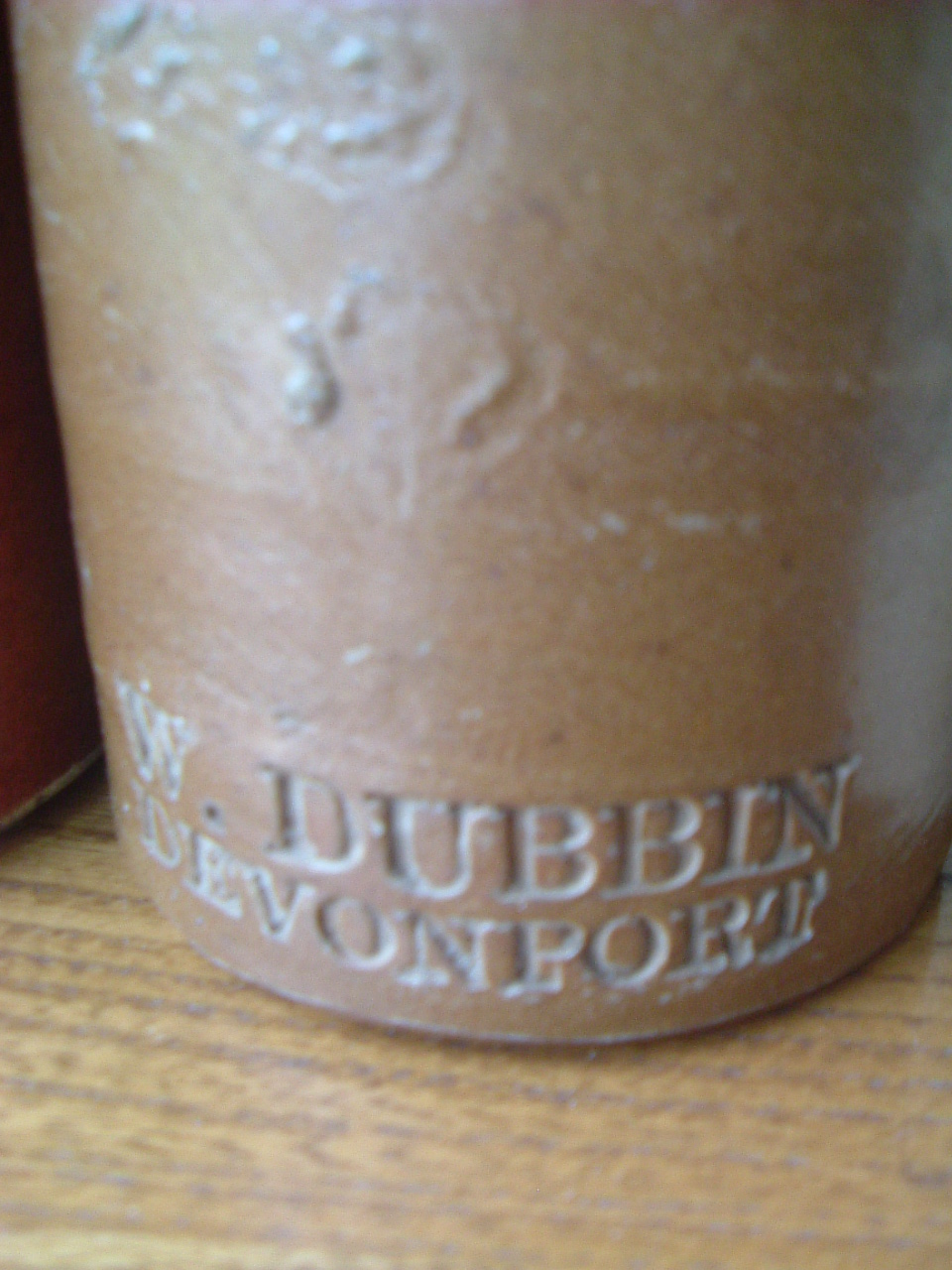
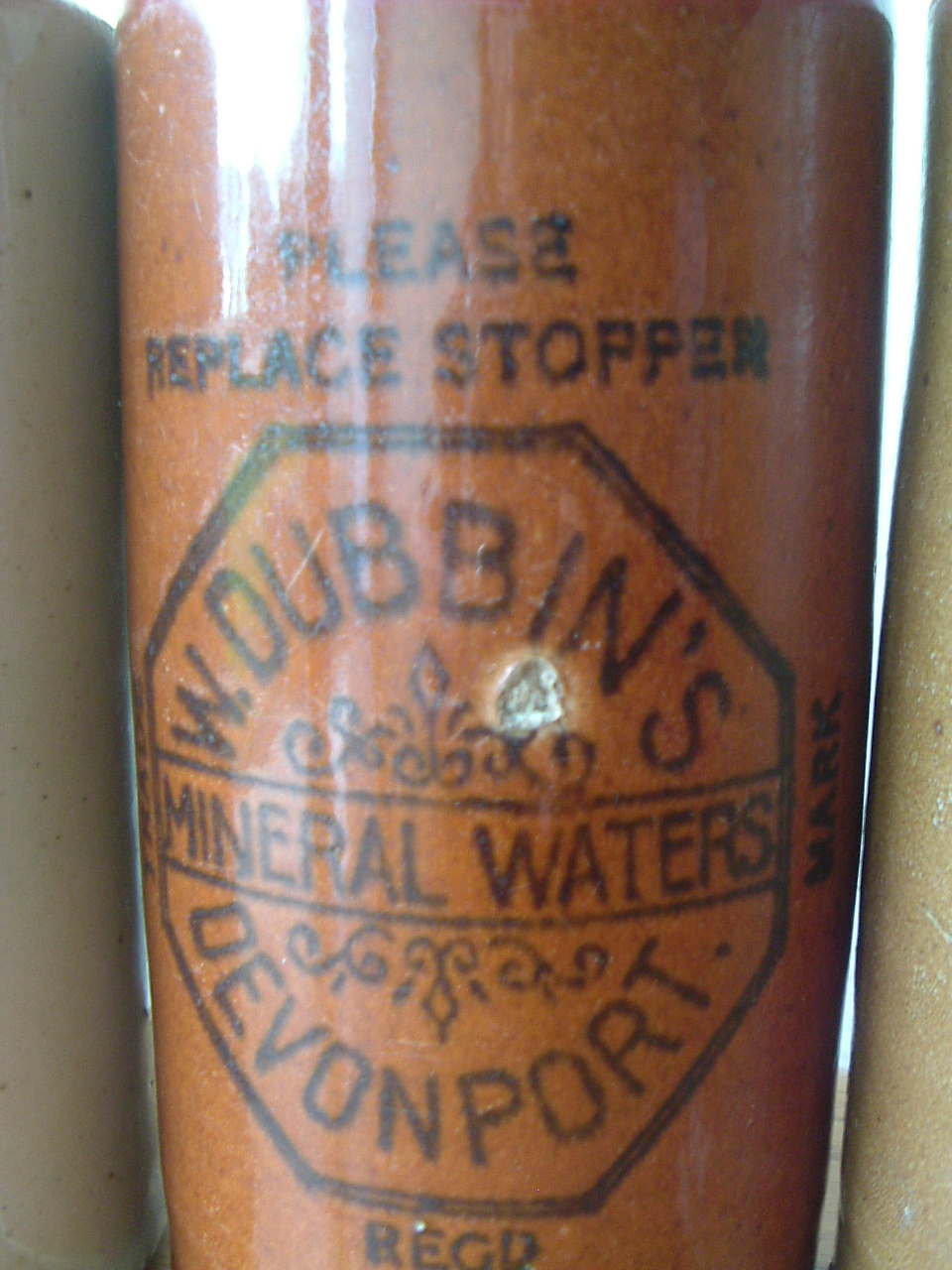
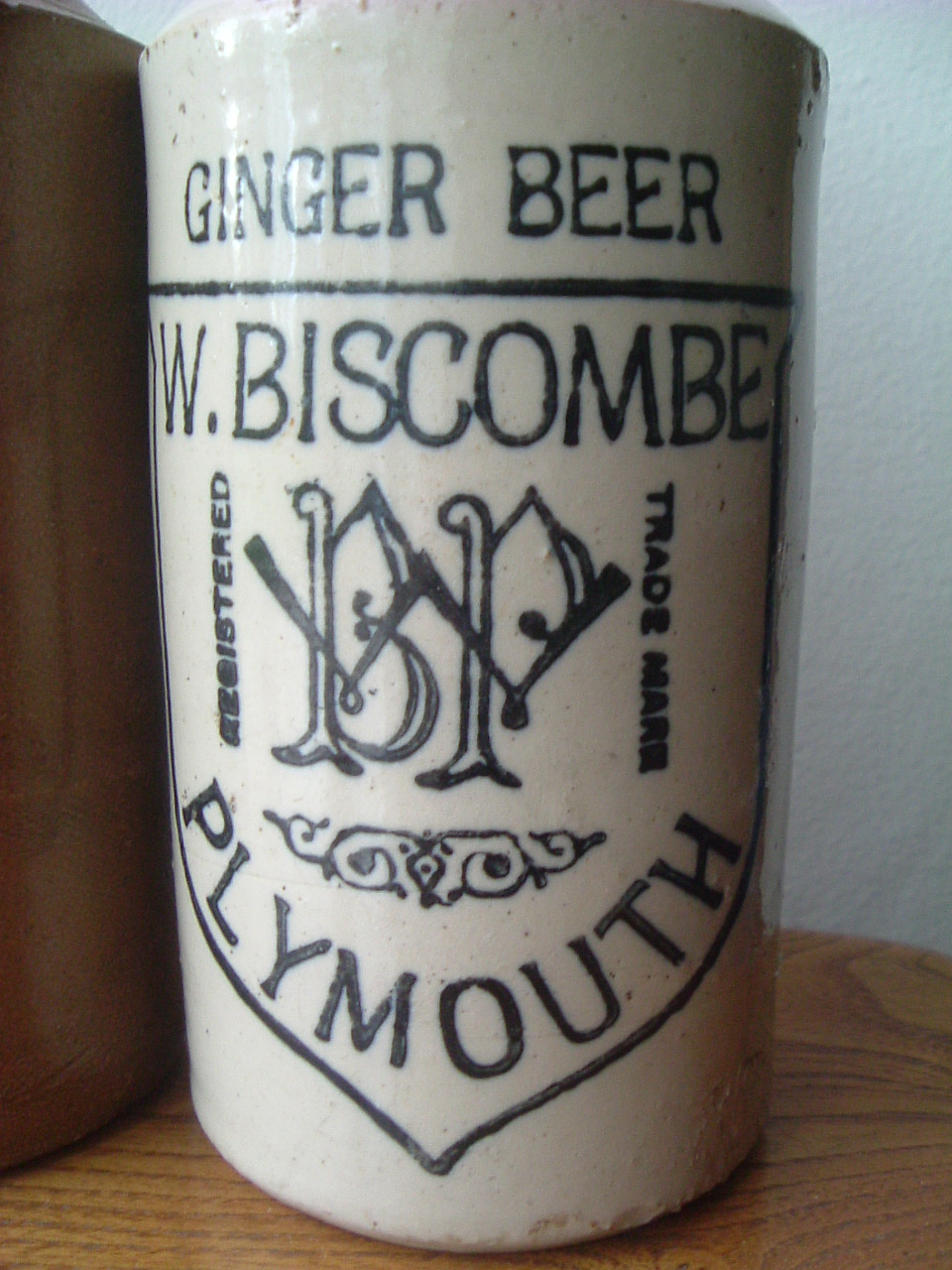
I’m looking at four stoneware bottles from the late Victorian period of slightly different dates.

All were found in a corner of the garden at our place. From the evidence of a few barrel hoops, much rusted, we guess they were put into a barrel for returning to the seller at some time, but it never happened and the barrel (sited behind what had been a small barn – and is now only a garden wall) got covered up and rotted away, so that when we were clearing the garden we found quite a number of these old bottles in the same area. Many were chipped or broken but an example of each we keep on show as part of the house history.

The earliest one appears to be this Dubbin’s as the name of the producer of this drink has had his name impressed into the damp clay.  We can see that  W. DUBBIN was a business in DEVONPORT (1882- 1916 which is now firmly part of Plymouth but at the time was still slightly apart. The bottle, as are the others, is made of stoneware and has a simple low-shine glaze all over, cream on the inside, brown on the out. (some stoneware bottles at this time glazed only the lip to shoulder outside) The base is unglazed.

One of the other bottles is also from DUBBIN’s – but by now they have really moved upmarket and their bottle is nicely trade-marked and tells you more about the contents.

The next bottle is from BRACHER’S of Plymouth (1897 or earlier  – 1914) with a very clear name and design glazed on the bottle.Cream glaze for the body of the bottle with a darker honey colour from shoulder to lip.

Our final stoneware bottle is from BISCOMBE’S of Plymouth (1850s – 1950s). By far the fanciest design on a very nice bottle, with ivory glaze inside and out.

I find it interesting that this simple drink had quite elaborate bottles to be sold in. They were, as I suggested, returnable for a small refund on them, and I for one am glad they never got round to returning these.

Thinking about this I realise I remember returning glass ‘fizzy pop’ bottles for the penny you got back on them at the shop (and promptly spent on halfpenny sweets) Something I hadn’t thought about for donkey’s years.

It is strange how memories can be triggered. Do you remember activities like this that were normal in your youth but just not done, not required or wanted today? And just why does ‘Ginger beer’ sound exciting??? Do share – I love to hear from you!

[For my FWT cheerleaders – same same this week {I knew a whole pound down in one week was too much at this stage!} so I’m all square and only one and a half pounds from my target!!


Divining an Inspiration

A captured-spring well

Google ‘divining’ and you’ll land in a vehement discussion as to whether it is real and true or just luck and trickery. There seems to be a big divide between those who believe and those who don’t.  I shall nail my colours to the mast. I believe.

Many years ago, after the spring that feeds our water supply reduced to just a trickle, we invested in having a borehole drilled.

Now I am under no illusion that Cornwall, and particularly this part, is a dry area. I know that there are many springs around – it is something that I have done a small historical study on, the domestic captured-spring wells of the parish. Like this one – where the spring has been boxed in by slate slabs (making a dipping pool of about 10 inches deep) with a little stone ‘house’ built over it and even (once) doors to keep out blowing debris and animals.

However, we contacted a guy who later became well known, with a short series on BBC TV, Donovan Wilkins, known as Don the Diviner. His business (based at Chacewater – true!) was borehole drilling and his promise was that when the drilling was made it should produce the amount of water he had predicted or you didn’t pay. Not just water – but the right amount of water.

A hazel Divining or dowsing rod

They came. They being Don and his wife Margaret and he looked around the small paddocks and strode around divining rod in hand, marking a few likely spots. His wife watched. After a while she suggested he try ‘over there on the other side of that gate’. Pointing at the gate to the strip that then led to the big field. So over there they went and within minutes he started sticking rods in all around. Soon he’d marked many lines of underground water and the place where they crossed. He told us how deep they would drill and the quantity of water in gallons per second. (I learned much later, from another renowned dowser, that Margaret was considered as good a diviner, if not better than, Don)

He then offered to show us all how to divine for water. Most of our family had ‘it’ to some extent or other, and #1 son, then aged about 7, was particularly good. Even after relinquishing the rod he seemed to still be able to sense the lines of water underground and described it to me like lights inside his head moving round until they met.

The borehole was drilled and the water found in just the abundance that was promised and an experience was locked into my head. Over time I read up about divining and found that water wasn’t the only thing that diviners could sense.

It was this, of course, that I drew upon when creating my novel Divining the Line, the handsome Cornish water diviner is following a line that isn’t water. It leads him to a nondescript estate in the southeast, a meeting with a woman and a near fatal beating. The woman is at a turning point in her life and ready to follow her own line of discovery that leads them both back down to Cornwall. What comes from this is a story of family, love and loss.  Divining the Line brings the ordinary and the extraordinary together into everyday life. Read reviews here

Of course in such a novel there has to be Divining – and here are two excerpts from DIVINING THE LINE  involving divining for water… firstly from page one….

Perran Lovering stood in the centre of a circle of white steel spears, marking the lines, and thrust a red spike into the earth between his feet. ‘Right,’ he said ‘that’s it.’

            He smiled and looked round the garden, it was about the best place they could have found, close enough to the road to make access easy and far enough away from the old Cornish farmhouse to be discreet.

‘Would you like to try? I’ll show you how,’ he offered, and held out the vee-shaped hazel stick to the owners.  

The wife blushed but held out her hand. As she took hold of the stick she tried to remember how he’d held it, but couldn’t as she had been keener on watching this handsome young man go about his work, than the work itself.

‘Like this,’ he said warmly. He laid out her hand flat, soft white palm upwards, and placed one arm of the dark rod upon it, its end passing just under her thumb, the lead up to the vee crossing her small finger. ‘Okay, now the same with the other hand. Right. Now grip it.’

She did, finding her wrists twisted inwards at an unnatural angle. 

He looked at her, made sure he had her attention. ‘Now pull the rods so that your wrists come straight.’

She followed his instructions feeling warm with embarrassment.

‘Got it?’

She nodded. 

……………………….

And then from chapter 8

Back in his room he began to work in earnest. He marked the boundary of the first property as far as was known, he shaded in the ‘impossible’ sites, where farm buildings were, ponds, woodland, and other impediments to the machinery  reaching the sites. He took up the pendulum, letting it swing and twist in his fingers. He thought, water once more filled his mind, the pendulum was brought to swing over the site, eyes open he followed its guiding lines, watched as the swing slowed to a stand-still and became a gentle twisting motion. He fixed his eyes upon the point, let the crystal rest, marked the place with the pencil. He breathed as if he’d held his breath. The site chosen by the pendulum was clear of any of the known obstructions. The lines on the map suggested the ground was reasonably level, that is, level for Cornwall. He picked up the pendulum once more, allowed it to find the spot again, then turned his mind inwards seeking knowledge of the depth that the water ran at, and the quantity that coursed through the place selected. Using imperial measurements he sunk his mind by feet, ‘felt’ a major flow at eighty foot, but went on down, finding the best at a hundred and twenty. He next thought of quality and tasted sweet water in his mouth and was satisfied with that. Finally he needed to fix the quantity, the pendulum answered the numbers as he thought them, settling on eight hundred gallons an hour or thereabouts. All this he noted down and when finished shook himself as if suddenly feeling a chill, his innermost mind shivered from exposure.

Divining the Line and my other Novels (Nothing Ever Happens Here and Some Kind of Synchrony) are all available from annmade books and from Amazon

Or you could Win  a copy ….  as of today there are just over 400 places left in the draw I am holding for one lucky person to Win a Kindle – with runner up prizes of a Nero Slate cheeseboard and ecopies of each of my novels – including Divining the Line. To enter you only need to email sign up to this blog (see box above left) Click HERE to get all the details of when and how the draw will be made, how to get extra entries and why you’ll want to tell all your friends about it!

 By the way, for this week FWT? cheerleaders – results for week 16 are now on the drop-down from FWT? button!

Have you ever had experience of water divining or dowsing? Do you believe in it or think it is just hocus-pocus? I’d love to hear from you on this subject!

Daffodils, daffodils and not dieting

Nature Notes for March (very late – sorry – please see last blog for my excuses) and Week 15 FWT?

Our parish hedgerows look stunning at this time of year, and behind their beauty lies a small bit of local history. As you drive around you will notice many of the Cornish hedgerows festooned with daffodils, ranging along the tops, dotted amongst the twiggery, pouring down the sides.  So many, you would be forgiven for thinking it were some free-for-all Britain in bloom affair, but the truth lies in the War Effort.

Many, many years ago, in the early nineteen hundreds, a St. Dominick man, sending other produce ‘up the line’ to London, picked and bunched some wild daffodils that grew here. The Tamar Valley has a micro-climate and produced early strawberries and cherries, and the daffodils were early ones too. They found a ready market in London and soon everyone was growing daffodils as they became a profitable crop. This was very much a market garden parish and not only were whole fields set aside for growing daffs (and a factory set up to treat the bulbs against disease) but most people with a bit of land would grow a few rows and band together with others to send boxes of daffodils off to market.

Now, come the War and Dig for Victory, all the arable land had to be turned over to food production. The daffs had to come out of the fields, and as they were cleared they often got thrown up onto the hedges, and there many thrived, and seeded and grew until now many of our hedgerows look like the photograph (above top) in spring with daffodils in abundance.

As for those homes with a ‘bit of land’ a large garden or an orchard, well the daffodils from those rows are still there – developed into great swathes – like this one that covers most of our orchard (above).

I took the camera round the orchard on one day and took pictures of the daffodils that were in bloom that day. I have to say that many were still in tight bud and would not show for another week or two so this is not the complete range that grow here – but you can see the variety we have.

The Dog loves to cool off by lying in the daffodils  (though it makes a mess of them!)

So my much belated March Nature Notes consist this year of daffodils, daffodils and more daffodils.

The Not Dieting part of this blog is the Fat Woman Thinning? report for week 15, and I can claim yet another one pound loss and half an inch off the waist measurements.  So now at 10st 5lbs. This is much steadier loss than I expected, especially as my weight gets further from the 12st starting point. If you are a late-comer to Fat Woman Thinning and wonder what it’s all about you can look at the FWT? dropdowns from the top bar where it will tell you the why and the how of my losing weight without dieting.

And looking at Bonny (The Dog) in the daffodils – she is very pleased her video has brought more people to enter the fabulous Draw I am holding on my blog here. You only have to sign-up to my blog to enter, though if you are on Facebook or Twitter you can have extra entries – what’s more, as soon as just one thousand people enter, the draw gets made.  And what can you win? Well, first prize is a KINDLE,(Yes a Kindle!) then there’s a Nero Slate Cheeseboard, and then ecopies of my Novels: –  Divining the Line, Nothing Ever Happens Here and Some Kind of Synchrony. If you haven’t entered yet – just click here for all the details, and if you have, don’t forget to spread the word – your friends and family deserve to know about this great free draw!

Does your area put on a particularly wonderful natural show at any time of the year? If so I’d love to hear about it – or any of your comments.


Old Bottle – New ‘Treasure’

A few weeks ago my husband was doing some repairs  to the old lean-to building out the back of the house which houses a toilet (for use when working outside – eg in welly boots and mucky coats). Now this building may have been used for such a function for many years, or it may not. For, when removing some of the slates before repair work to the roof, he came across an old bottle.

There is something beautiful about an old bottle, which judging by its style was probably made in the late 1800s. So, from junk, propped up on the top of the interior wall of an old out-building, it has become  a minor ‘treasure’  – something interesting to be handled and admired.

This bottle was for Percy’s Rennet (click on the pictures to see the words better). 

This would have been made  in a shaped metal hinged mould with the words embossed on the sides and  the glass would have been blown into the shape.


Rennet is used in cheese making, or at the very least, to make junket. You can still buy rennet for junkets in the shops in the local town. If you’ve never had Junket here’s the recipe

RECIPE for Junket – a dessert often given to invalids or children (clotted cream is a Cornish or Devon speciality cream – thick with a golden crust)

Ingredients

2 pints milk
1 tablespoon caster/superfine sugar
2 teaspoons rennet (or follow instructions on bottle for amount to be used)
1/4 teaspoon powdered cinnamon or nutmeg
1 tablespoon brandy or rum (optional)
clotted cream (optional)

Method

– Warm the milk until it feels neither cold not warm (blood temp)
– Put it into a large serving dish and stir in the rennet and sugar.
– Add the brandy or rum. (if used)
– Stir once or twice and leave in the large bowl or or pour into smaller dishes – leave in a warm room to set.
– When set, cover with clotted cream (if used) and sprinkle with cinnamon or nutmeg.

 * * * * PICTURE QUIZ FOR FEBRUARY * * * *

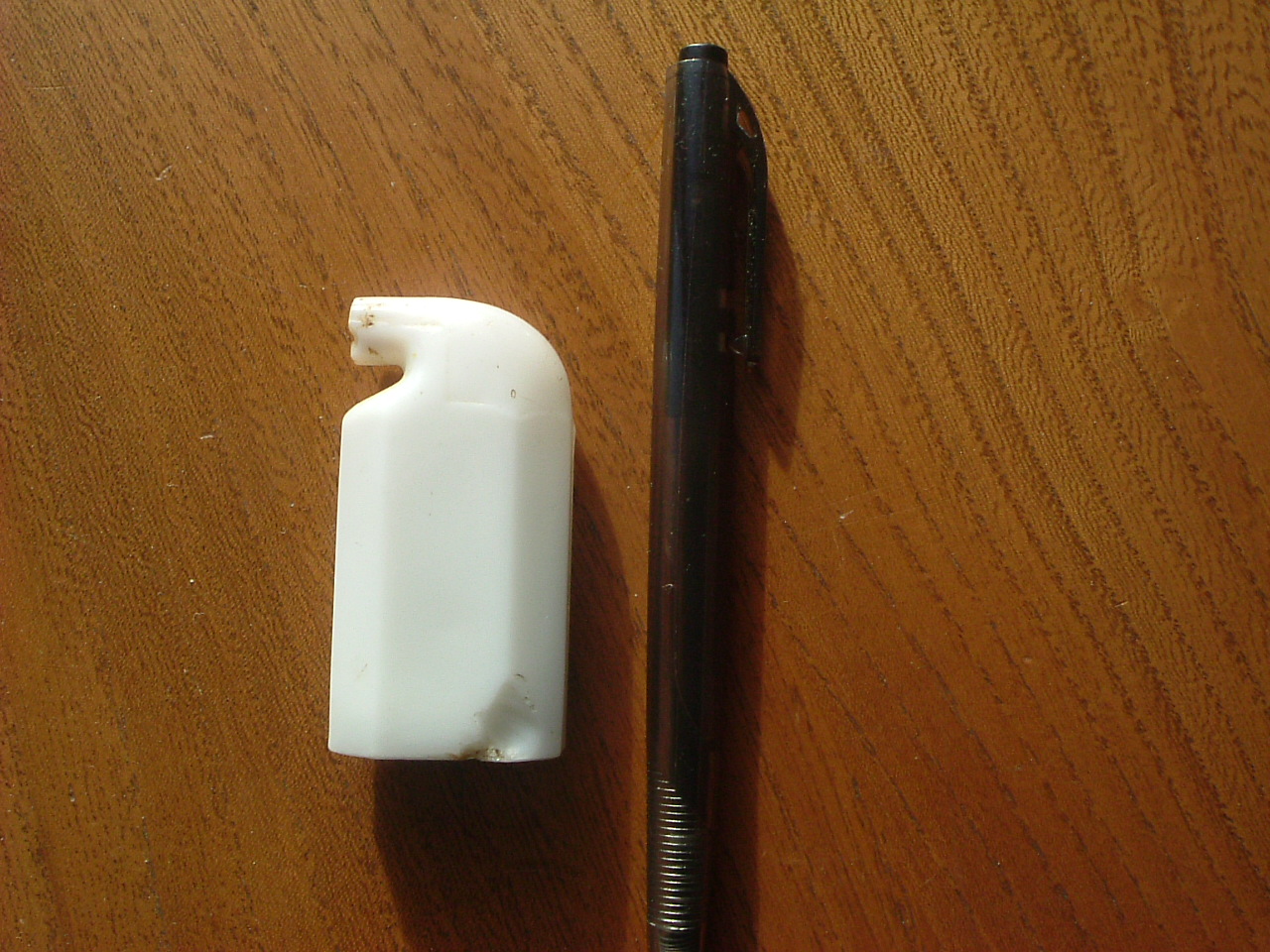
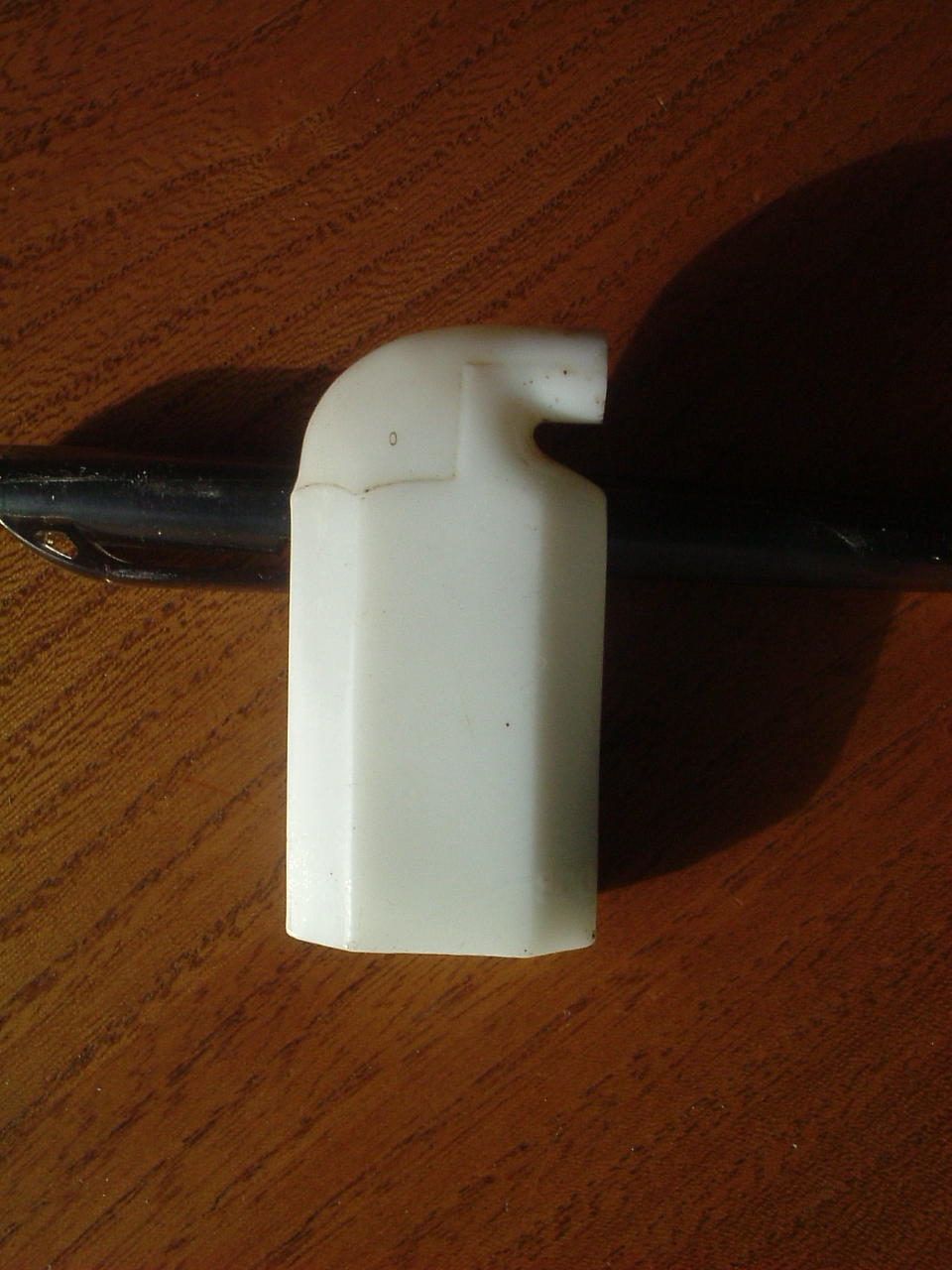
At another time we also found this little bottle, made from a white glass.

This is my picture quiz for this month.

What did this bottle hold when in use?

The first correct answer left in the comments will WIN an e-copy of

Nothing Ever Happens Here by Ann Foweraker.

Click HERE to read descriptions, reviews and read first 3 chapters in pdf of this book and Divining the Line and Some Kind of Synchrony


I really love to hear from you all.. have you found such ‘old junk’ that today becomes a minor treasure or a collectable? What’s the best thing you’ve found? or just your favourite?  Do share and do have a guess at the picture quiz!

24 /2: It has been a week of thinking and guessing. I believe it is time for a clue as the guesses have dried up .. .  if you have already guessed once you are allowed to guess again!

CLUE 1:  This bottle held a commodity we all use everyday – though it now it comes in a different form

OK – as we are well into March I guess I’ll have to give the answer to this Picture quiz. This little bottle was used for TOOTH-POWDER. It may well have been a ‘sample’ bottle as it is so small – or a ‘travel’ bottle. It dates from the end of the 1800s.  As I mentioned in the comments it is missing a small cap. More often than not Tooth-powders came in a shallow ceramic pot with a decorated ceramic lid – so this is unusual. Thanks for everyone who did have a guess – but I’m afraid as no one was even near, the prize awaits the next quick quiz.

error

Enjoyed this blog? Please share :)