Memories to Memoirs

clock poplar
Clock with map showing the area of Poplar he grew up in

Are you always having to listen to tales of what happened in the ‘old days’ – what your parents did way back when? We are often too busy to stand and listen just when they have remembered something in particular, and as for the grandchildren listening …

I am in the process of creating a book from my fathers memories – for him.  He is eighty-nine and has really LIVED a LIFE and would like his grandchildren and great grandchildren to know something of ‘where they came from’. He is writing it all in longhand and we are getting it typed up – then I am putting it into sentences, paragraphs and chapters – as the memories are written down as one long narrative.

Here is part of the first chapter …

I was born on 12th June, 1926, in Harrap Street, Poplar, in the East End of London, the first child of my parents and what follows in this first chapter is what I was told by my parents and memories that nobody could have told me – because I was alone in hospital from the age of eighteen months until the age of four years.

The state of the economy was low and, though my father had a job, the wage was poor, as there were a lot of unemployed. It was a struggle to make ends meet. Consequently they were already in a bad nutritional state, and then the employers wanted to cut wages by a shilling a week. The miners called a national strike and evidently all the small employers locked their workers out, so my father lost the little income he had. Mum and Dad went to the relief office to ask for a bread voucher, and the officer said “Why don’t you send your wife out to work?” and Dad said she was not in a condition to work. The officer said “Bring her in and let’s have a look at her – is she crippled or something?” (nobody mentioned the word ‘pregnant’ in those days) When he saw Mum, he said “That’s not my fault, and if you can’t feed your wife, you should keep yourself to yourself, and not come here begging”.  Dad grabbed his shirt front and hauled him over the counter. Immediately the copper on duty took Dad to the magistrates who were sitting full-time. Dad explained what had happened, so the magistrate sent for the relief officer who came, full of self-importance, and was soon told his job was to issue tickets, not pass obnoxious comments on the applicant’s condition and to go back and do the job he was paid for. Then he told Dad to go back and get the ticket. Dad thanked him and said that if that was what it took to get a loaf of bread he would sooner starve.

The strike was soon over because of starvation and the employers took their shilling off the wages, and then I was born. My parents struggled on, and when I was slow to crawl they asked the older women in their street what they thought was wrong, and in my case it was obvious to them that the child was just lazy in one leg. The only health service at that time was a scheme called ‘The Panel’ which only applied to actively working people, not wives or children, but at the end of eighteen-months they realised that I could not and would not be able to walk. I crawled, but only dragging my left leg, or stood, by standing by a chair with my left leg hanging free. So my parents tightened their belts and took me to the GP, who watched me crawl along the floor, and, for one shilling and sixpence, told them that I had a congenitally dislocated hip – just a bald statement – and then left them to get on with it.

Now, to add to their troubles, they knew their first-born was a cripple, doomed to wearing a leg-iron for life, useless and dependant on relief. Remember there was no NHS at the time but I think Dad had always belonged to the HSA (Hospital Savings Association), which, for a subscription of about three pence a week would finance any serious hospital treatment, the full cost of which you paid back in weekly instalments. (My father was still paying this back when I reached eighteen)

I was taken to Guy’s Hospital where they started the attempt to rectify the problem. The ball joint now was above the pelvis and had grown in, so over many weeks it was loosened and, by a system of pulleys and weights, the leg was stretched until the ball was in line with its socket.

My parents said that they couldn’t visit much, as they couldn’t afford the fares, so would walk when the weather permitted. I was only aware of strange faces swarming in and out of my vision. When the doctors were satisfied with the alignment I was put in a plaster cast from lower ribs to ankles for four months (my parents did visit at this time at least once, for years later I was told I was almost unapproachable because of the stink). At the end of the four month period the plaster was removed and I was fitted with a corset to keep the hip in place until it became stronger, and I was removed to Shadwell Hospital, where the muscles in my leg were to be exercised and strengthened. Bearing in mind that I had never walked, it must have been very difficult for the nurses.

The life was very confusing for me at the time – apparently during this time I caught all the childhood complaints, and I understand at this time my mother became ill, and visits were even less often.

Eventually I reached the age of four, still not walking unaided, and was fitted with a leg iron for support. I went home, except I didn’t know it was home, and my mother was ‘Nurse’, and when Dad came home, pulling faces, trying to make me laugh, I would say ‘That funny man is here again, Nurse’.   9781909936904-Perfect_FINAL copy


NOW AVAILABLE!!

ebook  http://amzn.eu/9h313ER

paperback: http://www.pendownpublishing.co.uk/shop/non_fiction.html

How many other people should be getting their memories written down? What rich heritage are families losing if they do not? What rich heritage of everyday life is the country losing – for instance if the memories of being a midwife in the East End in the 1950s hadn’t been written down then we’d never have had ‘Call The Midwife’ for instance. We have plenty of the rich and famous lives of each era – but, perhaps, not enough of the everyday people.

Here’s a thought, if your parents have retired*, get them to use some of their time in writing it down. (yes – I know this means they may be still quite young – but it takes a long time to write up fifty / sixty / seventy years – Dad began writing his story when he was about 68!) You don’t have to ‘publish’ the book to get it in print – Create Space is a wonderful set-up that you can use almost for free and only get as many books as you want printed for the family by Print On Demand  POD  (rather than the old way of having to have a lot done all at once)
*or this may be YOU?

What did you think about this excerpt from my father’s memoirs?

Are you, or your parents, on this task right now?

Do share – you know I love to hear from you.

ps – the grandchildren – now in their twenties and thirties – are, at last, standing still long enough to listen – and I am sure they will love the completed books

NOW AVAILABLE!! ebook  http://amzn.eu/9h313ER

paperback: http://www.pendownpublishing.co.uk/shop/non_fiction.html

Talk about the Weather!

book launch 2 med all
Members of Dumnonika with Sally at her book-launch

Oh? Yes! It’s me, I guess you’d forgotten about this blog… it looked like I had, but I hadn’t. Life had just got in the way, but this time pleasant life.

We are fortunate enough to have been off to Malaysia to visit our eldest son, wife and their three sons – our grandsons. So Good to see them at their home!

I won’t give you my travelogue here, but when I came home it was the weather that struck me most of all. Apart from the feeling that you are living the the perfectly moderated air-con environment when outside (this lasts for a day) it becomes abundantly noticeable why the British are obsessed by the weather.

It is for a good reason that one of the most popular opening gambits in a British conversation, with both friends and strangers, is a comment about the weather.

No one seems to talk about the weather when it is 36 degrees and very humid everyday when you wake (to a sunrise at the same time everyday of the year) followed by more of the same until late afternoon/ early evening when the wind will get up, the sky darken, lightning flash, thunder crash and the rain will sheet down like a waterfall for about ten to fifteen minutes before the sky clears and everything quickly steams dry again before nightfall swiftly arrives at the same time as it always does, around eight.

What is there to say? ‘Looks like the weather will be the same today?’

So home; the first day cloudy when we arrived, turning to bright sunshine that lasted into a late evening.

Second day; started dry but overcast and quite cold over the morning, brightened into hot by late afternoon and into the evening.

Third day; rained and drizzled all day.

Fourth day; a day of blazing heat and beautiful sunshine – and I know because I spend this day outdoors with the lovely Sally Newton at the launch of her novel ‘Caradoc – The Defiant Prince’ – set AD25 – where we were accompanied by Dumnonika – an Iron-Age re-enactment group for the first day of the Upton Cross Art and Craft Exhibition and Sale.

Book launch Upton cross poster Black &  Red & BlueIn fact it was such good weather and it was so hot it wasn’t really the best day to draw in the crowds … though rain would have proved even more difficult for an outside event like our part of the day.  As it was, hordes headed to the beaches, though a good sunburn could be had where we were too, and we had small groups of interested and engaged people instead – perfect. This made for a very successful launch of Sally’s novel which is the first of a trilogy covering the life of Caradoc, a real historic figure of the Iron-Age.

If you live in SE Cornwall (or SW Devon even)  and would like to see the Art and Craft Exhibition and Sale at Upton Cross it runs until 6pm on the 16th August and is well worth a look, but though signed copies of my books, and Sally’s, are on the Pendown Publishing stand I’m afraid we will not be there, nor will Dumnonika – but if you want to know more about them go to their website at Dumnonika.com.


Have you ever been away and then found the simple things of home more pleasing?

Do you like historical novels, Iron-Age anyone?

Do share, you know I’ve missed you    😉


[p.s. – seems I will be there on Friday afternoon – helping out – so if you want a book dedicated just ask at the door where to find me 🙂 ]


What our Ancestors can teach us about healing

It is odd that today I came across not one, but two examples of the ‘super-‘bug’ MRSA being defeated, or at the least severely dented, by ‘old recipes’ for fighting disease.

The first was a report in NEW SCIENTIST that scientists from the University of Nottingham have worked on a recipe to cure styes, laid out in a 1000 year-old Anglo-Saxon medical recipes book called Bald’s Leechbook . (article here)    DSCF5518

It sounds like the three witches in Macbeth, ‘Take cropleek and garlic, of both equal quantities, pound them well together… take wine and bullocks gall, mix with the leek… let it stand nine days in the brass vessel…’  But this is exactly what the scientists did.. though they made sure everything was sterile, and had controls set up, and had each element set up separately too (to see if only one would work – none did on their own)

The result: ‘The potion was tested on scraps of skin taken from mice infected with Methicillin-Resistant Staphylococcus Aureus. This is an antibiotic-resistant version of the bacteria that causes styes, more commonly known as the hospital super-bug MRSA. The potion killed 90 per cent of the bacteria. Vancomycin, the antibiotic generally used for MRSA, killed about the same proportion when it was added to the skin scraps’.

Just imagine how long and how much experimentation had to have taken place in ancient times to come up with this particular mixture of herbs and the vessel to use to make it in, made up so carefully (another ‘try’ with this recipe by a US university in 2005 resulted in  ‘a loathsome, odorous slime‘ that did not work,) and left for that particular length of time to discover it worked, that it cured styes (for that is what the recipe was for – and as styes are caused by Staphylococcus aureus – this is why the scientists were trying it)

This method has been peer tested by Dr Kendra Rumbaugh, of Texas Tech University in the US, who was asked to replicate the findings. She said that the salve performed ‘good if not better’ than traditional antibiotics at tackling the superbug. The findings were presented at the Annual Conference of the Society for General Microbiology in Birmingham which runs from March 30 this year.

IMG_0384The second MRSA attacker I heard about on the radio — my ears pricked up when I heard the goats (we used to keep goats) and they were the source of this other unexpected beater of MRSA.  It is a long story – but the goats had initially been kept to help with their son’s asthma (this is well documented that Goat’s milk is a less antagonistic to bronchial conditions than cows milk.) They also found that it helped clear up his eczema when made into a cream and a soap.

Now, eczema is an auto-immune disease and many auto-immune diseases appear to be triggered in the gut. By making a fermented product from the goat’s milk, called kefir, they found they had something that seemed to help many auto-immune gut related conditions. Kefir is a powerful probiotic that has been made for hundreds of years in Russia, though the name is possibly Turkish (from keif meaning good feeling).

Then, after surgery, the husband contracted MRSA from the hospital. The wound wasn’t healing, worse, the MRSA was attacking the skin and flesh and making the wound larger and worse and, despite treatment, would not go away. Having read of the curative powers of kefir and having seen how it had helped their son with both asthma and eczema, the wife started treating her husband with kefir by getting him to drink it. She also read-up on essential oils and, believe it or not, the bubonic plague and a bunch of perfumiers who didn’t catch it, and created her own blend of essential oils which she used to bathe his skin, after which she used the kefir on his skin too. In two weeks his skin was testing negative for MRSA and soon healed. The blend of essential oils has since been lab-tested to show it is effective against a whole bunch of pathogenic bacteria, and they are currently working with Swansea university on the effects of kefir and the essential oils  (read an article here)

Now these are concoctions that have been ‘known’ about in the western world for hundreds of years – and we are still only just realising how nature works, how our bodies work and how they can work together – or against each other. If this is the state we are in with cures and remedies we already ‘know’ about  – how many more cures are out there in nature, especially in the most bio-diverse regions like the rain-forests that man seems set on destroying? It makes you think!  (Yes, I did quite get into all this while I was writing ‘The Angel Bug’ as one of the main characters was deeply concerned for the rain-forest and its bio-diversity – does it show?

Had you picked up on these stories in the recent media?

What are your thoughts?

Are you fed up with the general election  (UK) ALREADY?

Do share – you know you want to 🙂

So, what does a typical WI member look like? #IamWI

IAMWI3
#IamWI   Ann Foweraker (St. Dominick WI)

Let me say from the start – I’ve been a member of the WI since I was 15  – excepting my years at college, and five living in a city – no WI branches allowed in universities or cities back then, as they are  now. (It’s good to see how well they are developing  in these places now and how many young women are joining them!)  This came about because my mum was going off to her WI meeting ON my 15th birthday… and, as that happened to be the age that you were allowed to join our branch of the WI back then .. I went along. (NB for insurance purposes, apparently, the joining age is now 18)

Now the WI (Women’s Institute) has developed an unfortunate image over the years – emphasised by almost every press report and slanted so that we appear to be jam-making fuddy-duddys and of the pearl and cardie-wearing, tory-voting brigade to boot. Even my Aunt thought this (when she moved from a town in Essex to our Cornish village she expressed this view – despite the fact that I, my mum and another Aunt belonged – none of whom fitted that description in any way whatsoever – except the jam-making part).

‘Jam and Jerusalem’, the papers say, in a disparaging way. Well, yes our rousing ‘song’ is Jerusalem, by William Blake, and I find the ‘bring me my bow of burning gold, bring me my arrows of desire,’ quite stirring 😉 though we do not sing it at our usual meetings nowadays. And as for Jam making – that was effortful war work. What other war work is disparaged?

In nearly a hundred years of being an organisation, the WI has made a huge difference. Though started to help rural women, for education and support, it has taken up the cause in many aspects of life. Some of these then grew into themselves as separate organisations, which still acknowledge their links to their inspiration and formation. Like the Keep Britain Tidy group… an idea and movement initiated by the WI in 1954 and, though now a national organisation, often the people on the ground in villages doing the organisation will still be from the local WI.

Each year we have a resolution and our National arm campaigns on these resolutions. Not just on that year’s one but on any that we have passed over time. They have our mandate; that is the mandate of 212,000 women, to campaign on these issues. Over the past five years these have included ‘No-more violence against women’ ‘SOS Honeybees’ ‘The need for more Midwives’ ‘Care not Custody – for people with mental health issues’ and ‘Time to Talk – about Organ Donation’. It educates, it campaigns and is listened to.

Yet still the WI is disparaged, though now we are also the ‘calendar girls’ (a doubtful accolade) where some potential members are as wary of being asked to strip off… as much as to run a cake stall (or should that be buns?)

So, when one of our members on the UnOfficial WI FB page, a page for WI members to chat and share (not the Official WI FB page which is more for National WI matters) suggested we each took a photo of ourselves holding a sign with the words I AM WI written on it – I thought this a great idea – for, though you know I like making Jam (in my microwave), I also think I am a typical (but NOT-STEREOTYPICAL) WI member! Active in my own life and in the community, busy and enjoying life to the full.

All of which explains the photo of me and my paddleboard at the top of this blog  🙂

Do you belong to the WI?

 If not, what is the image you have of the WI

 Look out for the hashtag #iamwi

When is a shoe not just a shoe?

Sounds like a riddle – or the first part of a not very good joke. In this case it is the question that goes with this picture.

shoe

This is a child’s shoe found in the stonework and mud filling of a building thought to be at least sixteenth century.

At first this seemed just a curious thing to find … then I did a little research. Shoes, it turns out, were often placed in the fabric of a building. Most usually near a door way or an opening (window, hearth) but not always, sometimes just placed there by the builder as they built the property.

The big question is ‘Why?’

Well there are many theories and I’ll pass on some that I have come across. To start with the concealed shoe, and it is nearly always just one,  is always well worn and frequently that of a child. One theory is that a shoe takes on something of the identity of the person who wore it – as it moulds itself to the wearer. That this identity or ‘soul’ within the shoe was the used as a spirit to ward off evil in general and witches in particular.

The spirit within the shoe would therefore guard the house and keep evil and witches at bay. The concealed shoes were therefore either hidden in the walls of the building, so no-one could remove them, or boxed in near an opening (that a witch or evil might try to enter through).

When life and death, through accident or illness, was pretty random and struck seemingly at will, superstitions were rife. Here was a way to protect your home and therefore your family – and easy enough to do. Even for the builders who placed them there, perhaps it gave them a sense that the building they made was protected.

Where did this odd idea come from?

No-one knows how this tradition began but in the UK it may have links the 14th century Rector of Marston in Buckinghamshire, who was said to have cast the devil into a boot, thus trapping him, or it may go back much further than this and may be more grisly ….

There is a long and murky history of blood sacrifices, usually of animals, being made to protect a house from evil, documented from as far back as the Romans.  Even the mark in blood made on the door post by the Israelites, when Moses was trying to get them released from servitude, that meant the angel of death passed over their homes, links into this superstition. Maybe a shoe is a simple and less drastic substitute.

Museum of shoes

In Northampton Museum, once the centre of shoe-making in the UK,  they have a collection of shoes. They also keep a concealed shoe index listing all those found and reported to them. At the moment the index stands at approximately 1,900 entries from all over the U.K and also records concealed shoe finds in North America, Canada, and a number of countries in Europe including France, Spain and Poland.

Inspiration

As an author I can’t help but lock these nuggets of information away, wondering when they will resurface in the plot of a novel. Somehow I feel this one is going to with the superstition and history it has all wrapped up in it!

 So the answer to the riddle …..  When is a shoe not just a shoe ….

 …… when it is an insurance policy

 Was the idea of concealed shoes new to you?

Have you ever found something like this?

What tickles your creative bones and makes you start to think and wonder?

Do share – you know I love to hear from you.

Iron-Age poem

I do not usually post my poetry here, but you may have gathered that poetry has been part of my life for a long time, probably just as long as the writing, both taking off in my early teens. loom weight resized

Today I had to photograph a pair of iron-age loom-weights that were found in our garden when some post holes were dug.  Just holding them brings a shiver of inspiration to me, so old, so handled, such a domestic reminder that this place has been inhabited for such a very, very long time.

So today, as my life continues to be battered about by events and my blogging is curtailed somewhat, I give you a poem that was inspired by the finding of these items and, later, the activity of clearing broken branches from the top field.

Shadowing

I am gathering wood in the top field,
my back bent I stoop from twig to twig
wrapped in thick layers against the icy
north-easterly that clips the ridge
and slices down the slope.

The goats have settled further along,
near the place I found the loom-weights.
As I move towards them I step
into a silence, where the wind
skips over my head and sun warms.

Then I see her; shadowing me.
And I know she’s left the baby in the hut
her loom stripped of its thread, her man away.
Shapelessly wrapped, she stoops
her back bent, twig by twig, gathering wood.

***

Thanks to Ellen for showing me how to ‘close-up’ the lines – now I’ll know what to do if I post any more poems here

Hope you liked it anyway… do let me know ..  you know I love to hear from you.

Let’s go for a walk …

I haven’t taken you all for a walk in the Cornish Countryside for quite a while … so as I was out on just such a walk on Saturday and took a bunch of pictures I thought I’d share the walk with you today.

To be honest – you are going to miss out on the first bit… I hadn’t taken my camera out of the bag until we dropped down into the small town / large village of Gunnislake for a ‘pit-stop’ so that is where we will start. Gunnislake was at the heart of the Cornish Mining in the far South East of Cornwall in the 1800’s. On the side of the River Tamar and with (at that time) the first bridge across the river up from Plymouth Sound, it was a significant place anyway – the first point to cross over into Devon (other than by ferry-man) and the mines all around the area brought miners up from further down Cornwall as well as making miners out of locals.DSCF7216

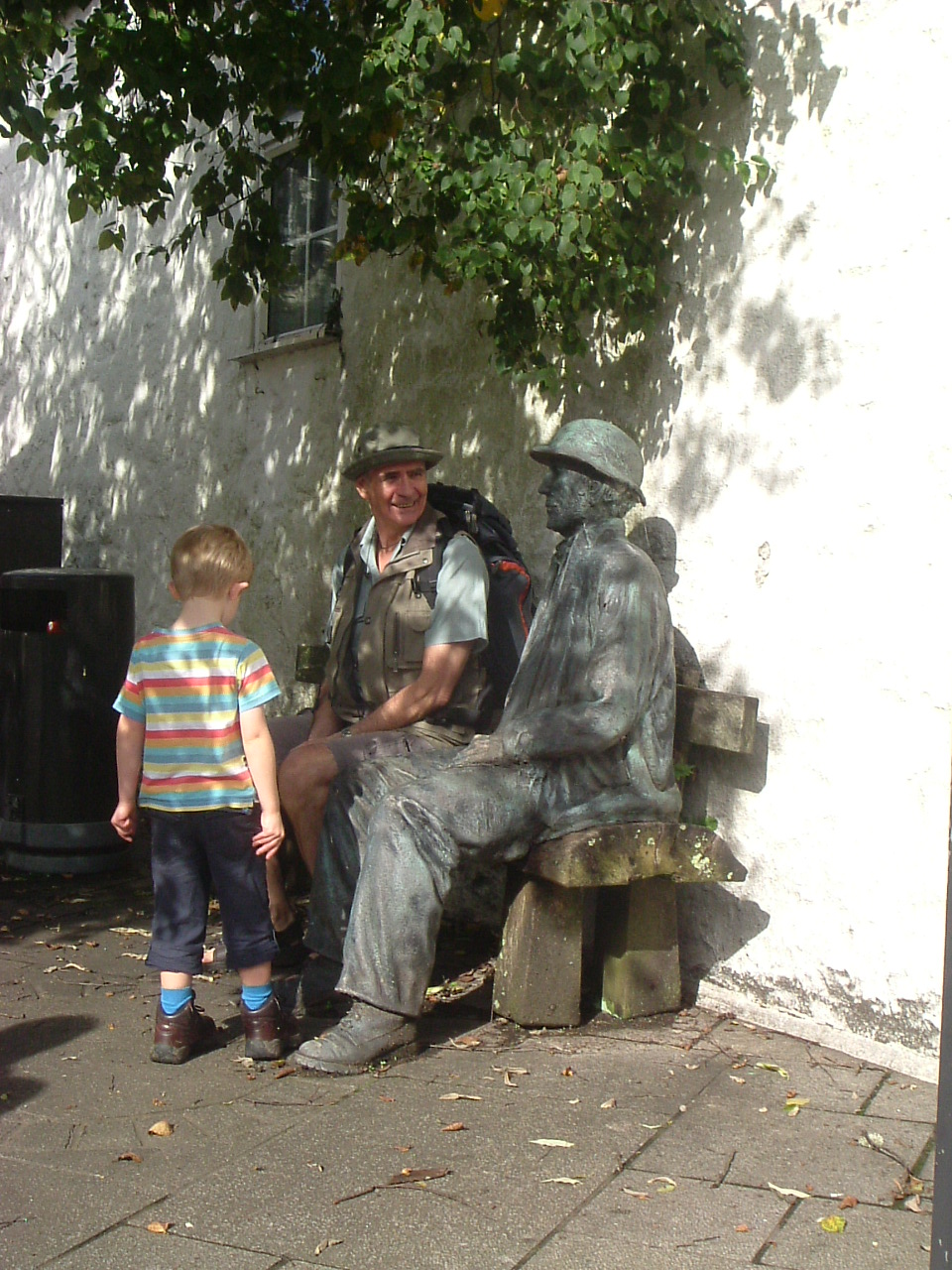
This bit of history is ‘recognised’ by the statue of a miner sitting on a corner by the main road through the town as it plunges down to the river bridge. Here shown with one of the other walkers (trying to look like he belongs 🙂

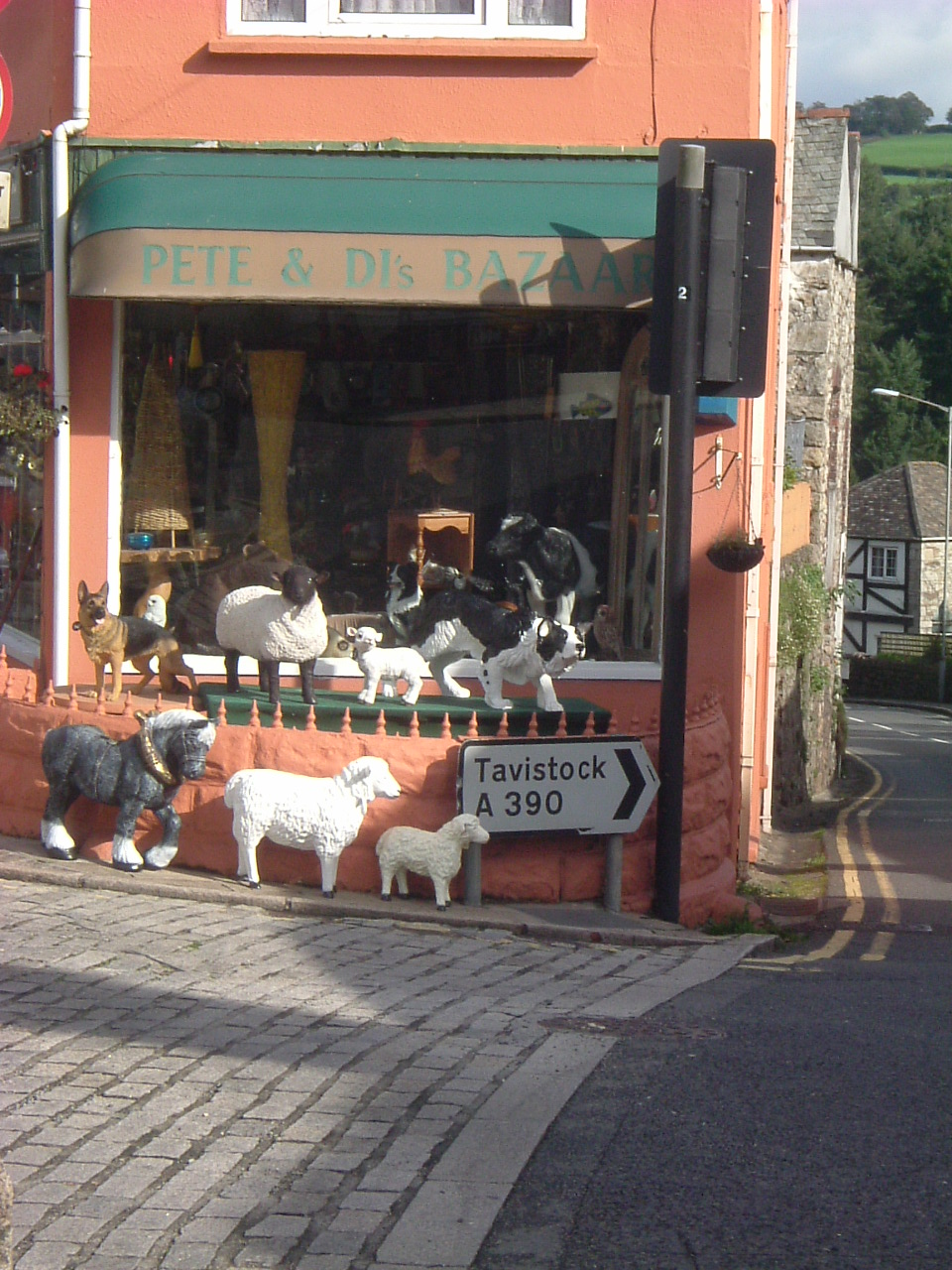
DSCF7215DSCF7214Just to the right shows the typical street in this small town, with higgledy-piggledy terraced cottages.. and I couldn’t resist giving you a picture of their ever bizarre Pete and Di’s Bazaar – which always has an ‘eye-catching’ display, on the other side of the road.

DSCF7219
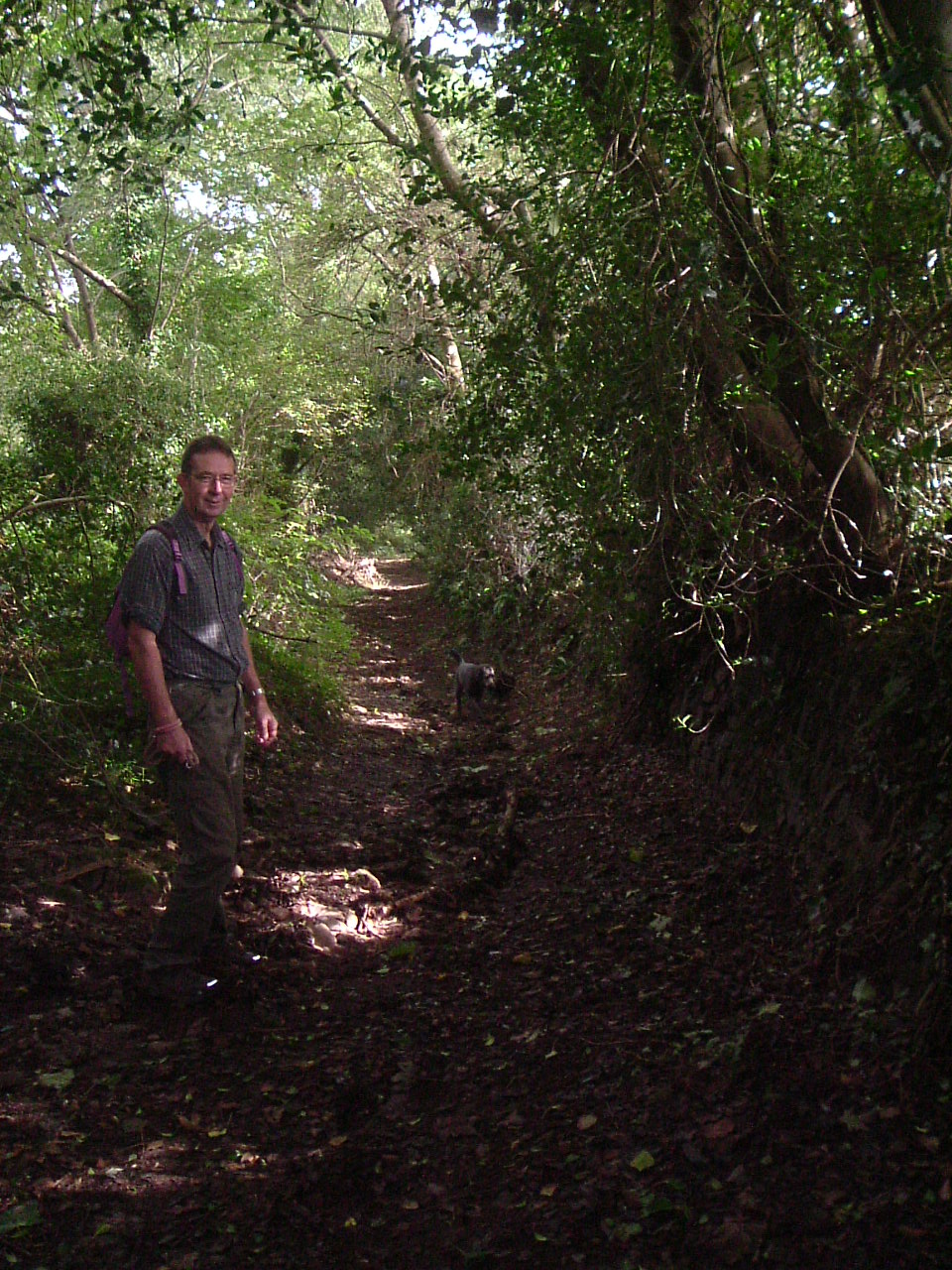
Mr M plus Dog on the path
DSCF7224
washed out stones along the way

From here we walked up the hill into Middle Dimson and from there dropped into a ‘hollow-way’ a path used by miners and labourers for a hundred odd years, almost completely covered over by trees and hedges, slightly sunken by the tread of many feet and the whoosh of rain water when it comes.

So much so that the ‘path’ underfoot looks more like a dry stream-bed than a path with so many tumbled rocks and stones, washed clear of the earth.

DSCF7220
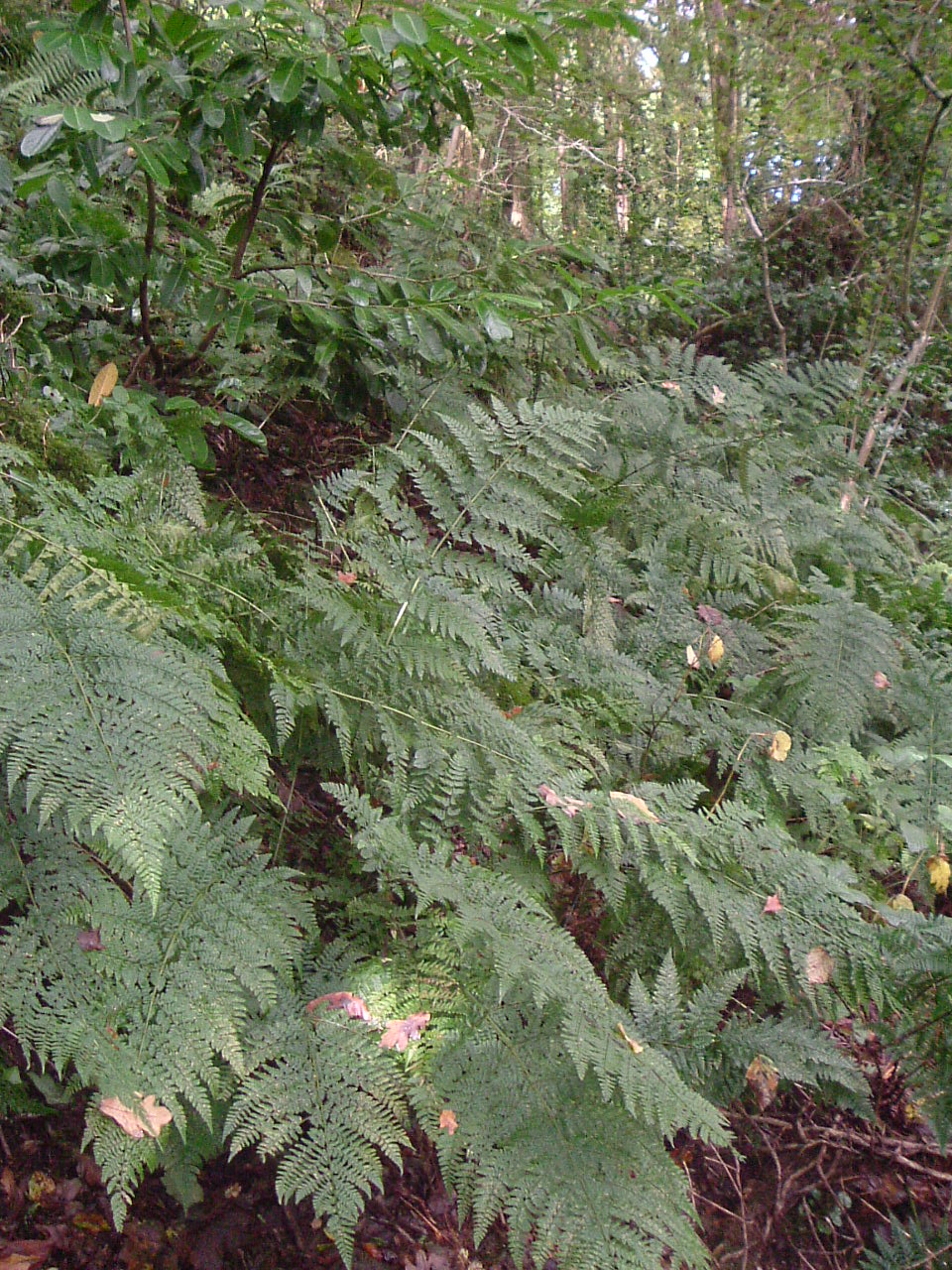
hart’s tongue fern
DSCF7226
buckler fern

Perpetually shaded in summer it is the perfect location to find a multitude of ferns and mosses.

There was an abundance of liverworts along the places where water ran beside the track, but I didn’t photograph those I’m afraid.

At one point we stepped off the path to look at one of the abandoned mines that were the industrial workplaces back in the 1800’s.  Looking at the ruins surrounded by peaceful countryside, wrapped in trees and to the sound of the a tricking stream it is hard to conjure the sheer noise, smell and dirt of the bygone age in this area. DSCF7237DSCF7236

DSCF7230
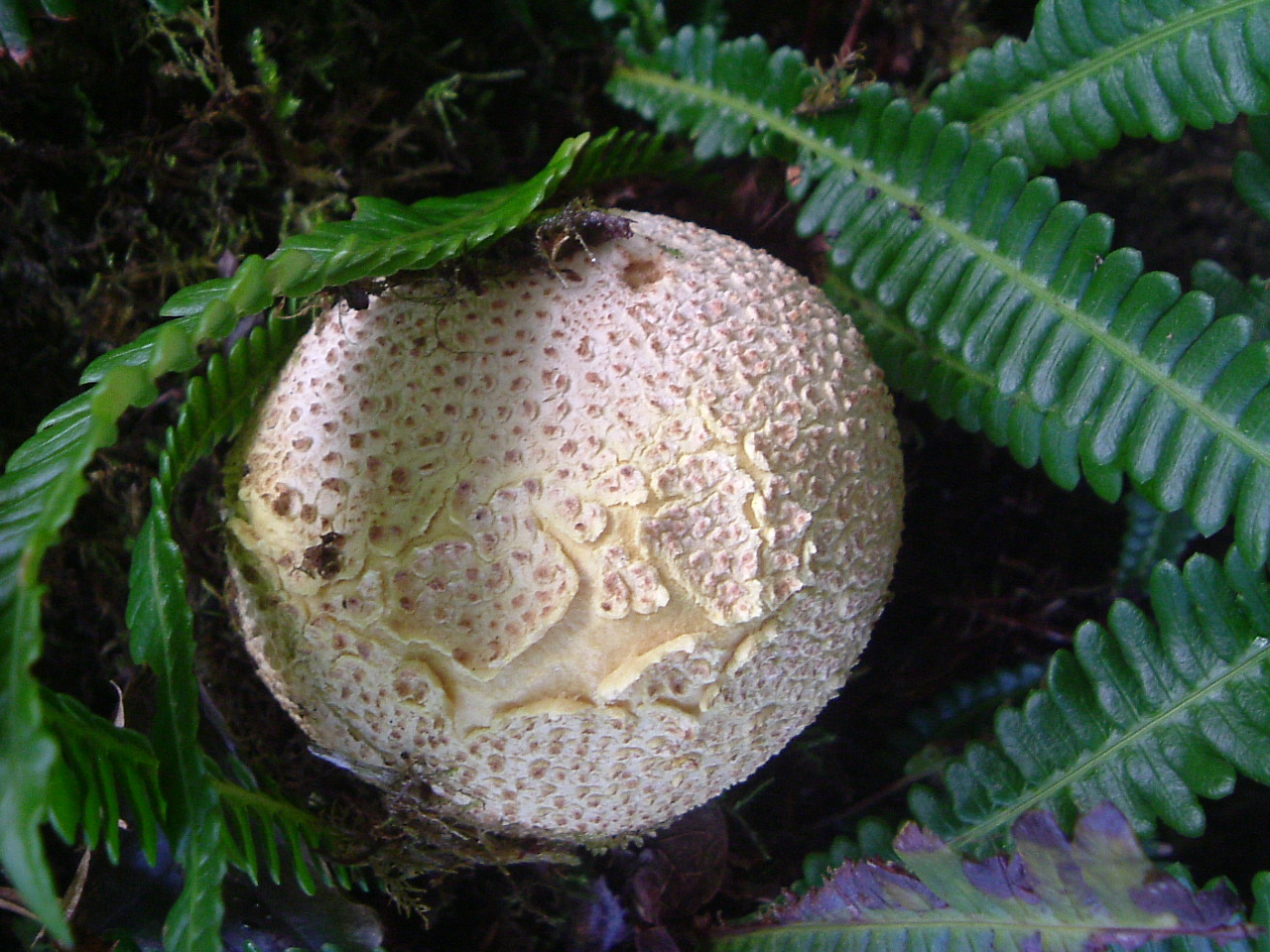
puff ball – burst : click to enlarge

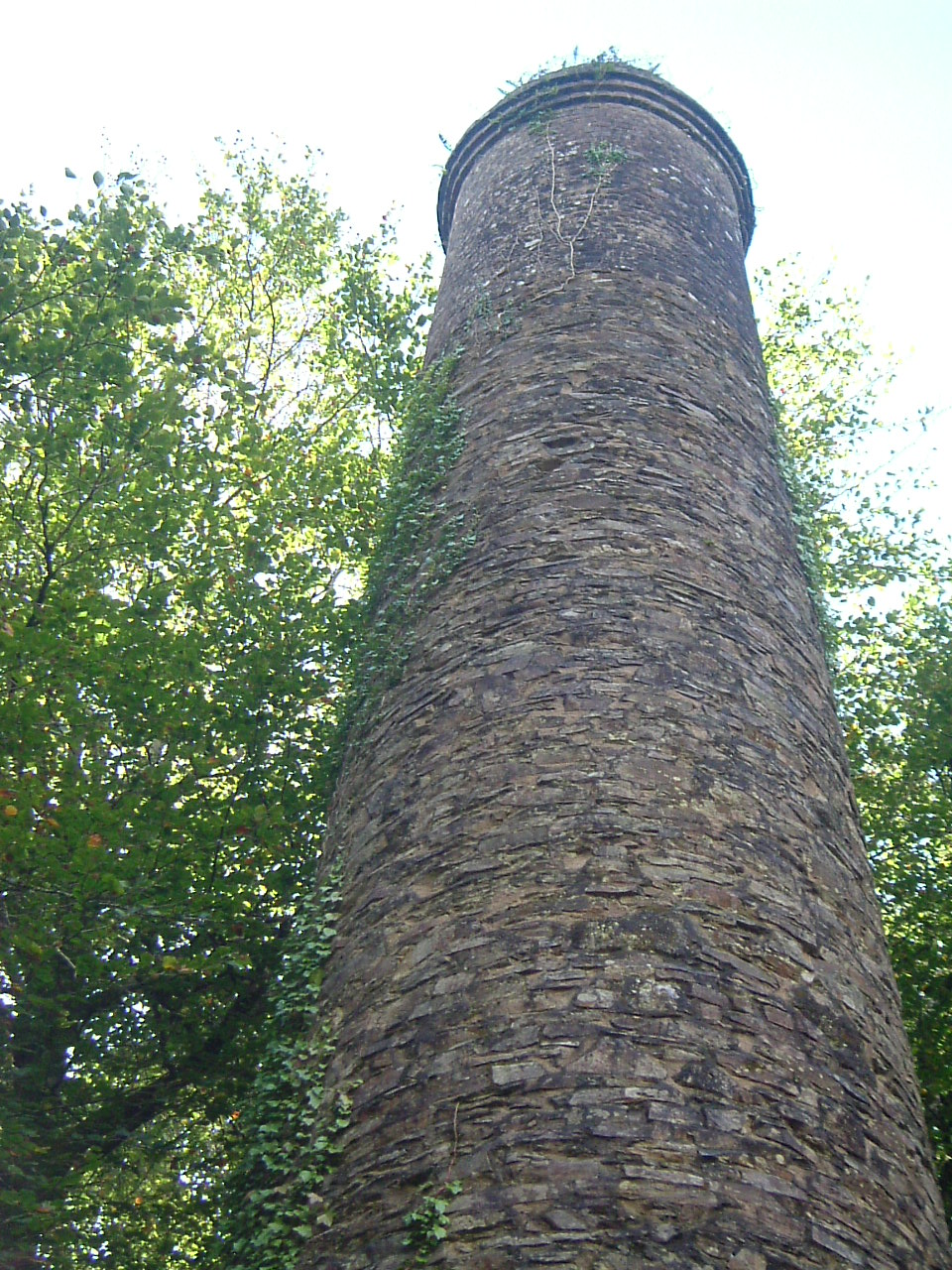
Here you can see the remains of an engine house, where the great beam engine would pump up water to keep the mine ‘dry’  and the chimney, that took off the smoke from the boiler fire that ran the steam engine that moved the beam, is remarkably complete.

DSCF7241
puff ball with hard ferns

Back on the path, and this being autumn the ground was scattered with seeds, beech mast, sweet chestnut (though with nothing in worth collecting in this year) acorns, berries from rowan and hawthorn and fungi – the most interesting of which were the puff-balls, small but burst open to allow the wind to suck out and scatter their spores

And that is where I’ll end this walk, mainly because my camera card was full (my main card having corrupted I’m using a small capacity one until I pick up another)

Have you been out to enjoy the Autumn scenery?

Where is your favourite walk?

You know I love to hear from you – just click ‘comment’ on the blog to add yours!


Bonjour, mes amis…

And back to the UK with a bump! A leaking dishwasher and heaps of washing to do, from the holiday plus washing that couldn’t be done before we went as it was too wet, plus sheets and stuff from the folks who kindly manned the fort while we were off getting a bit of respite and relaxation. Huge thanks to them for allowing us a break!
Also many thanks to the ‘très gentil’ Krissi for taking over my blog last week…wasn’t it great.. and Oh! So true, hypen-tales-and-all 😉

Having had a lovely time I thought I’d just take you on a trip out. We went to the ancient town of Locronan (Lokorn in Breton) as there was a Foire des Antiquaires advertised for Sunday. Well, we both like an Antiques Fair, and having been to a few in France know what to expect….

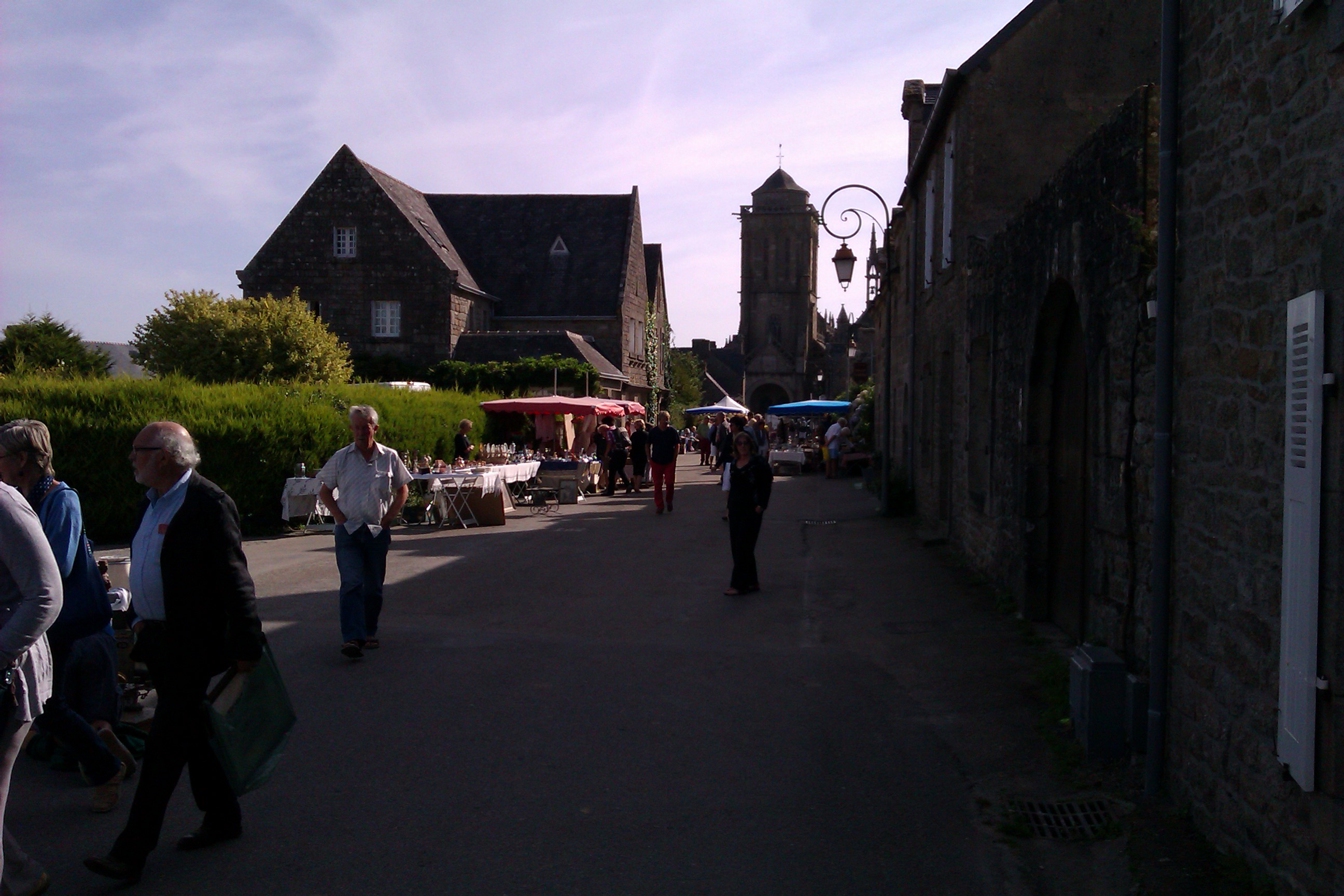
Locronan is a town whose fortune was built upon making sail cloth from the 1600s through to the 1800s. With a royal charter they made sail-cloth not only for the French Navy but also, at different times, for the Spanish and English Navies and the Portuguese, as in for Columbus as well as for Merchant shipping. When their patronage was rescinded and technology changed the industry dropped off and the fine granite houses were left unchanged from then on. The, partially restored, cobbled streets and facades of the centre are kept just so.

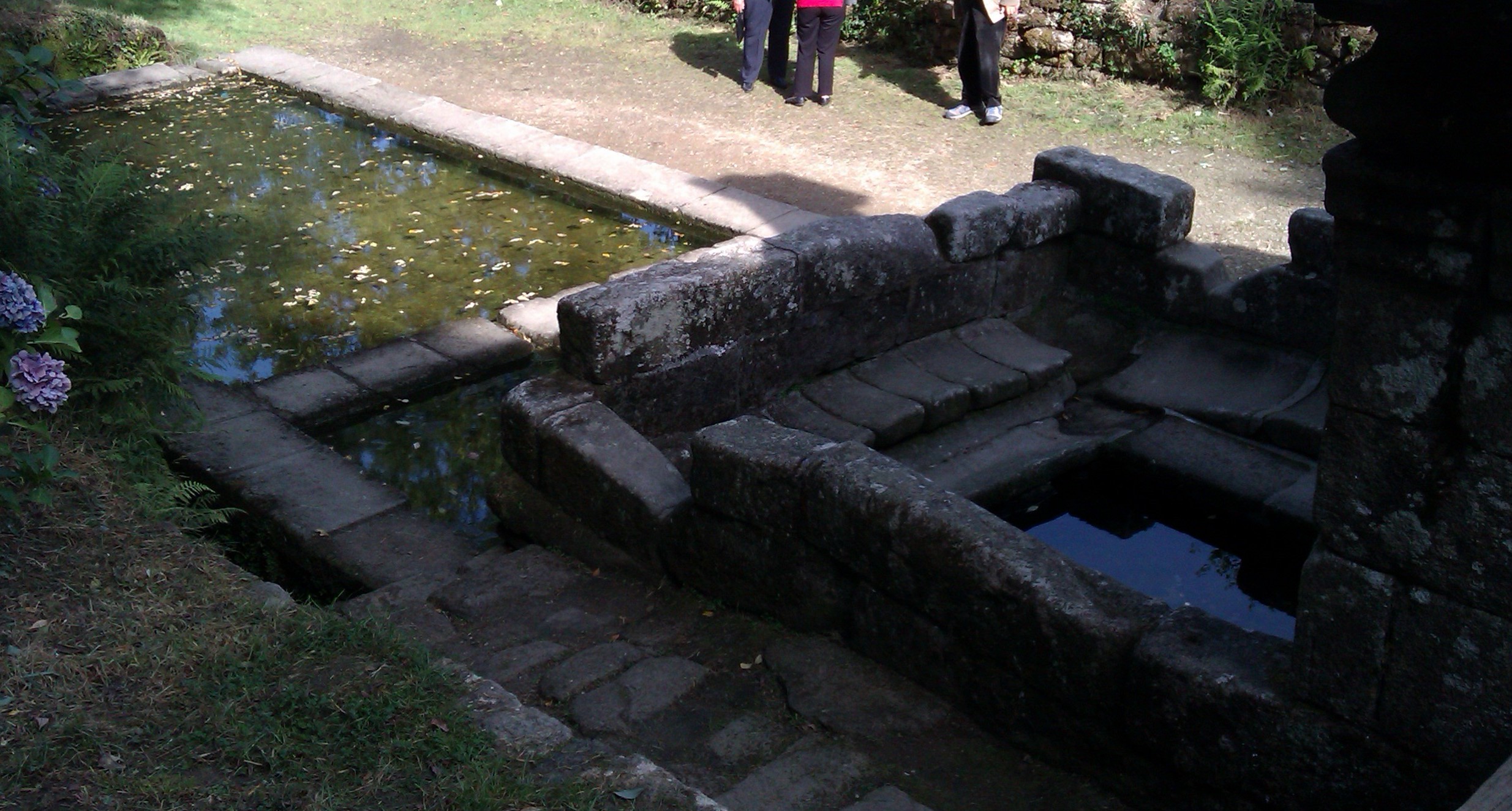
This site has a few nice photos and a brief history… but I am taking you to the Antiques Fair. First we park in the leafy lay-by and walk the green path up to the wonderful 16 century state of the art ‘Lavanderie’ (place for washing clothes) and past the beautiful little ancient church. IMAG0083 washing placeIMAG0080 calvarie  The calvarie has been decorated as they have just had a parade of the church banner and singing there before the Sunday morning service in the little church. We then walk up the steep side street looking back to admire the view. IMAG0079

We emerge onto the edge of the main square – where we can see traders setting up, as they are in the street to our left, where we first walk. IMAG0077

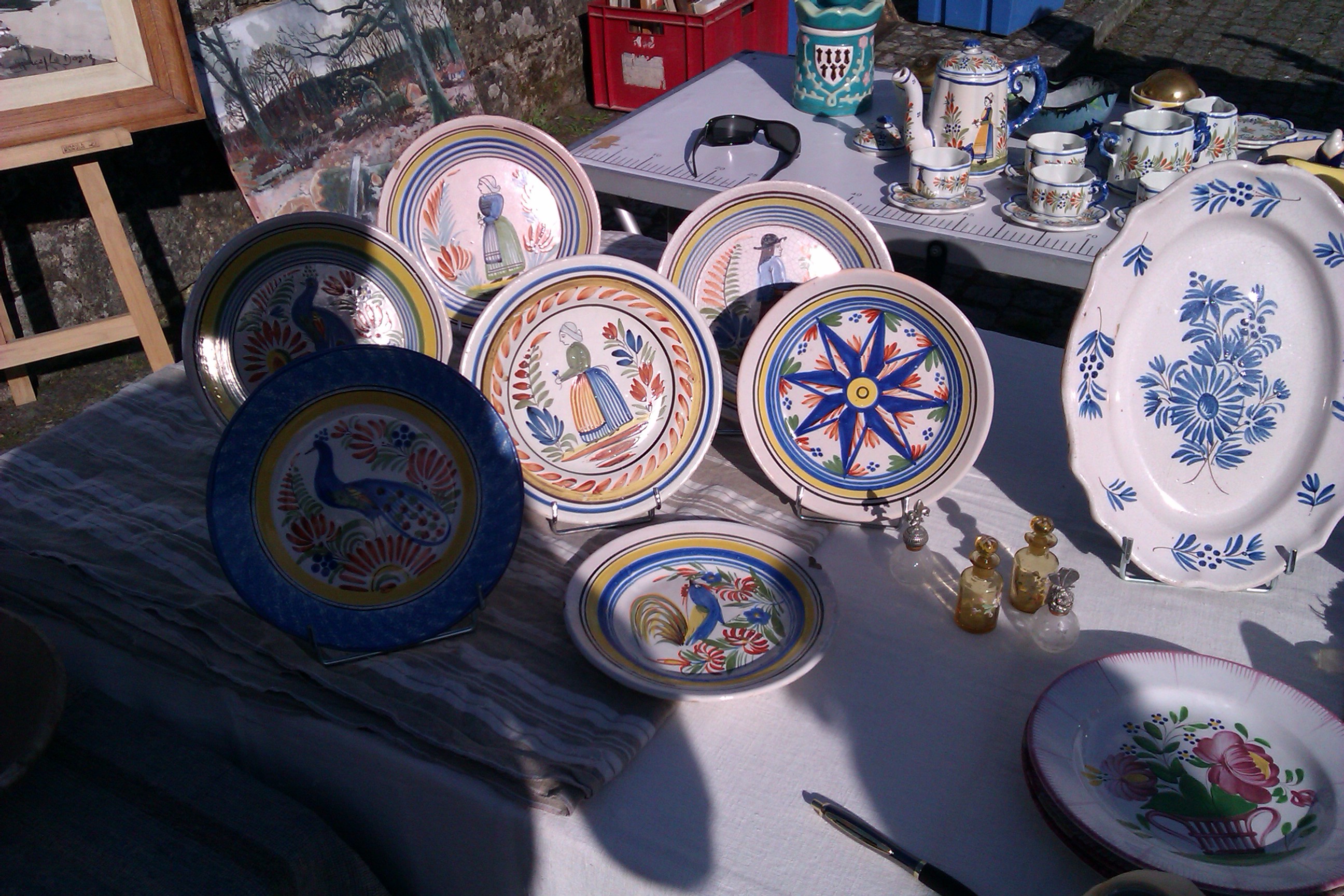
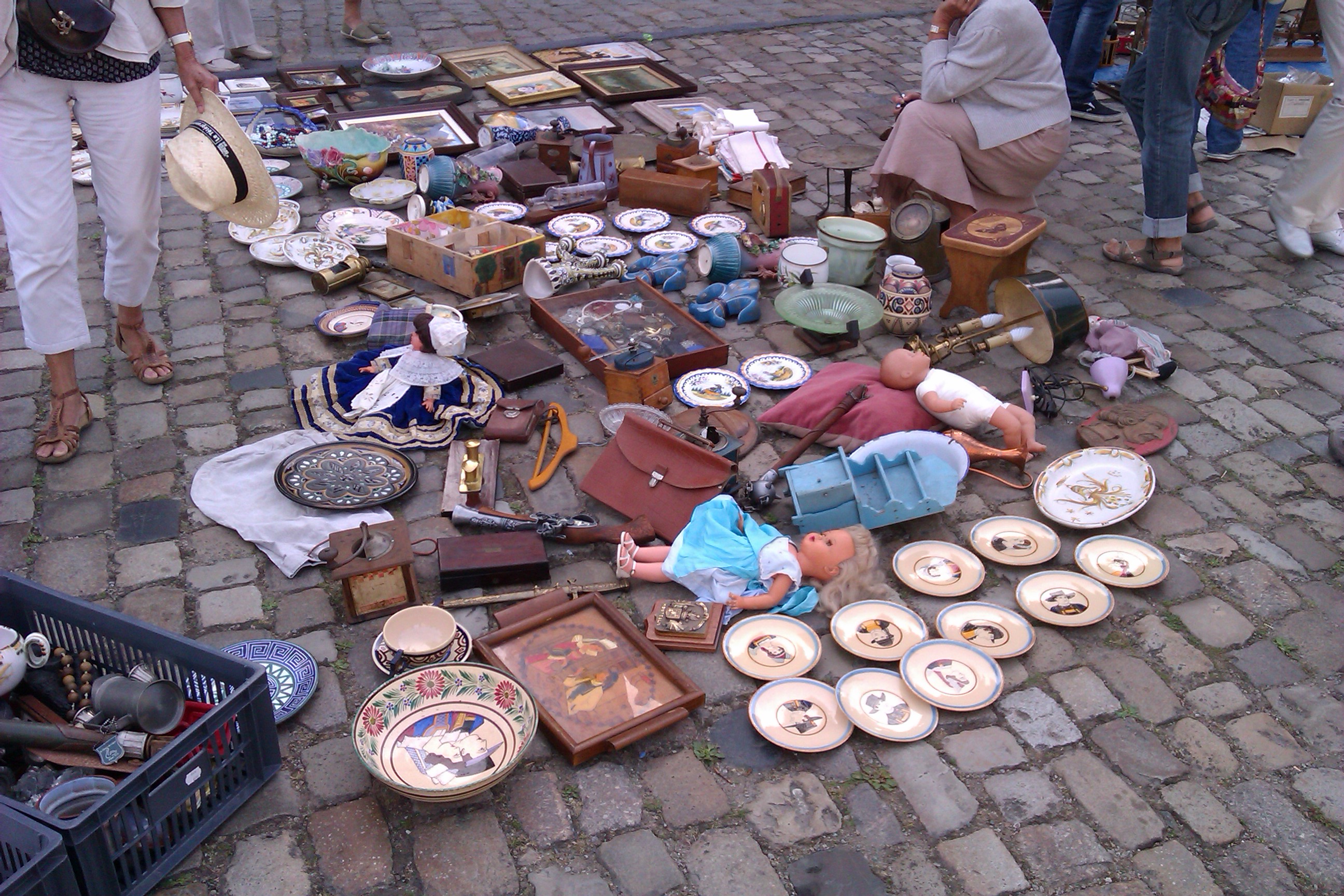
Here is a sample of wares. – faience from Quimper – traditional designs still made in Quimper ( about 20 miles away) and children’s traditional Breton dress bonnets – these beautiful and old enough to be in a museum (as indeed we saw some later) IMAG0069IMAG0070

We turn and walk past many stands, stalls and even cloths spread on the ground, covered with a mixture of goods. Some you would call bric-a-brac, some beautiful antiques, some a load of old tat!

We circle all the stands – drawing each other’s attention to things we like, find extraordinary or beautiful or mystifying and pass on. Only once have I longed to buy something at one of these markets (a ‘perhaps’ old map of Brittany) but thought it over priced and probably not as old as it pretended to be and passed on it rather than trying out my weak French in a negotiation. Here is a flavour of the place and the goods the tower of the huge central church in the background.IMAG0073IMAG0074IMAG0072


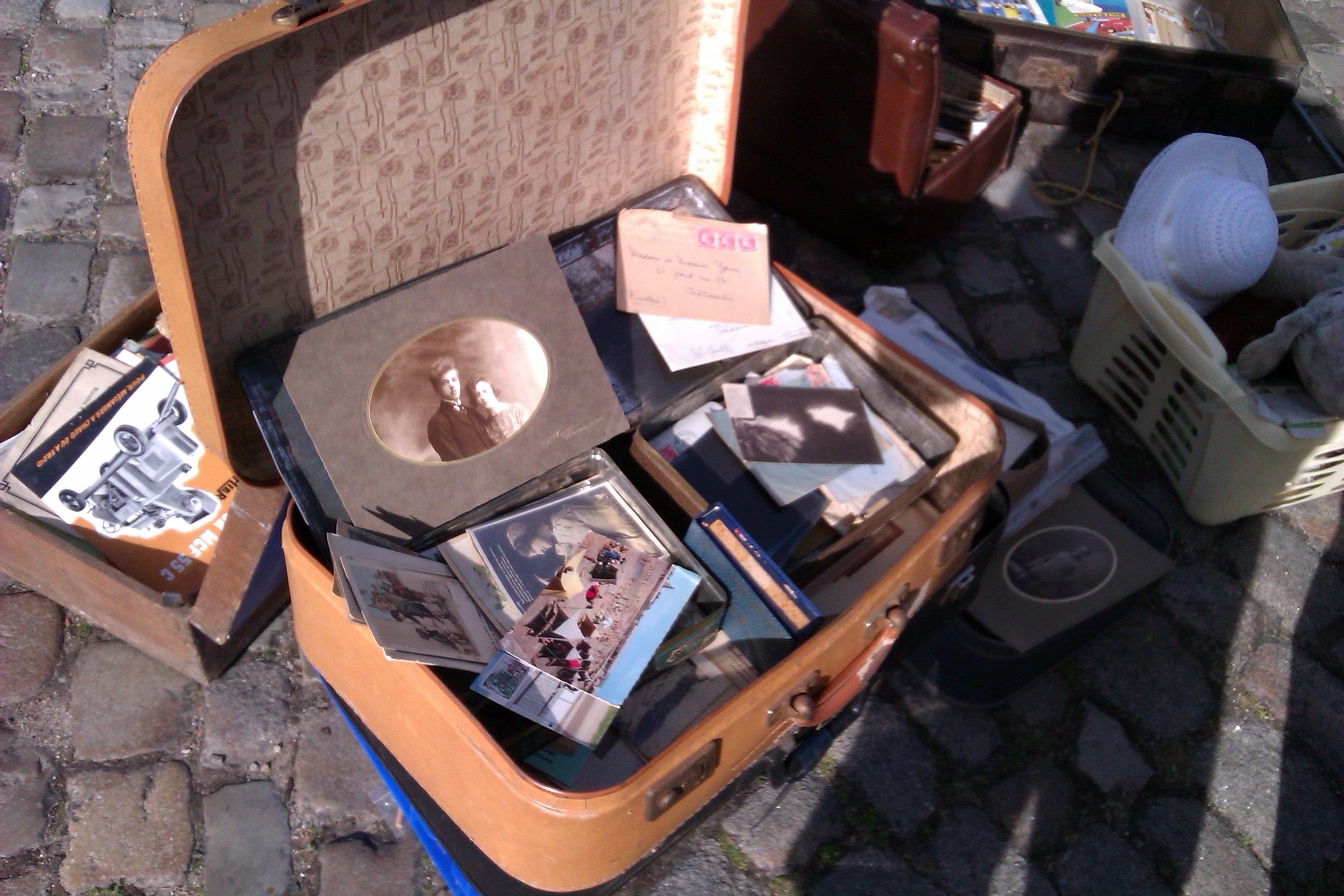
The last thing I want to show you is something that triggered my usual novelist’s imagination. Here was a suitcase, obviously where some, now deceased, French person had kept all their mementoes. In it and in tins within, were photographs, some on glass plates, of family and places, letters and souvenirs. If this had been in English it would have been the sort of thing that could start off a whole new story – fascinating and yet very poignant that there was no-one, no family that claimed this inheritance. IMAG0075

Where did you go for your holiday?

What would you like to share with everyone else on this blog?

Do let us all know – you know I love to hear from you

Long Distance Relationships

Today, Sunday, was my youngest grandson’s Christening – yeah that’s him (above) in his christening robe giving me a sermon on having missed it. And, how much I would have loved to be there with him, his mum, his dad (my eldest son) and his two older brothers (my only other grandchildren) but they all live in Kuala Lumpur, Malaysia, and I can’t get over there at the moment.

Really I am lucky as both the other boys were baptised here in the UK  in our local church where my son and his lovely wife were married. It was fortunate that both their Christenings could be arranged to coincide with long visits here.  This new event started me thinking about long distance relationships and how lucky most of us really are now.

When my parents moved some fifty-five miles from the East End of London out to a village near Maidenhead it was a HUGE move. At that time, 1954, they didn’t own a car and if they had, the journey would have taken far longer than the now estimated one hour fourteen minutes as the M4 had not been built even as far as Maidenhead. In fact, I can recall travelling up to see relations in London in the mini that we had by the time I was about nine and the M4 was open … it seemed an interminable journey even then!

My grandparents were known to me from the summer holiday when they would visit, and Christmas when we would go ‘up’ to visit relations in London (everyone else in our family).  Hence I remember odd things about each of them, the gran who taught me how to knit every time she visited more than once, leaving me a pair of knitting needles with a block and a half of a scarf started under her careful eye –  that I never finished. (I never did get on with knitting – which is strange as I’m into every other craft) The other gran who always seemed to wear a ‘traditional’ wrap-around pinny almost all day – which I found odd. One grandad always whistling a tune, the other always full of all sorts of information. In between visits they might talk on the phone with Mum and Dad … but I don’t ever remember talking to them on the phone.

image courtesy Ian Britton freefoto.com

My Aunt and her family moved to Australia in the early sixties. It might as well have been to the moon, back then. A phone call perhaps once a year – letters on birthdays with a photo slipped in with the card. The thought that they could fly back and visit was beyond imagining at that time.
When I went away to college – even though it was not very far away – the only contact my parents had with me during term time was the Sunday evening phone call, usually brief as there was frequently a queue at the hall of residence telephone box and it wasn’t done to keep others waiting forever!

Today, though my eldest son is in Malaysia, I see photographs of him and his family almost every week when they post them on facebook, and we have a skype video chat at the weekend, with the first and main portion being the grandchildren talking to granny! (and grandad when he’s around) They show me drawings, read to me, tell me how they are getting on at school, tease me, even try to tickle me … and I do similar mad stuff back. I have met and played with the boys, apart from the baby, and when we do meet every eighteen months or so, there isn’t that halting shyness as they’ve seen me every week. I am lucky, but I still miss the cuddles!

And then there’s my youngest son, also on the other side of the world, even where he is, on an island just off of Thailand, I am able to keep up-to-date with him via skype and facebook. We are so lucky!

And it is easy to think it is the same for everyone, but as I have been finding out from my niece on her blog (armywaglife.wordpress.com)  one group of people who do not enjoy such an easy long distance relationship via the internet are those overseas in our armed forces. Hard to believe in this day and age – but true – even in Germany. It’s a very new blog – but well worth the visit.

So, do you keep up a long distance relationship with family or friends?

Is it easier for you now than it used to be ?

Do you remember the days when you had to queue for a public phone to call someone? – and then they had to be at home!

You know I love to hear from you – please share your thoughts

Hot Cross Questions

Baking hot cross buns on Thursday so we could have them at breakfast on Good Friday morning set me thinking about how come, in our house, we eat this  ‘tea-time type’ bun for breakfast … and why, when supermarkets have them on the shelves for months, do we only eat them on Good Friday at home … and whether this was just a quirk of our family.

As with every question today, I was quickly on the internet to research it, however, as you will know, you need to choose your sources carefully. I am indebted to recipewise.co.uk for an excellent rendition of the whys and wherefores of the hot cross bun – from which I have extracted the core information I sought.

To start with, Hot Cross Buns for breakfast is not just a family quirk. (phew) It seems that the practice of eating the Hot Cross bun (also known as Good Friday buns) for breakfast goes back at least until the 1600s, with evidence from Pepys and. later, from Samuel Johnson in ‘The Life Of Samuel Johnson’, by James Boswell, published 1791: “On the 9th of April [1773], being Good Friday, I breakfasted with him on tea and cross-buns … On April 18 [1783], (being Good-Friday) I found him at breakfast, in his usual manner upon that day, drinking tea without milk, and eating a cross bun to prevent faintness”.

As to the history of the bun I am jumping ahead. Like the origins of Easter Eggs, the ‘spiced fruit bun’ probably evolved from the pre-christian celebration of the spring and dawn goddess Eastre where in Anglo-Saxon times ‘a bread dough was studded with dried fruits and baked in small loaves’. As Christianity spread these were ‘marked with a cross’ and linked to the crucifixion on Good Friday and so ‘absorbed or acquired’ by the Christian religion – and as they were within the Lenten season they were a real treat yet eating them was blessed.

Indeed the practice of marking all bread-doughs with a cross was widespread by the Middle-ages – particularly as it was thought that the sign helped ward off evil spirits and prevent the bread going mouldy or stale. However, with the rise of Puritanism, this widespread use of the cross was seen as  ‘superstitious’ and thus ‘Popery’ and was frowned upon and eventually only the sanctioned ‘Hot Cross Bun’ was permitted to have the cross marked on it, and only to be eaten on Good Friday in remembrance of the crucifixion.

By the early 1700s these delicacies were sold on the streets by baker’s boys and coster (barrow) boys and women (with baskets instead of barrows for this day) Their cry of ‘One a penny, two a penny, Hot Cross Buns’ is a rhyme that was also brought to mind and sung to myself as I baked our buns and is a popular Nursery Rhyme today.

Hot cross buns! Hot cross buns!
One a penny two a penny – Hot cross buns
If you have no daughters, give them to your sons
One a penny two a penny – Hot cross buns

The superstitions that were prevalent in the Middle-Ages started with the belief that the cross on the dough warded off the evil spirits lingered on. It is said that a hot cross bun all made and baked on Good Friday before sunrise will never go mouldy and if kept in the house will protect it from fire. Which reminds me of the famous pub The Widows Son where they used to hang a new Hot Cross bun from the ceiling each year on Good Friday. The story behind this being that a widow’s son was due home from sea on Good Friday, and she baked him Hot Cross Buns. However, he never made it and was never seen again. Every Good Friday she made him a special bun right until the day she died. Her cottage later became the pub and the tradition began of hanging the ‘widow’s son’s hot cross bun’ from the ceiling. Unfortunately – the ‘protection from fire’ part of the superstition wasn’t working well as part of the pub burned down in the 1980’s. However, they continue the ceremony today with a special bun placed in a net by the youngest of the local Navy Reserves who come to the pub for the occasion.

Who would have thought there was so much to know about a fruit bun! And if you’d like my recipe for Hot Cross Buns – go to the recipe drop-downs.

So – here come the Hot Cross Questions:

When do you eat your Hot Cross Buns? Tea time or Breakfast? Let’s take a poll here!

What do you think about the supermarket practice of having Hot Cross Buns available from before Shrove Tuesday to well after WhitSunday?

Do share your thoughts – you know I love to hear from you!

error

Enjoyed this blog? Please share :)