What our Ancestors can teach us about healing

It is odd that today I came across not one, but two examples of the ‘super-‘bug’ MRSA being defeated, or at the least severely dented, by ‘old recipes’ for fighting disease.

The first was a report in NEW SCIENTIST that scientists from the University of Nottingham have worked on a recipe to cure styes, laid out in a 1000 year-old Anglo-Saxon medical recipes book called Bald’s Leechbook . (article here)    DSCF5518

It sounds like the three witches in Macbeth, ‘Take cropleek and garlic, of both equal quantities, pound them well together… take wine and bullocks gall, mix with the leek… let it stand nine days in the brass vessel…’  But this is exactly what the scientists did.. though they made sure everything was sterile, and had controls set up, and had each element set up separately too (to see if only one would work – none did on their own)

The result: ‘The potion was tested on scraps of skin taken from mice infected with Methicillin-Resistant Staphylococcus Aureus. This is an antibiotic-resistant version of the bacteria that causes styes, more commonly known as the hospital super-bug MRSA. The potion killed 90 per cent of the bacteria. Vancomycin, the antibiotic generally used for MRSA, killed about the same proportion when it was added to the skin scraps’.

Just imagine how long and how much experimentation had to have taken place in ancient times to come up with this particular mixture of herbs and the vessel to use to make it in, made up so carefully (another ‘try’ with this recipe by a US university in 2005 resulted in  ‘a loathsome, odorous slime‘ that did not work,) and left for that particular length of time to discover it worked, that it cured styes (for that is what the recipe was for – and as styes are caused by Staphylococcus aureus – this is why the scientists were trying it)

This method has been peer tested by Dr Kendra Rumbaugh, of Texas Tech University in the US, who was asked to replicate the findings. She said that the salve performed ‘good if not better’ than traditional antibiotics at tackling the superbug. The findings were presented at the Annual Conference of the Society for General Microbiology in Birmingham which runs from March 30 this year.

IMG_0384The second MRSA attacker I heard about on the radio — my ears pricked up when I heard the goats (we used to keep goats) and they were the source of this other unexpected beater of MRSA.  It is a long story – but the goats had initially been kept to help with their son’s asthma (this is well documented that Goat’s milk is a less antagonistic to bronchial conditions than cows milk.) They also found that it helped clear up his eczema when made into a cream and a soap.

Now, eczema is an auto-immune disease and many auto-immune diseases appear to be triggered in the gut. By making a fermented product from the goat’s milk, called kefir, they found they had something that seemed to help many auto-immune gut related conditions. Kefir is a powerful probiotic that has been made for hundreds of years in Russia, though the name is possibly Turkish (from keif meaning good feeling).

Then, after surgery, the husband contracted MRSA from the hospital. The wound wasn’t healing, worse, the MRSA was attacking the skin and flesh and making the wound larger and worse and, despite treatment, would not go away. Having read of the curative powers of kefir and having seen how it had helped their son with both asthma and eczema, the wife started treating her husband with kefir by getting him to drink it. She also read-up on essential oils and, believe it or not, the bubonic plague and a bunch of perfumiers who didn’t catch it, and created her own blend of essential oils which she used to bathe his skin, after which she used the kefir on his skin too. In two weeks his skin was testing negative for MRSA and soon healed. The blend of essential oils has since been lab-tested to show it is effective against a whole bunch of pathogenic bacteria, and they are currently working with Swansea university on the effects of kefir and the essential oils  (read an article here)

Now these are concoctions that have been ‘known’ about in the western world for hundreds of years – and we are still only just realising how nature works, how our bodies work and how they can work together – or against each other. If this is the state we are in with cures and remedies we already ‘know’ about  – how many more cures are out there in nature, especially in the most bio-diverse regions like the rain-forests that man seems set on destroying? It makes you think!  (Yes, I did quite get into all this while I was writing ‘The Angel Bug’ as one of the main characters was deeply concerned for the rain-forest and its bio-diversity – does it show?

Had you picked up on these stories in the recent media?

What are your thoughts?

Are you fed up with the general election  (UK) ALREADY?

Do share – you know you want to 🙂
Council Kicking the Gift-Horse in the Head

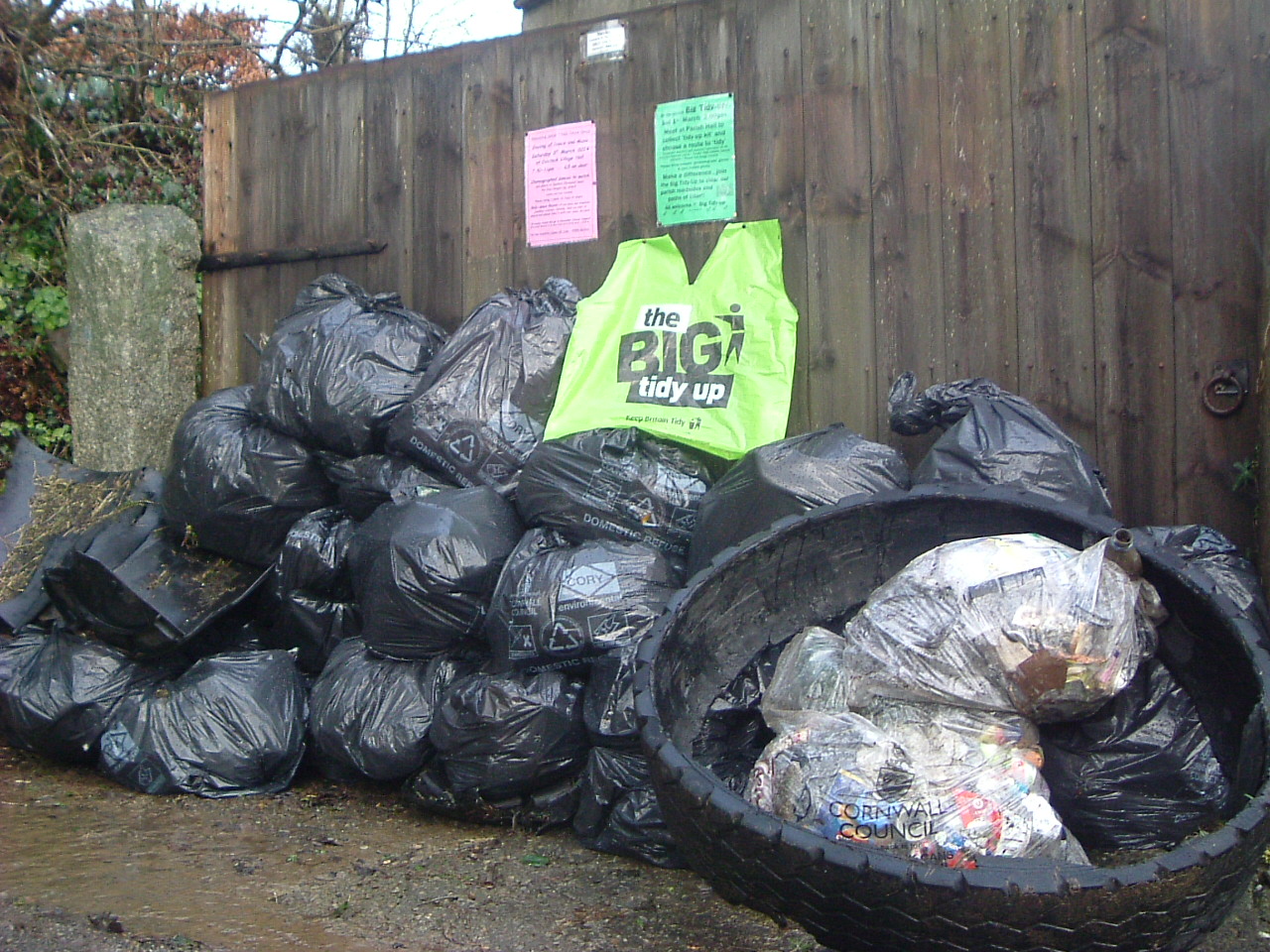
You will have read here before of our annual litter-pick – clearing our beautiful Cornish country lanes of the litter debris that accumulates over the year. You will  have seen the HUGE pile of bags filed with this rubbish, numbering twenty or more, plus sundry car tyres, plastic buckets and unidentified parts of something or other … Here’s last year’s collection DSCF7445

This all done through the goodwill of VOLUNTEERS. Volunteers who arrange the day, the allocation of routes,  the borrowing of tools to help in the job, the driving round the routes to collect bags that have become too heavy to carry, the collection of all the bags filled and sundry objects, and, ultimately the collection of all this by the Council.

All fine and dandy … we’ve been doing this for nigh on twenty years. However this year I am very UNHAPPY. The council have decided that the equipment can only be collected from one of four depots around our long county. … expecting us, in this case, to make a total of !!! 50 miles !!!  journey to borrow these items ….  TO HELP THE COUNCIL DO ITS WORK ???

# Their excuse is ‘the cuts’ … Umm excuse me ….. wind back a bit ……

Last year* (and for a number preceding this) we have been able to collect the equipment from the local One-Stop-Shop (once these became established – before then the equipment was delivered to us [yes that was extravagant] and, sensibly, collected when the refuse was collected.)

In this* model the equipment was delivered TO the One Stop Shop by the Council Van – which goes to round to each One-Stop-Shop  ANYWAY.  We could arrange to pick it up on a day during the week preceding out litter-pick – to suit us – and return it the next week. This meant it was picked up and returned when someone was already going into the local town RESULT = NO EXTRA TRANSPORT REQUIRED = less impact on the environment + less expense for the volunteers!

The Council blame ‘CUTS’ ….  HOW can volunteers travelling 50+ miles be better? As I understand it, one other volunteer group has already cancelled their litter-pick… and were it not for the fact that ours has been advertised I doubt this one would go ahead. Will we feel inclined to organise it next year? I doubt it.

The council appears to assume – by asking the volunteers to collect and return at distance – that the volunteers have the TIME in their working week to do this, that they have the SPARE MONEY to afford the extra cost, that they care so little about the environment that driving unnecessary miles is fine with them.

“A VOLUNTEER IS WORTH TEN PRESSED MEN”

It isn’t enough that we give up a Saturday afternoon (when we could all find something more pleasurable to be doing) to clear the litter from the highways and byways of our parish – it seems we are now expected to ‘pay’ to do so. This is not to say that we are not grateful for the loan of the equipment, we are, it makes doing ‘the council’s job’ easier for us, encourages more people to get involved, which encourages more people to care for their environment. The enthusiasm with which people work at this task is wonderful – as the saying goes ‘a volunteer is truly worth ten pressed men’

INSULT TO INJURY
Cornwall Council choice of recycling-collection method even causes litter

Litter-picking also means we get to see the types and locations of litter. We can highlight the patterns of offenders, the ‘every-week stop for a snack and a smoke – drop it out the window’ the ‘regular buy a Costa Coffee – drop the empty cup out the window as they finish’ the ‘chuck the cigarette-packet as they drive into the parish’ types. Since the council have changed to a new recycling collection system, where the recycling is collected loose from kerb-side bags, we have also identified another type of litter. Domestic recycling that has ‘jumped’ out of the recycling wagon, or been ‘sucked out’ by the wind as they drive along. 

How do we know? Well, who would fold flat a Quaker-Oats box (to give a specific example) then drive a couple of hundred yards or so to throw it out? Or lids from cans of fruit of similar? Or washed, squashed milk-bottles? This litter is usually a long way from residences; where the lorry gets a bit of speed up. Indeed, litter being ‘sucked out and whirling into the air’ has been observed by one of our group when following a recycling lorry down a long stretch between houses.

Ironic, then, that they are causing more litter AND effectively dissuading people from helping clean it up!

Looking again at that HUGE pile of litter and rubbish and debris we collected last year from the highways and byways of our small Cornish parish … It seems Cornwall Council want that to stay blighting the countryside this year, and the same again added every year! No amount of advertising ‘Clean Cornwall week / fortnight’ will get this picked up without the Volunteers that they are turning against them.

Do you think the council are being blinkered by ‘the cuts!!’

Are they ‘cutting’ off their nose to spite their face?

Are they kicking the gift-horse in the head (to mix my metaphors?)

What do you think we should do next year if they do not change this policy?

Rant over …  normal service may return next week… though it depends what rubbish we find on the litter-pick 🙂

Famous friend and Fictional place

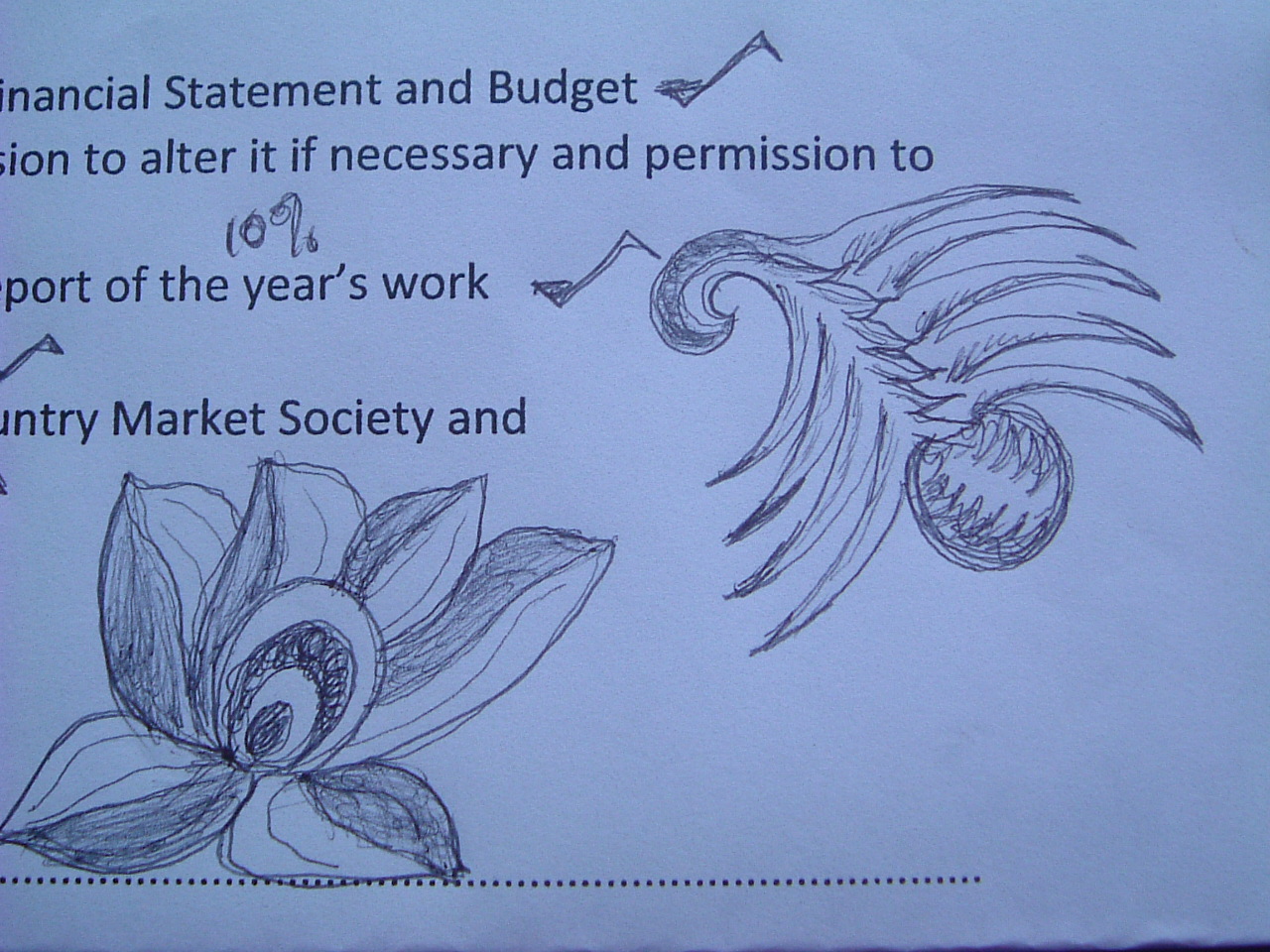
Have you been watching The Big Painting Challenge on BBC 1? (iplayer link HERE to first episode- runs out in 21 days) I have to say it has inspired me to think about my drawing and painting skills, long left to lie. Except when in meetings… I am an inveterate doodler – and when in meetings will doodle.

Some are of the opinion that doodling is akin to ignoring the meeting altogether. Not so! In fact it has been shown that those who doodle actually are taking in more than those who merely sit and listen. Even if I am chairing the meeting, I usually end up with a doodle or two – usually around the items on the agenda that cause most discussion. DSCF0133

Doodles, it is said, can also be interpreted, sharp angular ones indicating dissent, or difficulties, loose flowing ones indicating calm and non confrontational thought. I really can’t comment on this! Enough about doodles – on to some real Art!

If you have been watching The Big Painting Challenge you will, by now, be a little familiar with the contestants. Next time you watch please notice Anthea.  Anthea Lay exhibits her paintings at the same morning market that I mentioned last week, where I take my books as an opportunity to meet friends and the buying pubic, and has become a friend.

A long while ago I asked Anthea about painting a picture that I could use as a cover for my next book. At that time I had only just started writing but I knew my main protagonist was a woman who was very involved in art, and I felt a cover that was, and looked, like a painting, would be appropriate. Fast forward to this winter and I now know where my protagonist lives (in a fictional village near Kit Hill in the Tamar Valley) and much more about the story, so I commissioned Anthea to create this fictional scene.

To assist with the transition of my idea to her vision I gave her a photograph of a ‘wild’ sky I had taken over Caradon mast, another with Kit Hill in the background, saying the fictional village could be on the ridge by the valley full of trees you could see, a photograph of a converted chapel that I had in my mind’s eye for the home of the main character and a plan of the ‘village’ that I created to make sure my characters move around their landscape properly; and then asked if all the relevant details could be squished onto the right hand side of the painting as this would be the front cover. Tall order!? Not for Anthea!  ‘Landscapes’ are Anthea’s thing and she usually paints only from life but she had fun creating this new, imagined and ‘painterly’ landscape and I am delighted. IMG_1680 CroppedSo lucky to have such talented friends!

The sky is suitably ‘Turner-esque’ and though from a ‘real’ sky looks as if it could only exist in a painting, the salient points in the story-village are identifiable should you wish to do so, the whole countryside effect is perfect.

To be turned into a book cover it, obviously, has to have the title and author’s name across it.. and blurb and other info on the back – to give you all an idea I have just added the words to the front cover part (not done professionally – words will be better and properly spaced on the real thing) The whole painting will be used for the cover – running right through onto the back.

FRONT MOCK-UP  ARLWhat are your reactions to this book-cover idea?

Do you DOODLE?

Do share, you know I love to hear from you!

If you live in SE Cornwall or SW Devon you are lucky to be close enough to see some of Anthea’s work on exhibition and for sale at The Wharf, Tavistock; Compton Engine House cafe, Florence Road, Kelly Bray; Jane’s Florists and Art show room, the Pannier Market, Callington and The Public Rooms, Liskeard as well as the Wednesday morning Callington Country Market aforementioned, don’t miss your chance now that she is not only talented but also ‘famous’!

Which one did they win cabbages on?

So began an interlude when I turned up at the village shop the other day. ‘Was it Crackerjack?’ Mary asked.

‘Surely not, didn’t they win pencils on that?’ I replied, well and truly intrigued already (doesn’t take much – this is country-life after all)

Now, I have no idea how this conversation had started before I arrived, but I do know that Alan was already on the computer looking it up. ‘It was!’ he said, ‘but they didn’t win them they had to hold them.’  (he was referring to cabbages!)

Seems my memory was duff – they did win pencils with Crackerjack printed on them (certainly into BIG prizes back then!!) – and everyone shouted ‘Crackerjack’ … but the cabbages came in a part of the programme called ‘Double or Drop’ whereby for each right answer they were given a prize to hold and for each wrong answer the contestant was given a cabbage to hold. They were ‘out’ if they dropped anything … or were awarded their third cabbage!  (here follows a youtube clip – you need to be reading the original post rather than your email to see it) 

This began a trawling through of other ‘game shows of our childhood’ which drew in another customer who, despite having a few years on us, declared he wasn’t old enough to remember any of them!

I do recall Crackerjack, though I have to say it wasn’t something that I was desperate to watch. I was amazed to find out that it was on our screens  from 1956 through to 1984 with many incarnations of presenters and added sections to boost interest. As it was essentially aimed at children I suppose that my interest, such as it was, waned as I ‘grew out of it’.

The game show that left the biggest impression on me from the 60s would have to be ‘Opportunity Knocks’ a sort of talent show with (I always thought the slightly creepy) Hugie Green. This was soon displaced by The Generation Game with Bruce Forsyth when it arrived early in the 70s.

All in all I didn’t really like the ‘slap-stick’ and ‘crazy-fun’ sort of game shows. Anything that depended on people being made t0 look inadequate or silly I didn’t find funny then (or now). (here follows a youtube clip – you need to be reading the original post rather than your email to see it)

A game show I do recall and loved from the 60s and 70s was Call My Bluff – not aimed at children, but watched avidly in our house. I loved Frank Muir’s vocal antics as he describe the ‘true’ meaning of the words!  As an easy-to-put-on entertainment (not easy to prepare mind!) we had a session of Call My Bluff last month at our WI…. with ‘characters’ reading out the definitions and the audience choosing what they thought was the right answer – good fun was had by all… and we now refer to heavy rain here as ‘lumming it down’ 🙂

Perhaps this was my early and enduring love-affair with words.  It is hard as writer not to use any word in your own vocabulary as you write and I have sometimes been chastised for using words that I am told ‘many people’ would not understand. Now, as an author you really do not want anything to hold-up the flow of thought-transition, between words on the page and the imagination of the reader to form it into their personal ‘film-of-the-book’, but, as an educator, I rail against the ‘dumbing-down’ of language. So as an author I have to tread a fine-line between the two.

My OH tells me he uses his ‘dictionary’ function on his kindle fairly often. Such a great little tool, whereby you highlight the word and within seconds you have the full dictionary definition there before you, and great way to expand your own vocabulary!

Which brings me onto another conversation … with another book-aholic writer. She confessed to having been saying a word she had only ever read, never heard, in the way she thought it ought to be said .. for years.. until she was horrified to hear it used by someone who did know only to find she’d been saying the word incorrectly all the time. My confession followed, my faux-pas was the word hyperbole … which I had been rendering as hyper – bole in my head …. when I heard it and saw it at the same time to be hy-per-bo-le  I too was mortified   😮

Oh! Where a random conversation can lead you…

Do you have fond/cringing memories of the game shows of your youth?

What were the game shows of YOUR youth?

Do share – you know I love to hear from you.

Bargain! BARGAIN!! – Or is it?

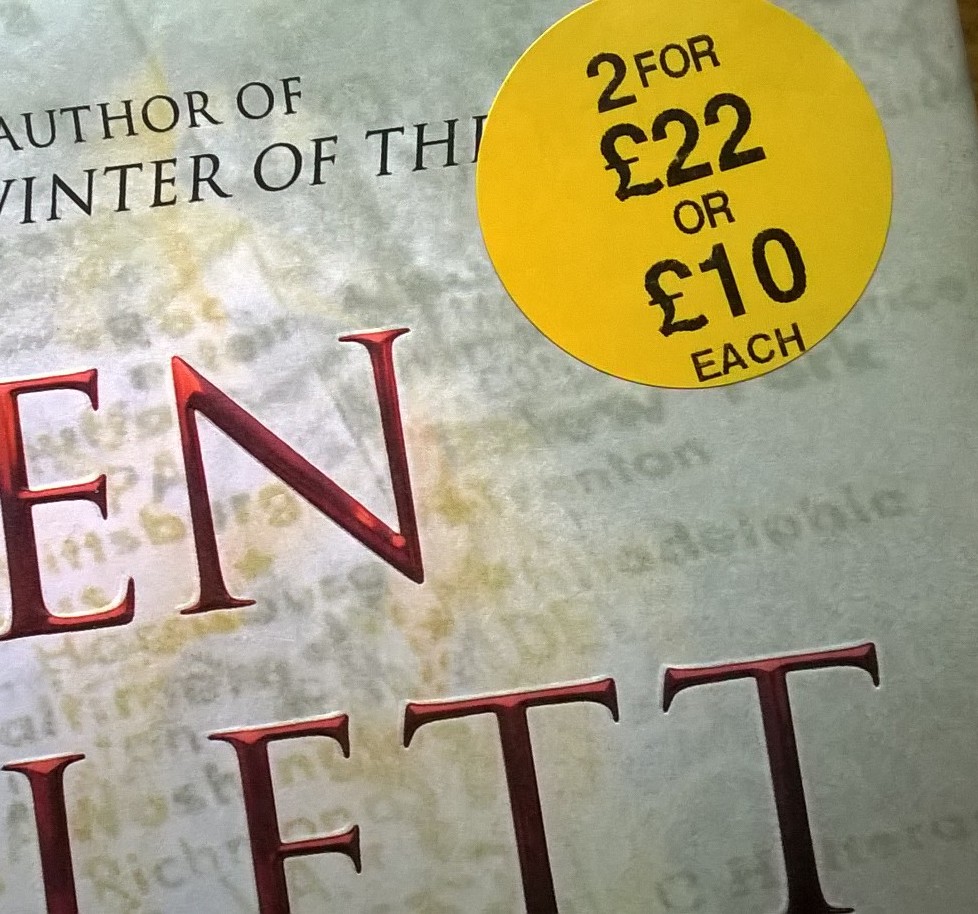
BOOK BARGAINThis special offer (absolutely genuine by the way – my photo taken on actual book cover) is not a bargain – obviously. However, not all fake  ‘bargains’ are as easy to spot. Many do not even scream ‘bargain’ at you. They just offer themselves in a way that we have been trained to assume is a ‘bargain’. Even this blatantly wrong bargain sticker would still draw the customer to look at the goods

Come on woman! I hear you say – what are you getting at?

Well, I am an inveterate checker of  ‘price per 100g / kilo’ at the supermarket, if I weren’t I would have frequently paid over the odds per weight by going automatically for the ‘multi-pack’ or the larger size – but it isn’t always the cheapest option! [And getting duped into paying more than I need, annoys me!]

‘Take care of the pennies and the pounds will take care of themselves’

Recently I have noticed ‘Family Value packs of Carrots’ at 6p/kg over loose carrots. Large packs of mushrooms marked ‘special’ at 15p /kg over loose mushrooms and broccoli (or calabrese) vacuum-sealed in plastic, also at a reduced price, that was still more than the loose per kg.

Away from the fresh produce and onto the packed goods: Multi-packs of fruit-juice, that you might reach for, suddenly 80p over the price of the individual ones – when they have a special on singles but not the multi-packs. Specials on small boxes of cereal / tea that make them cheaper per 100grams than the large boxes of the same, again, by having reductions on one size only. If the goods inside the package are being reduced – then be honest with it and reduce them across the range!

I have no problem with the supermarkets putting down the prices of the smaller packs – indeed I often feel that those who have to buy small-and-often due to finances or usage or space difficulties ought not be over-penalised for their need to buy smaller. (Whilst taking into account that packaging for small quantities probably costs almost as much as packaging for large – yet is frequently disproportionally charged for)

The question is – who is it that are being targeted by the supermarkets when they flag-up these ‘spurious’ special offers?

OK, so you might say it is those with an eye to a bargain, but you can look at  it another way, they may be someone who needs to watch their pennies.

However, if you combine that with someone who lacks the time, or the peace and quiet, to read the price per 100g / kg and compare – the ‘special price!!’ ‘Family value!!‘ ‘multi-pack!!‘ ‘larger box!!‘ – is mainly going to catch the harassed shopper for the family.

Someone squeezing in the shopping after work and before getting an evening meal together. Someone with children in tow. Someone who cannot spend too much time shopping as they have dependants to care for. Someone who has to get the shopping and be back to the bus-stop before the bus leaves*. (*Rural readers will understand this more than urban)

 ‘Don’t be penny wise and pound foolish’

There are other costs to consider when you head off  to shop at the supermarket too. Unless you are highly organised, or live within walking distance of the big supermarket, the trip to get something you need, but forgot, can cost you dear. Unless your one trip into town makes sure you really have everything –  when you nip back a couple of days later for the item you forgot you will  be paying well over the odds – fuel prices being what they are!

How useful, how nice if you could just pop along to the corner / village shop and pick it up there?  Well, you can if the little shop is still open, and to keep the little shop open we all need to make sure we do SOME of our weekly shop there, every week.  They can’t be expected to stock the esoteric and exotic (as everything has a use-by date now-a-days) but they usually have all the basics and staples that most of us buy on a regular basis anyway, and can supply other things if there are regular firm orders for them.

Do you know where my best bargains were to be found last week? In my local post-office stores! There, two of the items I buy every week were on special offer. Real special offers. Orange juice at two boxes for £2 (where they are usually £1.19  each) and sliced pineapple (to go with the delicious Cornish Bacon Company gammon I buy there too) at 2 cans for £1 instead of 62p each, plus I didn’t have to drive into town and back to get them (average fuel cost: 6miles = £1.00) and shopping locally helps to keep our local shop going and our village community alive – making it worthwhile even if I hadn’t saved extra. Win – Win! Much better than just doing the supermarkets!

Well, what do you think?

Where do you live? Do you have a local shop?

Do you love or loathe the supermarket ‘bargains’?

Do share – you know I love to hear from you 🙂

P.S.  It is one of our WI campaigns too – shop local!

Why a dishwasher could be the healthy option

HOORAY for the dishwasher! I know not all of us can afford one, or feel we need one as there are not so many dishes to do, but I, for one, would miss my dishwasher more than my washing machine. DSCF0094 crop

Now this isn’t just because I am lazy (moi?) or that I think there are better things to do with my time than wash and and dry dishes, but because I am convinced that dishwasher use is better for the health of the family as a whole.

I remember a time before I had one, and talking to a friend who’d had one for over a year. She said she was sure her family, including two children, had had fewer infections of any kind, including colds, since she’d been using the dishwasher. It sounded almost silly. I mean.. you catch a cold by air-transported viruses, don’t you?

After we got ours, which with 8 people in the house was an absolute godsend, I was minded to agree. Those childhood tummy bugs that children pick up in school (you know the ones that are ‘going round’, if one boy came down with it… that seemed to be it. Just the one boy… we didn’t all follow on.

You may recall my plea in a previous (very popular) blog for understanding about the importance of putting the LID of the toilet seat down before flushing (click here to read if you missed it). (No, not the old chestnut of male versus female, SEAT up or down.. but the scientifically backed need to put the LID DOWN to prevent an aerosol of faecal-carrying moisture being puffed up into the bathroom) When following up on the research on that I came across the evidence for the most germ-laden part of the home … and thought that one day I’d blog this too. Today is the day.

The kitchen sink / work-surfaces / chopping boards /cloths and sponges ARE THE MOST DANGEROUS GERM-RIDDEN PLACES IN YOUR HOME.

Why? Because we bring dangerous bacteria into our home and usually work on it in our Kitchens.  We ought to be aware of the dangers of raw meat by now – we are told often enough. Only this past summer there was a campaign telling us NOT to wash our chicken as it could ‘splash’ the salmonella all around the kitchen sink and surrounds. (having told us that most chicken meat was contaminated with salmonella but was fine to eat as long as it was cooked properly)

We also bring vegetables into our homes. The danger here lies in the fact that these have been GROWN .. in SOIL.  It is the bacteria clinging to them from the soil that provides the danger here, and, of course, we have to wash our vegetables.

All in all this means that our kitchen sink areas are not clean areas in terms of bacteria, in fact research shows they are probably worse that the lid of the toilet! And you wouldn’t clean your cups and plates and leave them to dry there  … would you?

So is the kitchen sink the best place to wash up your dishes? Is the sink-drainer the best place to stand them to dry?

Add to that the fact that to kill bacteria the washing-up water has to be hotter than  your hands can stand and you can see that a dishwasher has certain advantages. Washed in very hot water then heat dried – dealing with those pathogenic bacteria – especially on the hotter cycles. This goes not just for your crockery but also for your chopping-boards – harbourers of lots of bacteria according to the studies. It seems most people just do not have a different board for each use (colour coded) .. or clean them properly. I find it best to have a number of the plastic ones, using them for the different things, then just put them all in the dishwasher for a proper clean when I wash the dishes from the meal they were used to prepare.

Talking about drying-up… one of my pet shudders – the use of a tea-towel as a hand-drying cloth and a dish-drying cloth! A good way to spread bacteria around. There should always be a dedicated hand-drying towel, distinct from the dish-drying cloth, so that the dish-drying cloth is only used to dry clean dishes (Nor should either  be used as a serving cloth to hold plates of food). Research shows drying-up with a tea-towel to be the worst option – better to let them stand and air dry (as long as what you are standing them on is bacterially clean!)

Cloths and sponges are used to wipe up spills and splashes – that is their job, and as they also usually reside in or near the sink also pick up these bacteria.. and a damp, warmish environment, with ‘food’ from the spills, those ‘few ‘ bacteria will multiply into a veritable smorgasbord of bacteria that we then spread all over out work-surfaces when we wipe them down. The manufactures of bactericidal wipes would have you snatching these out and using them at every turn.  This is all good for their sales, but not necessary. Traditional cloths, a fresh one daily, the previous day’s dropped into a solution such as Milton sterilizer, until you have sufficient for a hot wash, will do just as well.

I’m not a great believer is banishing all bacteria from the home environment. I do believe that we need to meet these to keep our immune system in condition, but simple ways to prevent some of the nastiest bugs getting a grip on us is sensible. So I say. HURRAY for my Dishwasher … and, like my friend before me, I do think it helped keep the bugs from spreading within the household.

Do you have a dishwasher? What are your observations?

Do you have an un-sung household appliance that you’d like to praise?

Do share, you know I love to hear from you!


Hello! Mr Giant, Can You Hear Me?

megaphone by J Scott via Mary Ann Clarke Scott Wana Creative Commons
Image courtesy J Scott via Mary Ann Clarke Scott – Wana Creative Commons – some rights reserved

This is what I’ve been feeling like this week. 

Hello! Mr Giant, Can You Hear Me?

It started when I was preparing a tweet. Yep, you can find me there too  @annfoweraker with random tweets about Cornwall, writing, my books, what I’m up to… etc. So, there I was preparing to re-tweet that I had noticed Amazon had discounted one of my novels: £9.50 down to £8.95 and I thought I had better check the offer was still there. Amazon makes or stops discounts as and when they feel like it, with no rhyme or reason I can discern, but as I get the same amount and Amazon are discounting out of the amount of money they make from retailing my book I like to let my readers know when offers are on, so I tweet them.

I quickly went into the page for the book and, lo and behold, the offer was still on… but now, though the actual reduction was the same 55p, Amazon were claiming it was a larger discount than previously. WEIRD!…. then I noticed they were claiming that the RRP was £9.71   – of course the discount would look to be a higher percentage. I went to my other book pages on Amazon – all had the same problem but each one had a different RRP (all more than the correct £9.50) How could this be?

I didn’t tweet – even though there was still a reduction – the fact that there was an error in the quoted Recommended Retail Price, and therefore the percentage reduction Amazon was claiming they were making, seemed dishonest

I noticed that the one closest to being accurate was the one last added to Amazon. This novel was being offered at a 1% discount – down to £9.50… yes – down to the  actual RRP. What on earth was going on?

I worked out that this change had come about after my latest paperback was added to my lists. Now I am used to Amazon taking a few weeks to sort things out when a new book goes on. It seems (I queried this with my distributor the first time it happened) Amazon put books onto their US (.com) site first, the UK (.co.uk) site picks up the data and puts it on the UK site – but as if it was a book published in the US, giving delivery dates of weeks and translating the price from the US dollar price of the book – which was set as correct when the book was published.

Now, as we all know the dollar, sterling rate fluctuates. So a few weeks down the line the dollar RRP price converted to sterling gives an incorrect sterling RRP.

Usually after a couple of weeks this gets sorted out – the book appears as delivery 1 – 2 DAYS and the price is accurate. This time, however, somehow this glitch had not sorted itself out… and, instead, had infected my other novels. And, as the longer ago a book was published the more inaccurate the conversion will be, the earlier published books had larger discrepancies .

I do not know about you.. but if I bought a book at a discounted price (even of just 1%) and when the book turned up it’s face value was the same as I had paid I would be miffed. (if the discrepancy was more I’d feel proper cheesed off) Who would I blame?  It might be obvious to me to think it is Amazon – but then I deal with Amazon both ends, as it were. I am not just a customer, I also sell my ebooks through Amazon and my publisher distributes through Ingram to Amazon.  I know a little about how it works.

Who would you blame? The publisher? The author? Amazon?

I soon found that there was nothing I could do to point out the glitch to Amazon directly and get it rectified. Hello???

At the moment, after many emails to and fro to Ingram, and their ‘channel specialist’ to Amazon,  Amazon seem to have straightened out two out of the three books .. maybe by the time you read this they’ll all be ok.

Now, all that is left to sort out is how Amazon can say a book is ‘out of stock’ (as they also had for two of mine along with the false ‘discounts’) … when the book is a POD (Print On Demand) as in, you buy it, it is printed same day and posted to you… Ah, Mr Giant … can you hear me??

I really hope this gets sorted out soon as I’m on Radio Cornwall next Friday (7th) and the new Looe Lit Fest on the 15th November, both of which I hope will generate interest in my novels and, like it or not, Amazon is the go-to place for a huge number of book buyers nowadays.

Do you get frustrated when you are trying to deal with organisations so large there seems no proper way to get through to them?

Would you have though the publisher might be the one to blame for the misleading information on Amazon sale page for a book?

Do share your trials and tribulations with the GIANTS – you know I love to hear from you.

A spectacle affair

specs pic
courtesy wikimedia commons

As readers of this blog will know this year has been my big six ohhh! Along with this age come a few bonuses, and one of these is not paying for a few things… no, I’ve not taken to pinching stuff… suddenly I do not pay for prescriptions … and, as a letter from a high-street opticians reminded me, nor for an eye test.

Well I have been thinking that perhaps I ought to get them checked, after all I’ve been using those ‘1.0’ basic glasses (you know, £3 and fold up nicely into a slim tube) for a quite a long time now, for reading at odd times, like when in poor light, or small writing, like that on packaging. Oh, all right then… and for ease of reading speedily … without having to squint! Oh, ok… so what if I do have a set in every room and in both handbags? Just means I do not have to go round looking for them! Anyway, the ‘1.0’ were sometimes not quite doing the trick lately (mainly on product ingredients on food packaging etc) so I thought an eye test a good idea at least.

It’s not as if I haven’t had to wear prescription glasses before. Way back… just after I had my first baby I suddenly noticed that I could no longer read the road signs at a distance easily. Now, prior to giving birth, I had excellent eyesight at all distances. When I went for an eye test the optician told me that the hormonal changes could, in some cases, set the lenses. This mean that my eyes now had a mid range only, and I needed prescription glasses for long distance, and to do fine or very close work (like threading small-eye needles) at least a ‘point-one’ basic pair of glasses.

Strangely, my eyesight kept changing .. back .. perhaps the lenses softened again – I really do not know but after about thirty-five each eye test meant a weaker pair of lenses, until, at about fifty, I no longer required glasses for long distance at all. My long distance is excellent at the moment, however, my close vision became steadily worse, so that the spectacles used for only close work were needed for not-so-close work.. then for reading in poor light … or for reading small writing.

I was glad not to need the long distance glasses any more – didn’t have to keep finding them before driving (or buying a second pair with darkened lenses for bright day driving – and finding them when it was bright!) and didn’t have to fork out the huge prices for the frames. Note, not the lenses. I have no problem with the cost of technical, precision-made, personalised items such as the lenses… I do have a difficulty with frames that cost so much when the £3   frames on the ‘1.0’ have been doing their job quite satisfactorily for many years.

So it was with great delight (not to say surprise) that I received the ‘prescription’ from the optician… my eyes were not as good as they were, true, but a ‘2.0’ cheap pair would be fine!

Luckily both my eyes are almost identical in their requirements. She asked what I had been using so far … and when I admitted to using the off the shelf ‘1.0’, she said that the ‘2.0’ should be fine – with a ‘2.5’ for working on a computer (as in when writing the novels!) . WOW

Now as I was waiting for my optician’s appointment I had been looking at some of the frames available.  As it happened the weekend before my friend had just been showing me some snazzy ‘1.0’ – under a £5 each – that she had just bought. These were at least as nice as some up on the racks costing sixty pounds or more. So with my new ‘prescription’ I ordered a few pairs at ‘2.0’ and one at ‘2.5’. They arrived and are comfortable and attractive. Which begs the question … why do the ones available from the optician have to cost so much? (even before the lenses are added)

Any opticians out there would care to enlighten me?

Any one else want to share an optician story?

You know I love to hear from you!

Trouble With Numbers

I little while ago, in responding to a comment on one of my ‘Rants’, I mentioned that I was ‘dyscalcic’.  DSCF7514

For most of my life I just assumed I was ‘bad at maths’… however, when it comes to it I often understood perfectly what had to be done in maths. In fact, one of my abiding memories is meeting my friend Jenny, who had won a place at Grammar school, on the bus home and helping her understand what she needed to do to complete her maths homework. The fact that I frequently did not get my maths work correct, despite me checking it more than once, did not compute with my understanding of the method …

I could never remember my times tables, despite being at the sort of primary school that had us reciting every morning.  I would learn them, revising as I went to school, recite them.. then by lunch time I would have lost them again. I still do not know my times tables – but I have developed strategies for working them out. I use the 9 x tables trick of one number down from the times-ed number plus – whatever it takes to make nine. Even I can manage the 5 x, 10x and 11x and extrapolate from those, often adding on the extra. So, because the 5 x is easy I can manage most 6x this way quite quickly. So my biggest bug-bear; 7 x 8 will go 5×8 is 40 so 6x easily is 48, now just add another 8 = 56. Strategies.

I did a lot of ‘pairing to make 10’ work at one time (adding up columns of figures for a local village post-office) – so my ‘numbers that make 10’ is quite good. This means that I can add up a column of figures fairly well – though I will frequently have to do it more than once.

However, the biggest problem I have is in transposition. Put a list of numbers on one sheet and ask me to copy them onto another and at least one number would end up transposed incorrectly. Like when I used to write certain phone numbers in the back of my diary – copying them across each year and not realising a mistake until I phoned someone. For instance I might call using 350646  and get a wrong number, only to look back at the old diary to see the number should have been 350464!  I can now look back and see how easily I could have copied the sum incorrectly from the text book, completed the calculation correctly but, obviously, got the wrong answer when compared to the ‘answer book’. It would be an unusual teacher that checked to see if the sum had been copied correctly in the first place!

Dyscalculia involves frequent difficulties with everyday arithmetic tasks like the following:

  • Difficulty reading analog clocks  [I often look and recognise what I need to know (i.e. is it near the time I am keeping an eye on) – but ask me just after I looked what the actual time is and I will almost always have to look again to be able to tell you]
  • Difficulty stating which of two numbers is larger  [written numbers are ok – given a moment or two, obvious differences are ok, like when the starting numbers are the ones to focus on but numbers said that are similar and of a long duration in saying, ie, one million, five hundred thousand, seven hundred and forty six …. followed by a similar large number with, say the hundreds changed… I may not recall the first number accurately enough to tell you.]
  • Inability to comprehend financial planning or budgeting, sometimes even at a basic level; for example, estimating the cost of the items in a shopping basket or balancing a chequebook [Sometimes great  sometimes way-out – having somehow bunched a group of similar items and made them add up to too much or too little]
  • Difficulty with multiplication-tables, and subtraction-tables, addition tables, division tables, mental arithmetic, etc. [Yep – that’s me – See above re: times tables & mental arithmetic,  for example the other day I was working-out quickly how many items I needed to sell at £5 profit to cover a £100 pitch fee and came up with 200!  Yes, written down I can see it is stupid .. but I actually thought it was right for a few minutes!]
  • Difficulty with conceptualizing time and judging the passing of time. May be chronically late or early. [I hate to be late.. so am often early  – but have to set myself alarms to make sure I am. (when did this start – was it because I knew that I could not trust myself to know how time was passing) I always assume that when I get lost in time it is just my absorption in what I am doing… I admit I didn’t realise this might be something else?]
  • Problems with differentiating between left and right [Ask the OH if I have trouble with left or right … he calls my left –‘the other right’.  Thank goodness for Sat Navs!]
  • Inability to visualise mentally [No – not this one! I have extremely good mental visualisation – so good I can, at a push, do some mental maths this way – imagining the numbers written on the board]
  • Difficulty reading musical notation [I have been trying to learn to read music on and off since I was 13 – by the time my mind works out the relationship with the notation and the fingering/note the moment has passed]
  • Difficulty navigating or mentally “turning” the map to face the current direction rather than the common North=Top usage  [Well that is just logical isn’t it ?? – to turn the map so that you are traveling the same way along it … Thank goodness for Sat Navs AGAIN!]
  • Having particular difficulty mentally estimating the measurement of an object or distance (e.g., whether something is 10 or 20 feet (3 or 6 meters) away). [No, not this one either – goes with the overheated mental visualisation]
  • Often unable to grasp and remember mathematical concepts, rules, formulas, and sequences [Sequences! What is the next number in the sequence? ALWAYS totally baffled me!}
  • Inability to concentrate on mentally intensive tasks. [Unable to concentrate on mentally intensive NUMBER tasks – doing my taxes is a nightmare and so tiring!!]
  • Low latent inhibition, i.e. over-sensitivity to noise, smell, light and the inability to tune out, filtering unwanted information or impressions. Might have a well-developed sense of imagination due to this (possibly as cognitive compensation to mathematical–numeric deficits)  [Well developed sense of imagination – tick (Hey – I’m a novelist!) And – actually, rather over-sensitive to particular smells, and can find myself focusing in lense-like on certain visual patterns in nature in particular]
  • Mistaken recollection of names. Poor name/face retrieval. May substitute names beginning with same letter. [Oh! And do I do this? So often it is embarrassing – though I have developed strategies for getting over the awkwardness of this in everyday life… and even more if I meet a person out of the usual context. And woe-betide me if they have changed hair colour! (which I do seem to notice first and remember most about people oddly enough)]                                                                         (diagnostics courtesy wikipedia)

Fourteen ‘diagnostics’ – and I fit 12!  (no I won’t attempt a percentage on that thanks)  so not an official diagnosis but too good a fit to be accident and it explains a lot.

Now when I went to school there wasn’t even dyslexia – let along dyscalculia –  so I just became ‘poor at maths’. I struggled to get a GCE grade C in maths, yet got my A Level* in Physics. Back in a more enlightened time this is what got me over the maths hurdle entering teaching. (*other  A levels were Biology and English) When I re-trained for Primary teaching after the youngest boy was in the juniors, we were introduced to the idea of maths strategies!  I was ahead of the game – and I believe I was a more effective teacher of Maths for having struggled with numbers myself.

In retrospect, I think I am glad that no one told me I had a ‘problem’ because it made me work hard to find ways around the difficulties. However, it does help now to explain the struggle I have had with numbers all my life … and still do!

Is Dyscalculia new to you?

Have you lived a life with a hidden problem and just made the best of it?

You know I love to hear from you – do share.

The JOY of LISTS

I love a list, me.

If I have a lot to do —- or am organising something … or need to take a multifarious number of items with me somewhere …. or ….yes, even for shopping….. I make a list. And, not so long ago, when I was under a lot of pressure I found that making lists was the only way for me to get things done that I had committed to, to make sure I didn’t let other people down. I hate letting people down and beat myself up big time if I ever do.

What was worse was forgetting to do things and, with my mother suffering from dementia, I can tell you that forgetting to do things starts to feel worrying! Lists were my way of achieving the myriad of small but important things that had to be done over and above running what had become a tiring and complicated life.

However, through this I have discovered the Joy of Lists!  I had discovered that lists are life-affirming. Lists can give you a sense of achievement, they can boost your self-esteem, they can make sure you get things done!

I start the day by writing a quick list of things I know I want to do in the day – say, while drinking my morning tea. I then glance down the list and number the items in order that I think they need to be achieved. Sometimes this is self evident as some things must be done before others… sometime it is a game to play against yourself. Which one do I least want to do? Perhaps make that the second (rather than the last) on the list. Do not make it the first … you may never get going at all. Second or third means you have got yourself going.. you have CROSSED OFF one (or two) items on the list … you are on a roll … you can tackle and defeat the things you didn’t want to do more easily that way.

If you are anything like me you will add to the list as the day goes on .. or even turn the page over and add something to the next days list. Writing ‘make a list’ as number one.. and crossing it off as soon as you get to the end of the list is perhaps going a bit far … 🙂

Currently everyday my list contains ‘Correct 1 ch of SKOS min’ – which actually means ‘Correct one chapter of Some Kind of Synchrony, at least, for the paperback version’ which is undergoing a final scrutiny – line by line – before being prepared to be the next Ann Foweraker novel to be published in paperback!

I find a day guided by a list is often the most productive day. There is also a sense of achievement in having worked through all the tasks on the list, reinforced every time you cross one off! That is The Joy of Lists 🙂

Are you a list maker?

Do you find it helps in more ways than one?

Do share – you know I love to hear from you.

error

Enjoyed this blog? Please share :)